
Key Takeaways
- Understanding the latest trends in commercial flooring informs better design decisions for your space and clientele.
- Innovative materials and textures offer both functional performance and impactful aesthetics.
- There is a heightened emphasis on sustainability and responsible sourcing in commercial flooring today.
In today’s dynamic commercial environments, the role of flooring extends far beyond mere functionality. The right flooring not only defines a space’s atmosphere but also enhances its usability and long-term value. Choosing options that balance durability, aesthetics, and environmental responsibility has never been more crucial. Businesses looking to boost visual impact, maximize longevity, and meet sustainability objectives are turning to new and versatile solutions. For those seeking a local approach, there are dedicated commercial flooring solutions for Tulsa businesses that cater specifically to their evolving needs and operational requirements.
Recent advancements in materials and design have allowed commercial spaces to marry style with substance, achieving results that benefit both appearance and performance. As the industry embraces these latest trends, commercial outfitters and facility managers are gaining insights into what’s possible, enabling them to make informed choices that positively impact customers, clients, and employees alike. Adopting innovative approaches is not only a reflection of modern taste but also underscores a commitment to effective maintenance and environmental stewardship.
One of the driving forces behind current flooring selections is the push for more biophilic design elements. Bringing warmer tones and natural textures indoors helps promote a comforting ambiance while maintaining professional standards. A growing awareness of factors such as installation efficiency, ease of maintenance, and lifecycle costs accompanies this trend.
Industry experts now recommend examining how materials science, recycled content, and technology contribute to the overall performance of flooring systems. Keeping up with these developments enables companies to future-proof their interiors and create spaces that leave a lasting impression.
Emerging Trends in Commercial Flooring
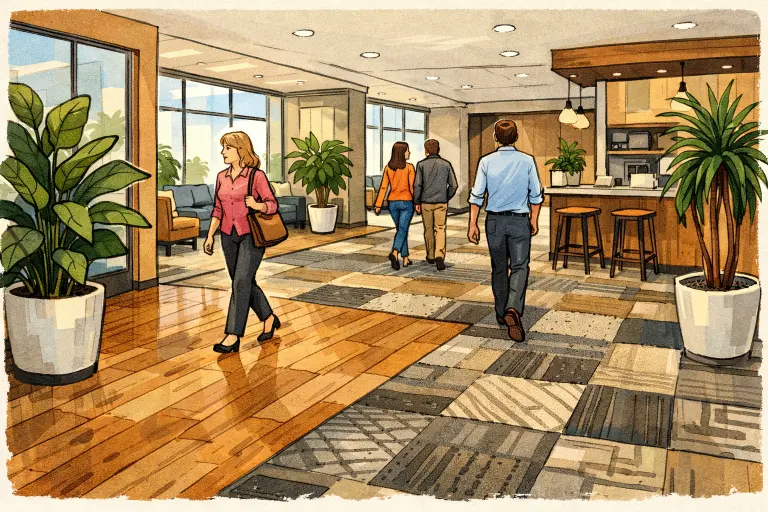
One of the standout movements in commercial flooring for 2026 is the reinvention of classic aesthetics with modern improvements. Designers are gravitating toward warm wood tones, think honey oak and deep walnut, that evoke sophistication and a sense of grounded comfort. These shades help create a welcoming environment, making them ideal for coworking spaces, hotels, healthcare facilities, and retail destinations. Textured finishes remain in high demand, with hand-scraped and wire-brushed surfaces imparting character while hiding everyday wear and tear.
Additionally, the use of patterned LVT (luxury vinyl tile) and modular carpet tiles is giving commercial settings flexibility in both functionality and flair. Mixing patterns, colors, and textures in a cohesive design approach adds visual interest and delineates distinct zones within open layouts. For further insights, authoritative resources like Architectural Digest illustrate how the industry is evolving and what innovations business owners should consider.
Innovative Materials and Designs
The commercial flooring sector has made leaps in both performance and aesthetics thanks to breakthroughs in material science. Products such as Interface’s terrazzo-inspired “In The Mix” LVT look remarkably similar to traditional terrazzo, delivering the same high-end visual effect but with easier installation and lower maintenance. These advances make it possible to achieve timeless style without sacrificing practicality, especially important for high-traffic areas.
The integration of digital printing technologies enables designers to customize patterns, replicate natural materials, or introduce branded elements directly into the floor. This level of personalization not only strengthens brand identity but also gives architects and facility planners tools to create cohesive experiences across multiple locations. In addition, antimicrobial treatments and sound-absorbing layers built into modern flooring systems help promote healthier, quieter indoor environments. For a broader overview, Forbes Home details some of the most compelling materials entering the market today.
Sustainability in Flooring Choices
Environmental stewardship is now a primary consideration for commercial enterprises specifying new flooring. Many manufacturers are enhancing transparency in their supply chains and designing products with recycled or rapidly renewable resources. Demand for flooring that minimizes emissions and supports decarbonization is rising, spurred by growing awareness of climate action and workplace wellness.
Companies such as Interface are known for producing high-performance flooring from recycled content and offering product lines certified for low chemical emissions. These efforts align with broader green building goals and help businesses lessen their overall environmental footprint without compromising on quality or style. Adopting sustainable flooring also facilitates compliance with certifications like LEED or WELL, which are increasingly sought after in new builds and renovations.
Practical Considerations for Installation and Maintenance
Installation processes have evolved to accommodate busy commercial schedules, with options that reduce downtime and disruption. Products such as click-together LVT or carpet tiles can often be installed more quickly than traditional broadloom or hardwood, allowing businesses to upgrade aesthetics with minimal interference. For facilities with heavy machinery or constant foot traffic, many owners are also turning to epoxy flooring for its durability and easy upkeep, cutting down on long-term maintenance costs.
Choosing materials with inherent stain resistance, moisture tolerance, and simple day-to-day care routines means facilities can maintain their fresh, professional appearance while reducing labor and cleaning product costs. This practical mindset ensures that investments in flooring continue to deliver functional value well into the future.
Conclusion
Keeping pace with the shifting landscape of commercial flooring trends is essential for anyone involved in designing, managing, or upgrading workspaces. Current innovations are evolving to meet aesthetic preferences, support sustainable building objectives, and offer enhanced performance. By carefully evaluating emerging materials, aligning with maintenance needs, and prioritizing environmentally sound choices, business owners and designers can create spaces that impress clients and support productivity for years to come.