
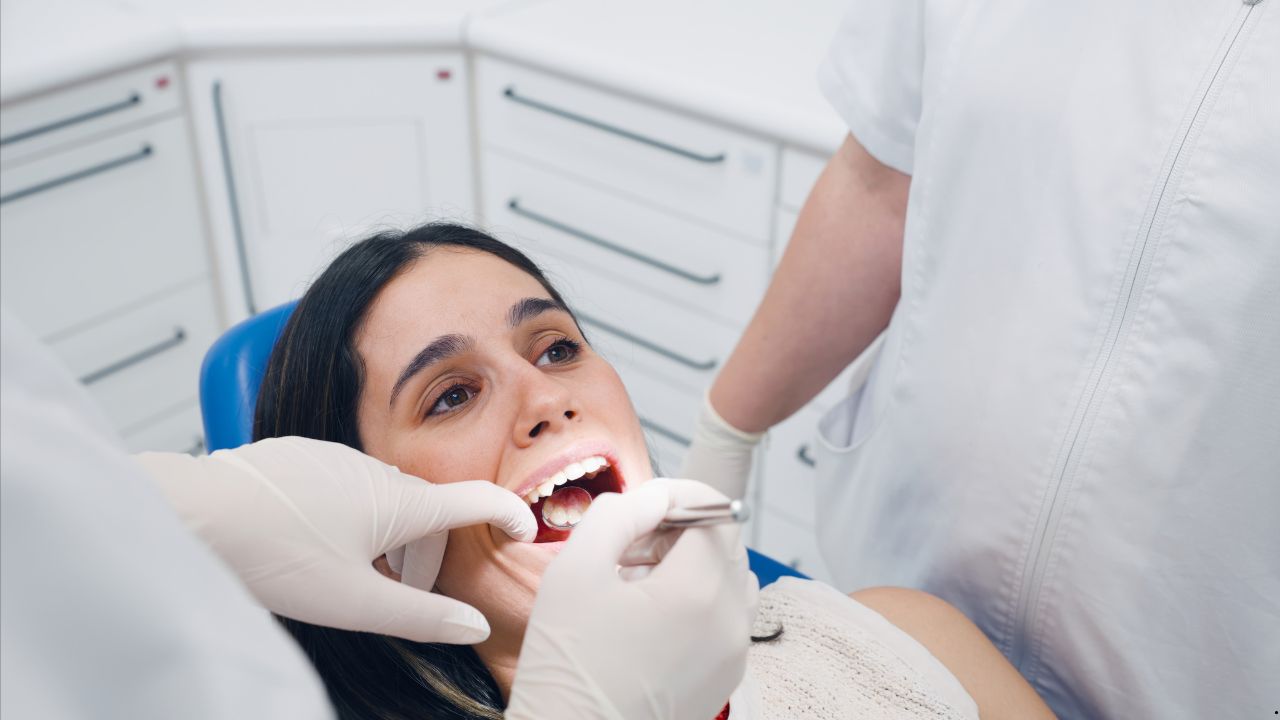
Preventive oral care focuses on proactive maintenance to identify and prevent potential issues before they escalate into major concerns. By prioritizing prevention, the dental team helps avoid cavities and gum disease while fostering long-term oral health. Exploring the role of a dentist in preventative oral care involves the following:
Professional Teeth Cleaning
A dentist offers professional teeth cleaning to maintain a healthy, fresh smile. The procedure involves the following steps performed by skilled hygienists:
- Initial oral examination
- Plaque and tartar removal
- Polishing
- Professional flossing
A hygienist inspects your mouth for signs of inflammation or cavities. They use specialized tools, such as scrapers and mirrors, to remove plaque and tartar buildup from tooth surfaces and the area below the gumline. After scaling, they polish the teeth to remove surface stains. Depending on individual patient needs, dental specialists offer professional flossing to provide additional protection against decay and help remove plaque buildup in hard-to-reach areas.
Early Decay Identification
Dental care providers identify early decay to prevent it from worsening. Identifying problems early also helps patients make informed decisions about restorative options by dental crowns and other treatments. When needed, experts utilize digital X-ray technology to capture images that reveal issues between teeth or beneath the enamel. Regular visits allow the dental care provider to track your oral health over time and recognize subtle changes.
Jaw Alignment Checking
During a dental exam, professionals check the jaw alignment to evaluate your overall oral health. They inspect how your upper and lower jaws fit together when your mouth is open or closed to determine if you have an underbite or overbite. Functional assessment allows them to check your jaw’s movement and identify clicking or discomfort. Various orthodontic solutions, such as aligners and retainers, address problems with jaw and bite alignment. Clear aligners offer a discreet way to shift teeth, while active retainers help close small spaces or realign single teeth.
Fluoride Treatment Administration
Oral care providers administer fluoride treatments to strengthen tooth enamel. Fluoride treatments protect patients who are at higher risk for tooth decay by providing defense against acid attacks. The dental team applies a concentrated fluoride solution directly to the tooth surfaces. Once applied, the fluoride remineralizes the enamel, making it more resistant to the bacteria that cause cavities. The treatment is part of long-term preventive oral care because it prevents decay from starting. Practitioners administer these treatments during routine cleanings or exams between visits.
Dental Sealant Application
Dental practitioners apply a thin, protective coating to the chewing surface of the back teeth. Sealants are especially beneficial when care is guided by an experienced pediatric dentist who understands children’s oral health needs. The sealant bonds to the enamel grooves, forming a protective shield over each tooth and supporting long-term tooth health. Its role is to prevent food particles and plaque from becoming trapped in its crevices, potentially stopping cavity formation.
Visit a Dentist Today
During a dental exam, the professional performs an oral cancer screening to check for abnormalities. For younger patients, the dental team monitors the mouth’s growth and development to identify issues. In urgent situations, patients can quickly find care using emergency dentists without delaying treatment.