
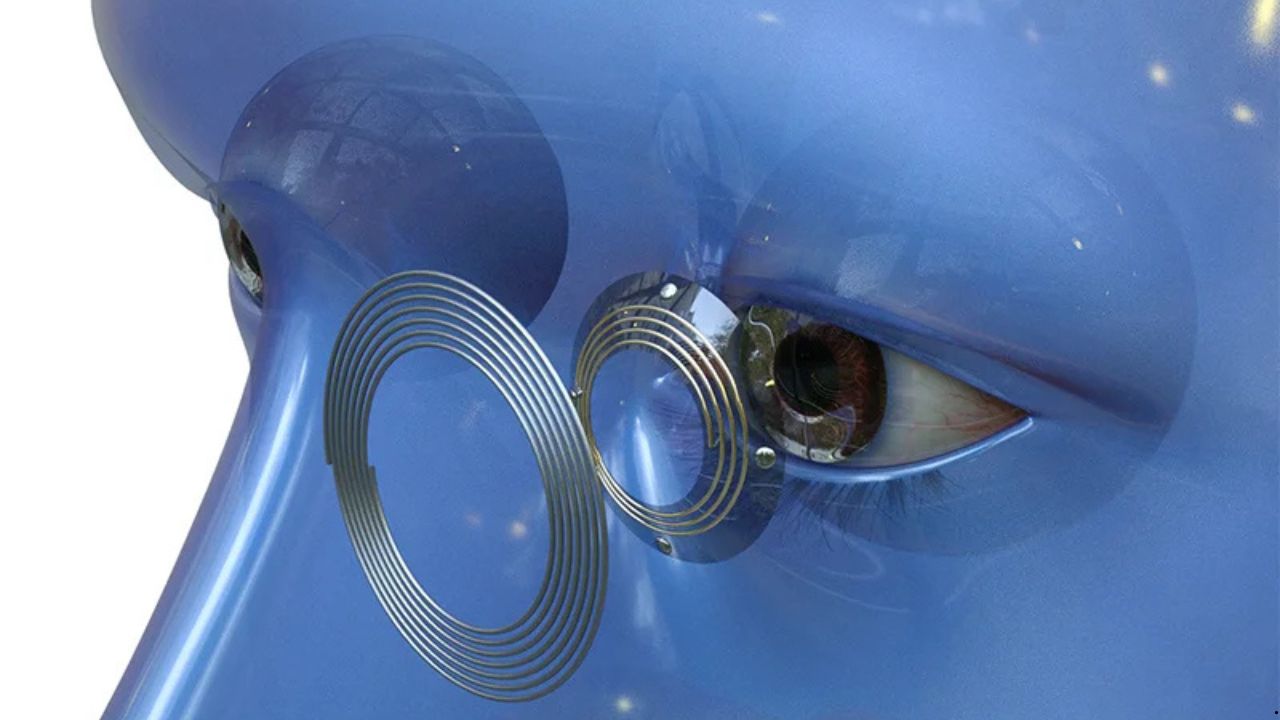
In the contemporary scientific landscape, the sheer volume and complexity of data often outpace our innate ability to process text-based information. Whether it is the frantic signaling pathways within a T-cell or the gravitational dance of binary star systems, the most profound truths of our universe frequently exist beyond the reach of the naked eye. This is where scientific illustration and animation transcend the role of mere “visual aid” to become essential cognitive tools. By synthesizing rigorous empirical data with advanced design principles, these disciplines convert abstract theories into visceral, understandable realities.
The Cognitive Architecture of Science Visualization
The human brain is optimized for pattern recognition and spatial reasoning. According to dual-coding theory, information is processed more effectively when it is presented through both verbal and visual channels. In a scientific context, a well-executed illustration does not just replicate a subject; it interprets it.
Professional illustrators use “selective emphasis” to guide the viewer’s attention. In a medical diagram of the human heart, for instance, an expert might de-emphasize surrounding tissues using transparency or desaturated colors to highlight a specific coronary artery blockage. This same cognitive principle—explored in the psychology of purchase—shows how visual systems guide attention, decision-making, and understanding.
The Precision Pipeline: From Data to Render
The hallmark of expert science visualization is its foundation in raw data. Unlike conceptual art, which prioritizes aesthetic impact, scientific animation is often a direct extension of the laboratory. The workflow typically follows a specialized trajectory:
- Data Acquisition: This involves sourcing atomic coordinates from the Protein Data Bank (PDB), volumetric data from MRI or CT scans, or mathematical simulations of physical phenomena.
- Modeling and Simulation: Using software like ZBrush for organic sculpting or Blender and SideFX Houdini for physics-based simulations. Here, the laws of thermodynamics or fluid dynamics are often applied to ensure that the “motion” of a cell or a galaxy is physically plausible.
- Shading and Lighting: This step is crucial for clarity. Subsurface scattering is used to give biological tissues their characteristic translucency, while physically-based rendering (PBR) helps in differentiating between synthetic implants and natural bone in orthopedic visualizations.
- Post-Production and Annotation: The final layer where labels, leader lines, and motion graphics are integrated to provide context and nomenclature.
The Power of the Fourth Dimension: Why Animation Wins
While a static illustration is peerless for showing structure, animation is the undisputed king of showing process. Science is rarely static; it is a series of transformations. This strength explains why video animation has become such a powerful tool—not only in science education, but also in digital communication and marketing.
Consider the process of protein synthesis. A textbook might show three distinct stages: initiation, elongation, and termination. However, a 3D molecular animation can show the stochastic, jittery reality of molecular machines, the way tRNA molecules collide and dock, and the fluid movement of the ribosome along the mRNA strand. This temporal clarity is vital for education, as it prevents the student from forming a “static” misconception of what is actually a highly dynamic system.
Ethical Considerations in Scientific Artistry
An expert in this field bears a significant ethical burden. Because visuals carry such high authority, a misleading animation can inadvertently spread scientific “misinformation.” There is a fine line between clarifying a concept and oversimplifying it to the point of inaccuracy.
For example, when depicting viruses, illustrators often use vibrant, distinct colors to separate the spike proteins from the viral envelope. In reality, these structures are smaller than the wavelength of visible light and have no “color” in the traditional sense. The expert’s role is to ensure the viewer understands that these color choices are functional metaphors, not literal descriptions. This transparency maintains the integrity of the science while maximizing the instructional value of the art.
The Real-Time Revolution: AR, VR, and Beyond
We are currently witnessing a paradigm shift from passive observation to active immersion. The integration of real-time engines, such as Unreal Engine 5, is allowing scientists and students to enter the data.
- Immersive Anatomy: Medical students can now use VR headsets to perform “virtual dissections,” rotating organs and zooming into microscopic structures in a way that physical cadavers do not allow.
- Interactive Research: Researchers can use haptic feedback tools to “feel” the resistance when trying to dock a potential drug molecule into a protein’s active site, combining visual data with physical intuition.
- Public Outreach: Museums are using Augmented Reality (AR) to overlay animated musculoskeletal systems onto dinosaur skeletons, bridging the gap between paleontology and public imagination.
The Impact on the Scientific Ecosystem
The ROI of 3D rendering is increasingly measurable across industries, from scientific research to commercial and real-estate visualization. Studies have shown that research papers accompanied by high-quality graphical abstracts or video summaries receive significantly more citations and social media engagement. In the world of biotechnology and pharmaceuticals, a high-end animation is often the “pitch” that secures millions in venture capital funding, as it allows non-specialist investors to visualize the value of a complex proprietary technology.
Ultimately, scientific illustration and animation are the translators of the modern age. They take the silent, cold language of mathematics and data and turn it into a visual narrative that resonates with the human experience. As our scientific frontiers move deeper into the subatomic and the interstellar, the role of the visual storyteller will only become more central to the progress of human knowledge.