
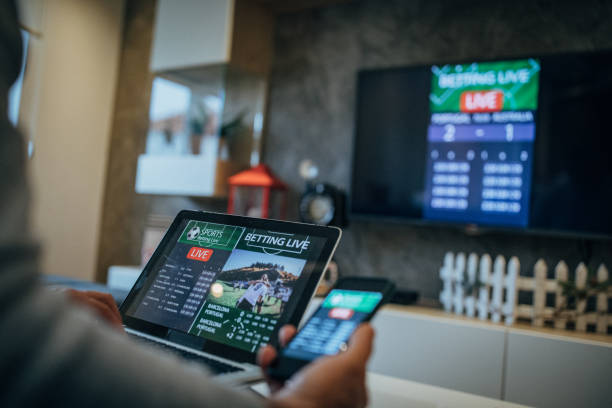
Sports betting can look remarkably straightforward when you are watching a match and selecting a market on your phone. Behind that simple interface, however, a complicated technical system is processing event data, updating prices, checking transactions and managing market activity within seconds. As connectivity has improved and sporting data has become more detailed, the mechanics supporting your betting experience have changed significantly.
You can see this most clearly during live events, where a goal, penalty or red card can trigger several technical responses almost instantly. The UK Gambling Commission describes in-play betting as a fast-paced activity where prices are continuously amended according to available information and operator liabilities. That constant movement has made technology fundamental to how modern sports betting operates.
Real-time data changes the timing
If you search for sport bet Zambia, you will find services built around live fixtures, current prices and mobile access, reflecting a wider development across the betting industry. Modern platforms depend heavily on data arriving from sporting events quickly, as feeds can provide scores, player statistics and individual actions that influence live markets. The information then moves into systems that can update prices or suspend markets.
A useful example comes from American football, where the NFL extended its technology partnership with Genius Sports in 2025. Genius Sports remained the league’s exclusive distributor of official real-time play-by-play statistics, Next Gen Stats and official sports betting data for media companies and betting operators globally. For sport bet Zambia users, the same underlying principle applies because faster reliable information allows live markets to respond more quickly.
Faster connections alter the betting window
Speed becomes crucial when you are following an event live because there can be a gap between something happening on the pitch and that information appearing on your screen. A goal can alter the likely outcome immediately, while a penalty or injury can produce a similar reaction. The technology must process that information through several stages before a new price appears.
The Gambling Commission highlights latency as a significant consideration for in-play betting because spectators at a venue can see an event before television or online viewers receive the same information. Your internet connection and device performance can also influence how quickly information reaches you. That matters when using sport bet Zambia platforms because apparent real-time access does not mean every participant receives information simultaneously.
Mobile technology changes accessibility
Smartphones have transformed how you interact with sports betting because you can follow fixtures, examine statistics, check markets and manage transactions from almost anywhere. Mobile technology has also connected betting with payment systems, becoming particularly significant in countries where mobile money is widely used for everyday transactions.
Zambian betting services demonstrate this development clearly because operators can support local currency alongside services such as Airtel Money, MTN Mobile Money and Zamtel Kwacha. Consequently, sport bet Zambia platforms show how modern betting technology can bring market access, account management and payments together within a single mobile experience. Your phone has effectively become the interface connecting several separate technical systems.
Geolocation adds another layer
When you place a bet online, the platform has to establish whether you are accessing the service from an appropriate location. Geolocation technology can help operators identify where a device is being used, meaning location checks have become another technical component sitting behind the interface you see. These systems have to process location information quickly without creating unnecessary friction.
The importance becomes clearer when you consider sport bet Zambia services operating within a defined national market. Location technology can form part of the checks surrounding access, transactions and regulatory requirements. That process happens largely in the background, so you can concentrate on the sporting event itself. The technical challenge is making these checks work reliably as platforms handle large numbers of simultaneous users.
Regulation becomes increasingly technical
Technology now affects more than speed and convenience because regulators increasingly require betting companies to maintain detailed digital records. Zambia’s Betting Act 2025 requires betting companies to keep records of their operations for six years, while electronic records of deposits and withdrawals must include transaction dates, amounts, account details and calculated levies.
The legislation also requires systems holding those electronic records to support integration with Zambia Revenue Authority systems for automated reporting and verification. That makes technology a regulatory requirement as well as a commercial tool. For sport bet Zambia operators, the software supporting transactions consequently has to accommodate financial reporting requirements alongside the everyday mechanics of accepting bets.
Live betting becomes more data-intensive
Think about a modern sporting event and the amount of information available beyond the final score. Football can generate data about possession, shots and player actions, while motorsport can produce information about pit stops, safety cars and driver strategies. More detailed feeds create opportunities for markets that react to specific moments within an event.
Formula One provides a current example because its 2026 partnership with Betway incorporates real-time data supplied by ALT Sports Data. The agreement includes in-play betting opportunities connected with elements such as pit stops and safety-car appearances. That development shows how sport bet Zambia users are part of a wider technological shift where betting markets can respond to increasingly granular sporting information.
What these changes mean for you
The biggest technological change is easy to miss because the interface often remains simple. You tap a market, review a price and confirm your selection, while numerous systems are processing information behind the scenes. Data feeds, connectivity, payments, geolocation and regulatory records all have to function together for that apparently simple interaction to work smoothly.
That is why sport bet Zambia and comparable modern betting experiences can feel so different from traditional betting. The basic concept remains familiar because you are still selecting a sporting outcome and placing a wager. The infrastructure has become considerably more sophisticated, however, as technology determines how quickly information moves, how markets react and how transactions are processed during an increasingly data-driven sporting experience.