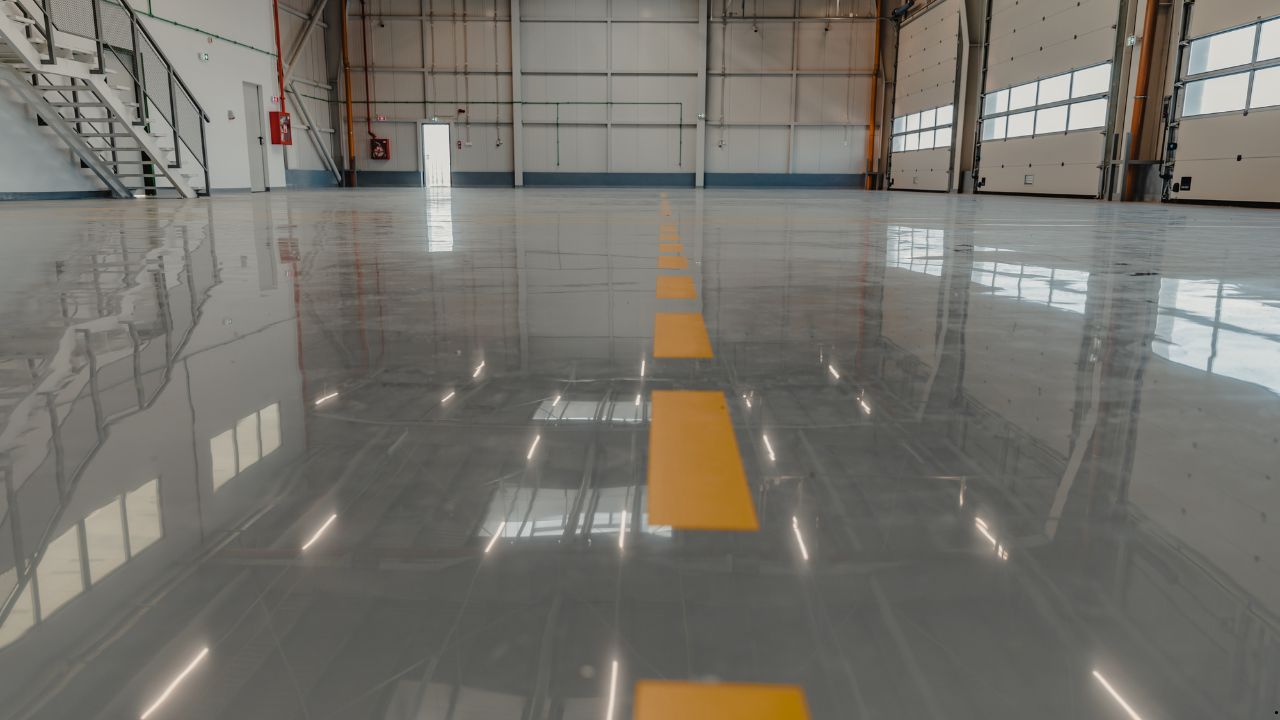
Flooring plays a far more critical role in commercial spaces than many business owners realize. Beyond aesthetics, the right flooring system affects safety, maintenance costs, durability, and even day-to-day operations. As businesses across a wide range of industries reassess their infrastructure, epoxy flooring has emerged as a practical and forward-thinking solution for commercial environments.
From warehouses and auto facilities to retail stores and restaurants, epoxy coatings are transforming how commercial properties think about their floors.
Table of Contents
The Demands of Commercial Flooring
Commercial environments are tough on surfaces. Floors must withstand constant foot traffic, heavy equipment, spills, and ongoing cleaning without breaking down or looking worn. For alternative flooring options, explore flooring solutions suitable for different spaces. Traditional flooring options—like untreated concrete, tile, or vinyl—often fall short over time, leading to cracks, stains, and costly repairs.
This is where epoxy flooring stands out. Designed to bond directly to concrete, epoxy creates a hardened surface that enhances strength while protecting the underlying slab. Learn more about transforming floors for practical and aesthetic upgrades. The result is a seamless floor that performs reliably in demanding conditions.
What Makes Epoxy Flooring Different?
Epoxy flooring isn’t just a surface coating—it’s a system. When properly applied, it becomes part of the concrete itself, creating a durable layer that resists wear and damage.
Key characteristics include:
- High load tolerance for equipment and machinery
- Resistance to chemicals, oils, and spills
- Non-porous surface that prevents moisture penetration
- Seamless finish that reduces dirt buildup
Because epoxy hardens into a solid, continuous surface, it eliminates common problem areas like grout lines and surface cracks where debris and bacteria can accumulate.
Benefits for Business Owners and Facility Managers
For commercial property owners, epoxy flooring offers both short-term and long-term advantages.
1. Reduced Maintenance Costs
Epoxy floors are easy to clean and maintain. Regular sweeping and occasional mopping are often sufficient to keep the surface looking professional. For tips on maintaining other flooring types, see maintenance tips. This simplicity can significantly reduce cleaning time and labor costs over the lifespan of the floor.
2. Improved Safety
Slip-resistant additives can be incorporated into epoxy coatings, making them safer in areas exposed to moisture, grease, or frequent spills. This is especially valuable in kitchens, service areas, and industrial facilities where employee safety is a priority.
3. Long-Term Durability
Unlike traditional flooring that may need frequent replacement, epoxy floors are designed to last. When installed correctly and maintained properly, they can perform well for many years without significant degradation.
4. Professional Appearance
Epoxy flooring offers a clean, modern look that enhances the overall appearance of a commercial space. With a variety of finishes available—from subtle matte surfaces to high-gloss coatings—businesses can match their flooring to their brand image without sacrificing performance.
Commercial Environments That Benefit Most
Epoxy flooring is highly adaptable, making it suitable for many types of commercial properties, including:
- Warehouses and distribution centers
- Auto repair shops and service bays
- Restaurants and commercial kitchens
- Retail stores and showrooms
- Medical and laboratory facilities
- Manufacturing and production spaces
Each of these environments requires flooring that balances durability, cleanliness, and safety—criteria epoxy systems are well-equipped to meet.
Installation Considerations
While epoxy flooring offers many advantages, results depend heavily on proper installation. Surface preparation is critical, as the concrete must be clean, level, and structurally sound before the coating is applied. Professional application ensures proper adhesion, curing, and long-term performance.
Business owners should also consider factors such as curing time, foot traffic schedules, and environmental conditions when planning an epoxy flooring project. With thoughtful planning, installation can often be completed with minimal disruption to operations.
Why Location Matters for Commercial Flooring Decisions
Environmental factors such as temperature changes, humidity, and usage patterns can affect how flooring systems perform over time. In large and diverse regions like Los Angeles County, Commercial properties vary widely in function and exposure. Choosing a flooring solution that can adapt to these conditions is essential. Read more about flooring options to make informed decisions for your space.
Businesses exploring durable, long-lasting solutions often research commercial epoxy Los Angeles county options to better understand how epoxy systems are applied in real-world commercial settings and what factors influence long-term performance.
A Practical Investment for the Future
Epoxy flooring is more than a cosmetic upgrade—it’s a strategic investment in efficiency, safety, and durability. By reducing maintenance demands and extending the life of commercial floors, epoxy systems help businesses control costs while maintaining professional standards.
As commercial properties continue to evolve, flooring solutions that combine performance with practicality will remain in high demand. Epoxy flooring stands out as a reliable option for businesses looking to future-proof their spaces without compromising on quality.