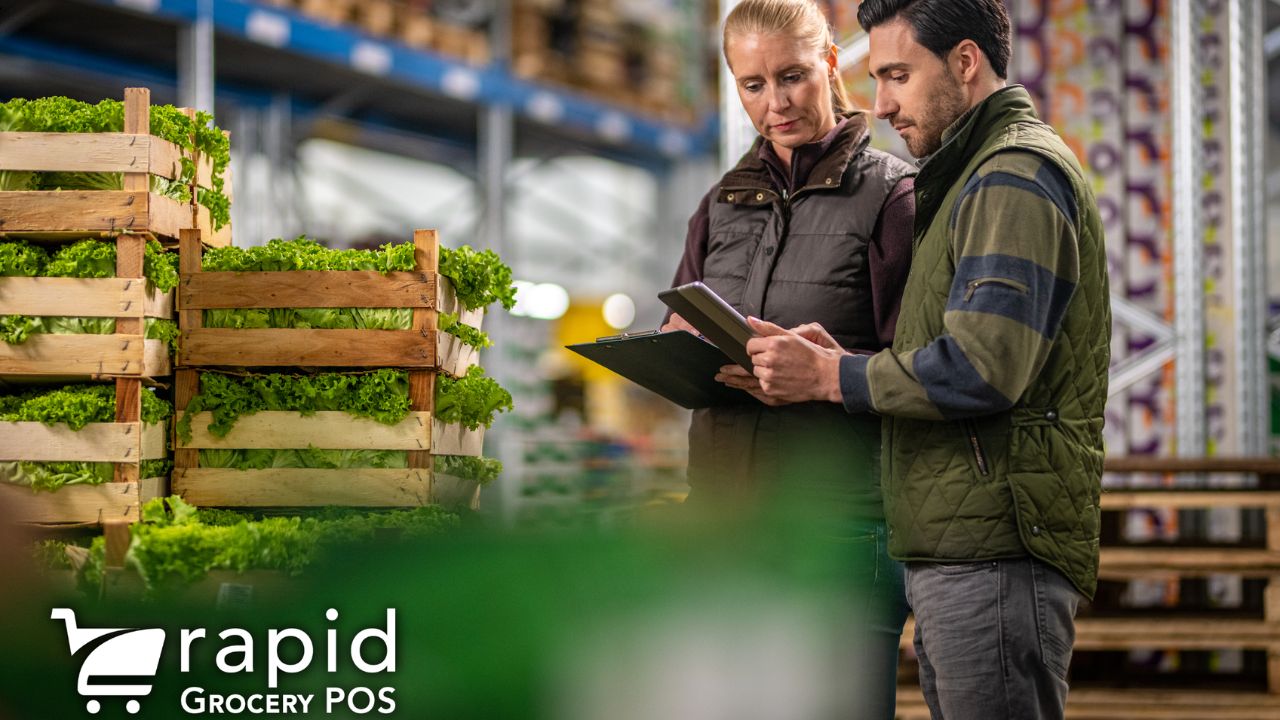
You scan shelves every day, probably thinking the same thing most managers do: why do stockouts still happen, and why does spoilage keep eating into margins? But here’s the thing: right now, chains are rolling out RFID and AI forecasting at a pace that’s hard to ignore. Tracking thousands of SKUs no longer feels like guesswork. If you’ve ever watched a pallet of produce go bad because the system said “all good,” you know the frustration. Grocery store technology is changing that, one alert at a time. The shift isn’t just about fancy gadgets; it’s about reclaiming control over operations that used to feel chaotic.
The numbers tell the story clearly. Independent modeling from the Centre for Economics and Business Research projects the global economic cost of food waste across the supply chain hitting $540 billion in 2026, up from $526 billion last year, as outlined in Avery Dennison’s January report.
Many chains lean on modern grocery POS software now, the kind that syncs checkout scans straight to stock levels and sends reordering alerts before things run dry—but a true grocery POS system takes it further by tying everything together in real time. That integration means you actually see what’s moving and what’s sitting around, so decisions on orders and promotions make sense instead of feeling like shots in the dark. No more hoping the spreadsheet is right. Small oversights that once cost hundreds in lost sales or spoiled goods are becoming much rarer.
Table of Contents
RFID Commands Fresh Department Precision
Fresh departments are where waste hurts most, and RFID is stepping up. Walmart brought tags into meat, bakery, and deli late last year; Kroger did the same for better use-by tracking. These inventory tracking tools push accuracy way past the old manual 50-60% range, reaching 99% or better, as Grocery Dive laid out in their analysis of in-store shifts.
The payoff shows up fast. Fewer empty shelves mean happier customers. Less overstock means less money rotting away. You end up avoiding those moments where a customer walks away empty-handed, or where backroom bins become profit graveyards. It’s straightforward relief for the bottom line, and the difference feels noticeable almost immediately after implementation.
AI Forecasting Masters Volatile Demand
AI brings real prediction power to grocery inventory management. BCC Research pegged the global AI market for food retail and e-commerce at $2.7 billion in 2024, heading toward $13.4 billion by 2030 at a 30.8% compound annual growth rate. Systems pull in weather patterns, local happenings, past sales—everything—to guess demand more accurately than gut feel ever could.
What if your system flagged a weekend rush ahead of time? Broader AI tools even help with procurement, anticipating needs and cutting excess. Check out how AI procurement solutions are reshaping things on TechAger. It all helps balance stock levels without the extremes of running out or overbuying perishables that cost a fortune to replace. Let’s face it, no one wants to throw away money on items that never sell. When demand spikes unexpectedly—like during holidays or local events—these forecasts prevent panic ordering and keep shelves steady.
Sensors and Automation Slash Shrink Losses
Sensors tied to the Internet of Things keep watch on temperature, shelf life, movement—all of it—non-stop. Impinj’s 2025 Food and Grocery report points out RFID hitting 99% accuracy with double-digit shrink drops. Yet only about one-third of grocers get full real-time 360-degree visibility, even if most think they do.
Alerts come right away when spoilage risks spike. Grocery Dive notes approaches like this can trim food waste by up to 30%, especially with perishables. You save money and headaches instead of discovering problems after the fact. Sounds simple, but it adds up quickly in smart retail systems. The quiet confidence that comes from knowing nothing is slipping through the cracks is hard to overstate.
Automation Software Powers Backroom Gains
Look at Symbotic’s automation setups. Their AI-driven retail automation software shrinks storage footprints by up to 40%, hits 99.9% retrieval accuracy across thousands of SKUs, and makes high-density work in tight spaces.
- Reduces footprint up to 40%
- 99.9% retrieval accuracy
- High-density control in limited areas
Retailers also need to understand budgeting before adopting these systems, and learning about POS system cost helps businesses plan smarter investments in automation and avoid unexpected expenses. Everything connects better, supporting grocery inventory management no matter your size. The backroom stops being a bottleneck and starts feeling like an asset instead.
Real-Time Tracking Revolutionizes Store Operations
Tie it all together with grocery store inventory management software, and operations link up end to end. A POS inventory system updating instantly after every sale closes the gap between floor and back office. Deloitte highlights how barcodes and RFID enable real-time inventory tracking of shelf life, temperature, routing, optimizing stock and cutting recall risks.
Gartner calls out Ambient Invisible Intelligence as a leading trend, low-cost tags enabling massive tracking of perishables minus manual work. McKinsey frames this era as the tech race, with grocers shifting from pilots to full AI and analytics for shelf tweaks and shrink cuts. Accenture finds 56% of grocers prioritizing RFID for visibility and omnichannel flow. The pieces are falling into place for supermarket POS software users, too. Daily routines become smoother, and surprises become fewer.
Master the Grocery Tech Shift for Lasting Control
RFID, AI, sensors, platforms—they converge into something fundamental. Manual counting and hoping for the best? That’s fading. Automation brings accuracy and less waste without the old headaches. Owners and managers embracing these inventory tracking tools set up for better profits and smoother days in a tough market.
Stay ahead. Explore tools that give real-time control fitted to your store. Technology shifts guesswork to precision, and what used to be losses can turn into real gains. No magic, just smarter systems doing what they should.