Key Takeaways:
- Fill-in puzzles rely on logic and word placement instead of clues, using a provided word list.
- Organizing words by length and analyzing the grid structure improves solving efficiency.
- Start with unique-length and longest words to create a strong foundation.
- Use cross-referencing at intersections to narrow down correct placements.
- Review and adjust entries as needed; trial and error is part of the process.
- Regular practice builds speed, accuracy, and overall puzzle-solving confidence.
Table of Contents
Understanding Fill-In Puzzles
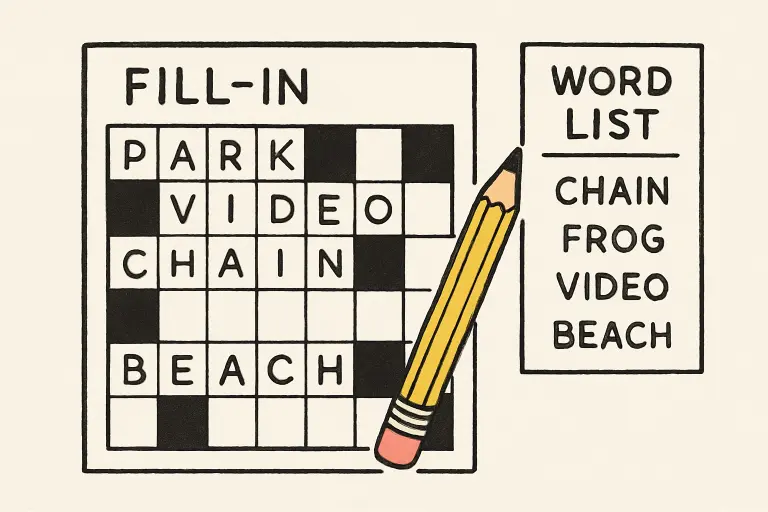
Fill-in puzzles provide a unique and entertaining challenge for word game fans. These puzzles, also called “fill-ins,” present you with a crossword-style grid and a list of words. Unlike traditional crosswords, you will not find clues to solve; instead, your task is to strategically fit each word into the correct space in the grid. To find plenty of fill-in puzzle examples and additional resources, visit this website for a broad selection and tools to get started.
What makes fill-in puzzles especially satisfying is the blend of logic and vocabulary skills required. Every word must fit perfectly, with length and shared letters at intersections guiding each placement. The entire list is used, and correct completion leaves no unanswered clues or empty boxes. If you appreciate games that test pattern recognition and critical thinking, fill-in puzzles offer the perfect activity.
Solving your first fill-in puzzle may seem overwhelming, but by following a clear series of steps, you can tackle grids with increasing confidence. Each puzzle is like a mini-mystery, and with patience and practice, your solving speed and accuracy will improve.
Materials Needed
- A fill-in puzzle grid
- A list of words to place in the grid
- A pencil and eraser
Step 1: Analyze the Word List
Before putting pencil to paper, carefully examine your list of words. Organize them by word length, either by writing new grouped lists or highlighting words of matching lengths. This approach immediately shows you how many possible candidates there are for each opening in the puzzle and prevents wasted time trying to fit incompatible options. Some puzzles print these groups by default, but if not, take the time to prepare it yourself.
Step 2: Identify the Grid’s Structure
Look closely at the puzzle grid. Find the longest open horizontal or vertical spaces, as well as any columns or rows that are unusually short. In most fill-ins, the longest and shortest words are fewer in number, reducing guesswork for those positions. Mark these anchor spaces or jot down their lengths on a scrap of paper for quick reference.
Step 3: Place Unique-Length Words First
Locate words in your list that are the only ones with their specific length. These are guaranteed to match with unique-length openings in the grid. Place these words first, as this will immediately fill out sections of the puzzle and provide key letters that restrict the remaining options for intersecting words. This method gives you an immediate advantage and a solid head start.
Step 4: Use Cross-Referencing
With your anchor words in place, start filling in the intersecting spaces. As you progress, use the shared letters at intersection points to guide which words are eligible for each blank. This cross-referencing method is one of the most effective puzzle-solving strategies, allowing you to quickly discard options that don’t work.
Step 5: Fill in the Remaining Words
Once the main framework is filled, look for letter patterns or intersections that only a few words from your list can match. Sometimes, filling smaller words last is effective because they must work with every letter already filled in. If you run into a space where no word fits, review your recent placements, as an error may have occurred earlier in the sequence. It is common to erase and retry an area before achieving the right configuration.
Step 6: Review and Finalize
When you think the grid is complete, scan every word both horizontally and vertically. Confirm that every entry is a word from your original list and that there are no leftover words or pieces. A finished fill-in puzzle should feature no empty squares and each word placed perfectly. This final review step ensures accuracy and helps you internalize effective solving habits for future puzzles.
Additional Tips
- If you enjoy puzzle-solving beyond fill-ins, trying a few fun jigsaw puzzles can also sharpen your focus and pattern recognition. Begin by placing the longest words, as they often intersect with the most spaces and offer more clues for other entries.
- Always use a pencil so you can easily erase and adjust entries when conflicts arise.
- Practice often with new grids, and you can also try a quick memory game to improve concentration and recall skills.
- Read puzzle magazines and websites for advanced strategies and a wide selection of fill-in challenges, which also helps you learn from experts.
Solving fill-in puzzles is not just a test of vocabulary but also of logical deduction and perseverance. Make a habit of approaching each puzzle methodically, and you will find your success rate—and enjoyment—growing with every session.
Final Thoughts
Fill-in puzzles offer a simple yet highly engaging way to sharpen logic, focus, and problem-solving skills. With a methodical approach and regular practice, they become easier and more enjoyable over time. Whether you’re a beginner or a seasoned puzzler, these games provide a rewarding mental workout that’s both relaxing and satisfying.