
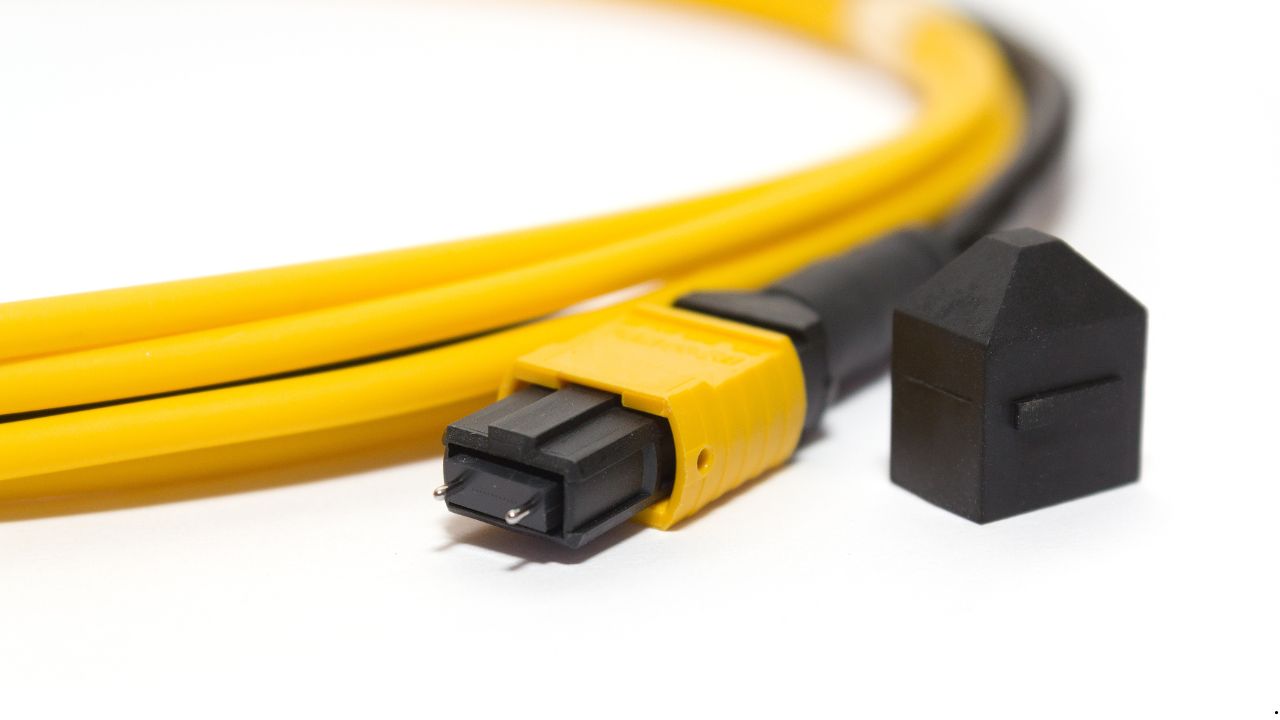
In the rapidly evolving landscape of data center interconnections and high-speed network infrastructures, MPO (Multi-Fiber Push-On) cables have emerged as a cornerstone technology, enabling efficient, high-density connectivity for 40GbE, 100GbE, and beyond. As critical components of structured cabling systems, MPO cables are primarily categorized into two types: Single Mode (SM) and Multimode (MM) MPO cables. Each variant is engineered to address distinct network requirements, leveraging unique optical properties to optimize performance across different distances, bandwidth demands, and application scenarios.
Fundamental Definitions: Single Mode vs Multimode MPO Cables
At their core, the distinction between Single Mode and Multimode MPO cables lies in how they transmit optical signals through the fiber core.
Single Mode MPO Cables
Single Mode MPO cables are designed with a narrow fiber core (typically 9 micrometers in diameter) that allows only a single path—known as the “fundamental mode”—for optical signals to travel. This design minimizes signal dispersion, the phenomenon where light signals spread out as they propagate, ensuring that data remains intact over long distances. Single Mode fibers operate primarily with laser light sources (e.g., VCSELs or DFB lasers) and are optimized for high-bandwidth, long-haul transmissions. Compliant with international standards such as IEC 61754-7 and TIA 604-5, Single Mode MPO cables deliver consistent performance in demanding enterprise and data center environments.
Multimode MPO Cables
Multimode MPO cables feature a larger fiber core (commonly 50 or 62.5 micrometers) that supports multiple propagation paths, or “modes,” for optical signals. This design accommodates lower-cost multimode light sources like LEDs (Light-Emitting Diodes) and VCSELs (Vertical-Cavity Surface-Emitting Lasers), making them a cost-effective choice for short-range applications. However, the multiple modes inherent in these cables lead to modal dispersion, which limits transmission distance. Multimode MPO cables are also compliant with key industry standards, ensuring compatibility with structured cabling systems and network equipment. They are further classified by specific bandwidth and distance capabilities, with newer variants offering enhanced performance for higher-speed networks.
Key Technical Differences
To fully understand the performance gap and application suitability of Single Mode and Multimode MPO cables, it is essential to examine their technical specifications side by side.
Core Diameter and Mode Propagation
As noted earlier, Single Mode MPO cables utilize a 9μm core, which restricts light to a single mode. This narrow core reduces modal dispersion to near-negligible levels, enabling signals to travel farther without degradation. In contrast, Multimode MPO cables use larger cores (50μm or 62.5μm) that support hundreds of modes. While this allows for higher light-gathering efficiency and lower-cost light sources, the varying path lengths of the modes cause signals to arrive at the receiver at different times, limiting distance and bandwidth over long hauls.
Transmission Distance and Bandwidth
Single Mode MPO cables excel in long-distance transmissions. They can support 10GbE signals up to 40km, 40GbE and 100GbE up to 10km, and even 400GbE over several kilometers, making them ideal for inter-data center connections and long-haul backbone networks. Their bandwidth capacity is virtually unlimited for practical purposes, as chromatic dispersion (the primary dispersion type in Single Mode fibers) can be mitigated with dispersion-shifted or non-zero dispersion-shifted fibers.
Multimode MPO cables are optimized for short-range applications. Advanced Multimode fibers can support 100GbE up to 400 meters and 400GbE up to 150 meters, while standard variants support 100GbE up to 300 meters. Their bandwidth is specified as Modal Bandwidth (MB), with top-tier options offering 4700 MHz·km at 850nm, making them suitable for high-density, short-reach connections within data centers, such as server-to-switch links and rack-to-rack interconnections.
Light Sources and Cost
Single Mode MPO cables require laser-based light sources (e.g., DFB lasers), which are more expensive than the LEDs or VCSELs used with Multimode MPO cables. Additionally, Single Mode components (connectors, transceivers) tend to have higher upfront costs due to their precision manufacturing requirements. However, their long-distance capabilities reduce the need for signal repeaters or amplifiers, leading to lower operational costs over time for large-scale networks.
Multimode MPO cables leverage lower-cost VCSELs and LEDs, making them a budget-friendly option for short-range deployments. The larger core also simplifies termination and installation, reducing labor costs. For data centers with limited distances between equipment, Multimode MPO cables offer a cost-effective balance of performance and affordability.
Advantages of Single Mode MPO Cables
Single Mode MPO cables offer several distinct advantages that make them indispensable for specific network scenarios:
Long-Distance Performance: With minimal dispersion, they support transmissions over tens of kilometers without signal degradation, eliminating the need for costly signal boosters.
Unmatched Bandwidth: They can handle ultra-high-speed networks (400GbE and beyond) with ease, future-proofing infrastructure for growing data demands.
Reliability in Demanding Environments: Enhanced mechanical and optical features (similar to premium MTP cables) ensure durability and stability in enterprise networks and harsh conditions, such as outdoor or industrial settings.
Space Efficiency: Like all MPO cables, Single Mode variants enable high-density connectivity, reducing the number of cables needed and optimizing rack space in data centers.
Advantages of Multimode MPO Cables
Multimode MPO cables are a preferred choice for short-range, high-density applications due to their unique benefits:
Cost-Effectiveness: Lower upfront costs for components and installation make them ideal for small to medium-sized data centers and localized networks.
High-density connectivity: Support for multiple fibers in a single connector (up to 12 or 24 fibers) enables efficient rack-to-rack and server-to-switch connections, reducing cable clutter.
Easy Installation and Termination: The larger core simplifies termination processes, reducing installation time and labor costs.
Compatibility with High-Speed Standards: Advanced variants support 400GbE and beyond for short distances, meeting the demands of modern data centers.
Scalability: They integrate seamlessly with structured cabling systems, allowing for easy expansion as network demands grow.
Use Case Scenarios: Choosing the Right Cable
The selection between Single Mode and Multimode MPO cables depends on the specific requirements of the network, including distance, speed, cost, and environment.
When to Choose Single Mode MPO Cables
Inter-Data Center Connections: Transmitting data between geographically separated data centers (e.g., campus-wide or city-wide networks) requires the long-distance capabilities of Single Mode cables.
Long-Haul Backbone Networks: Enterprise networks spanning large areas (e.g., multinational corporations) rely on Single Mode MPO cables to connect regional offices and data hubs.
Ultra-High-Speed Networks: Deployments requiring 400GbE or higher speeds over distances exceeding 400 meters benefit from the bandwidth and dispersion control of Single Mode fibers.
Outdoor or Harsh Environments: Single Mode MPO cables, especially IP67 waterproof variants, are suitable for outdoor installations or industrial settings where durability is critical.
When to Choose Multimode MPO Cables
Intra-data center connectivity: Short-range connections within a data center, such as server-to-top-of-rack (ToR) switches, rack-to-rack links, and storage area network (SAN) connections, are ideal for Multimode cables.
High-Density Deployments: Data centers with limited rack space benefit from the compact design of Multimode MPO cables, which support multiple fibers in a single connector.
Cost-Sensitive Projects: Small to medium-sized businesses or data centers with tight budgets prefer Multimode MPO cables for their lower upfront and installation costs.
Short-Reach High-Speed Networks: 40GbE, 100GbE, or 400GbE deployments within 400 meters (depending on the Multimode variant) are efficiently supported by advanced Multimode MPO cables.
Single Mode and Multimode MPO cables are both vital components of modern high-speed network infrastructures, each tailored to address specific distance, speed, and cost requirements. Single Mode MPO cables excel in long-haul, ultra-high-speed applications, offering unmatched reliability and scalability for enterprise and inter-data center networks. Multimode MPO cables, on the other hand, provide a cost-effective, high-density solution for short-range data center connections, leveraging lower-cost components and simplified installation.