
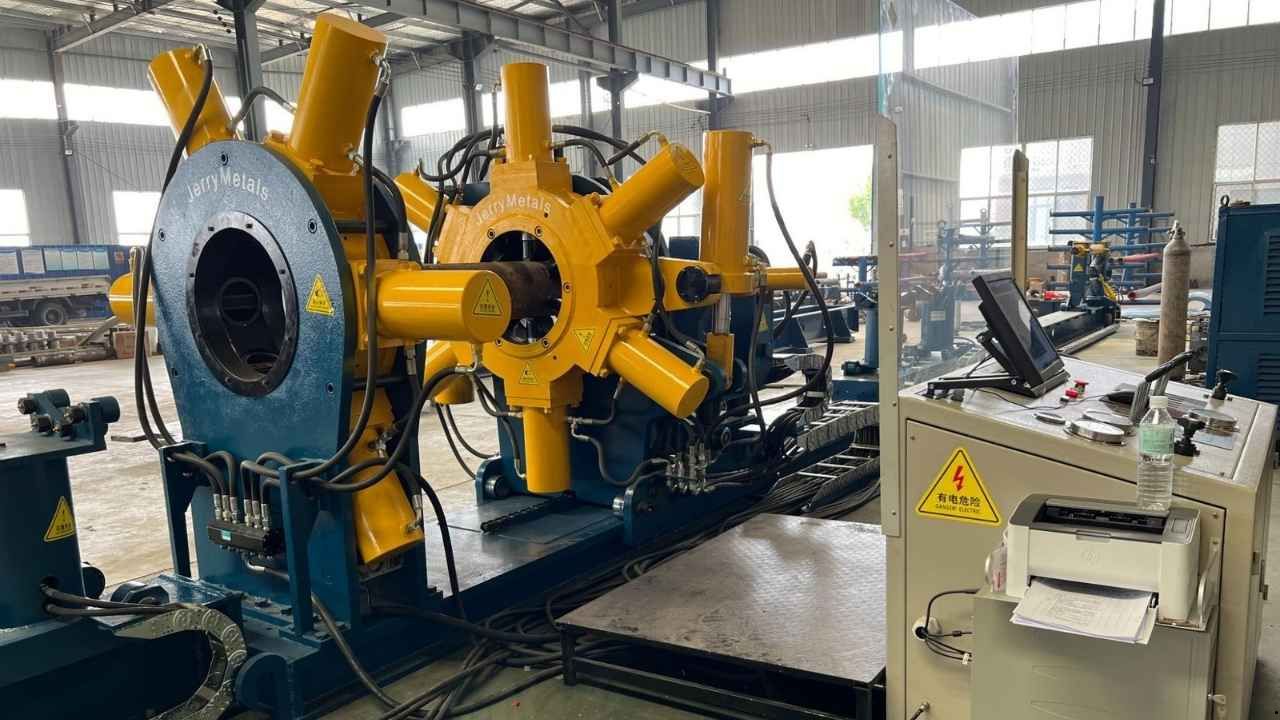
A Hydraulic Bucking Unit is widely used in oil and gas workshops because it combines strong clamping, stable power delivery, and reliable control for making up and breaking out threaded connections. In a world where premium connections, tight tolerances, and demanding quality expectations are increasingly common, connection assembly can no longer depend on “operator feel” alone. A Hydraulic Bucking Unit helps workshops turn connection work into a repeatable process—one that protects high-value threads, reduces rework, and supports consistent performance across different shifts and operators.
Whether the facility handles tubing, casing, drill pipe, tool joints, or completion assemblies, the goal is the same: build connections in a controlled way and avoid damage that creates downtime or rejection. That is why a Hydraulic Bucking Unit often becomes a core station in modern service bases and manufacturing-style workshops.
Why a Hydraulic Bucking Unit Fits Heavy-Duty Connection Work
Hydraulics are well-suited to high-force industrial tasks. A Hydraulic Bucking Unit can deliver high torque density and maintain stable output under changing loads. In real workshop conditions, the load during make-up is not constant. Friction changes, shoulder contact begins, and the resistance can rise rapidly near final. A Hydraulic Bucking Unit can be designed to handle these transitions smoothly, helping the operator maintain control without sudden loss of stability.
A second advantage of a Hydraulic Bucking Unit is durability. Many workshops operate in dusty, humid, or harsh environments where equipment must tolerate long hours and repeated cycles. With proper oil management and preventive checks, a Hydraulic Bucking Unit can be a long-life asset that performs reliably day after day.
Hydraulic Bucking Unit Workflow: Turning Daily Operations Into a Standard Routine
A well-run Hydraulic Bucking Unit station typically follows a repeatable routine. While procedures differ by connection type, most workshops rely on a similar sequence:
- Preparation: clean the connection area, confirm lubrication, inspect for damage.
- Positioning: place the pipe or tool into stable supports and confirm alignment.
- Clamping: apply controlled clamping with suitable jaw inserts.
- Rotation: perform make-up or break-out with stable motion and controlled speed.
- Verification: check final condition and confirm results against the procedure.
The value of a Hydraulic Bucking Unit is not only in power—it is in the repeatability this workflow creates. When every operator follows the same sequence, results become consistent and predictable, and it becomes easier to spot abnormal behavior early.
Hydraulic Bucking Unit Alignment Control: A Hidden Key to Quality
Alignment is one of the most underrated factors in connection assembly. Misalignment can cause uneven thread loading, abnormal friction patterns, and higher risk of galling or premature wear. A Hydraulic Bucking Unit supports alignment by using rigid frames, stable fixtures, and controlled clamping geometry that helps maintain the connection axis during rotation.
In practice, workshops that invest in a Hydraulic Bucking Unit often see fewer “mystery problems” once alignment becomes part of the standard routine. Many issues blamed on thread quality or pipe condition are actually caused by inconsistent handling. A Hydraulic Bucking Unit reduces those inconsistencies.
Hydraulic Bucking Unit Jaw Strategy: Protect the Surface Without Losing Grip
A Hydraulic Bucking Unit can generate large clamping forces, which is great for grip—but it also increases the importance of jaw strategy. The wrong jaw profile, worn inserts, or debris in the clamping area can leave marks or scratches, especially on premium threads or coated tubulars.
This is why many workshops maintain multiple jaw sets for the Hydraulic Bucking Unit. A typical approach is to match jaw inserts to the job: stronger grip solutions for tougher surfaces and non-marking options for sensitive surfaces. A workshop that uses a Hydraulic Bucking Unit effectively also enforces basic discipline: clean the clamping area frequently, inspect jaw wear, and replace inserts before they cause slip or surface damage.
Hydraulic Bucking Unit Oil Management: Performance Depends on Clean, Stable Hydraulics
One topic that directly affects Hydraulic Bucking Unit performance is oil condition. Contamination can reduce valve and seal life, create unstable behavior, and increase downtime. Temperature also matters. If oil becomes too hot, viscosity changes and response may become less consistent. If oil is too cold, the system can feel sluggish, especially during start-up.
Because of that, a Hydraulic Bucking Unit benefits from practical maintenance habits: monitor oil level, keep filtration in good condition, check hoses and fittings regularly, and maintain stable operating temperature. For related equipment insights, explore innovative heating solutions that improve system efficiency. These steps support consistent clamping and smooth torque delivery—key reasons why workshops select a Hydraulic Bucking Unit in the first place.
Hydraulic Bucking Unit Productivity: Where the Gains Come From
Many buyers think the biggest advantage of a Hydraulic Bucking Unit is high torque output. In reality, the productivity gains often come from reduced interruptions. When clamping is stable and motion is controlled, operators spend less time re-clamping, correcting alignment, or handling partial slips. Over a full shift, those avoided interruptions can improve throughput significantly.
A Hydraulic Bucking Unit also supports smoother scheduling. In many facilities, connection assembly becomes a bottleneck that affects inspection, packaging, and dispatch. A consistent Hydraulic Bucking Unit station helps stabilize that workflow.
Hydraulic Bucking Unit Selection: What You Should Define Before Requesting a Quote
To select the right Hydraulic Bucking Unit, workshops typically define:
- Pipe/tool size range the Hydraulic Bucking Unit must cover
- Required working torque and maximum torque for the Hydraulic Bucking Unit
- Connection types and any surface protection requirements for the Hydraulic Bucking Unit
- Expected cycle volume per day for the Hydraulic Bucking Unit
- Workshop layout, handling method, and operator workflow around the Hydraulic Bucking Unit
This information helps match the Hydraulic Bucking Unit configuration to real operations rather than generic specifications. For practical installation tips in workshop setups, consider reviewing step-by-step guidance.
Hydraulic Bucking Unit Value: A Long-Term Process Upgrade
A Hydraulic Bucking Unit is not only a piece of equipment—it is a process upgrade. With a defined routine, proper jaw selection, and basic oil management discipline, a Hydraulic Bucking Unit reduces rework, protects high-value connections, improves safety, and increases workshop consistency. For facilities that rely on threaded connections every day, a Hydraulic Bucking Unit becomes a dependable core station that supports quality and productivity at the same time