
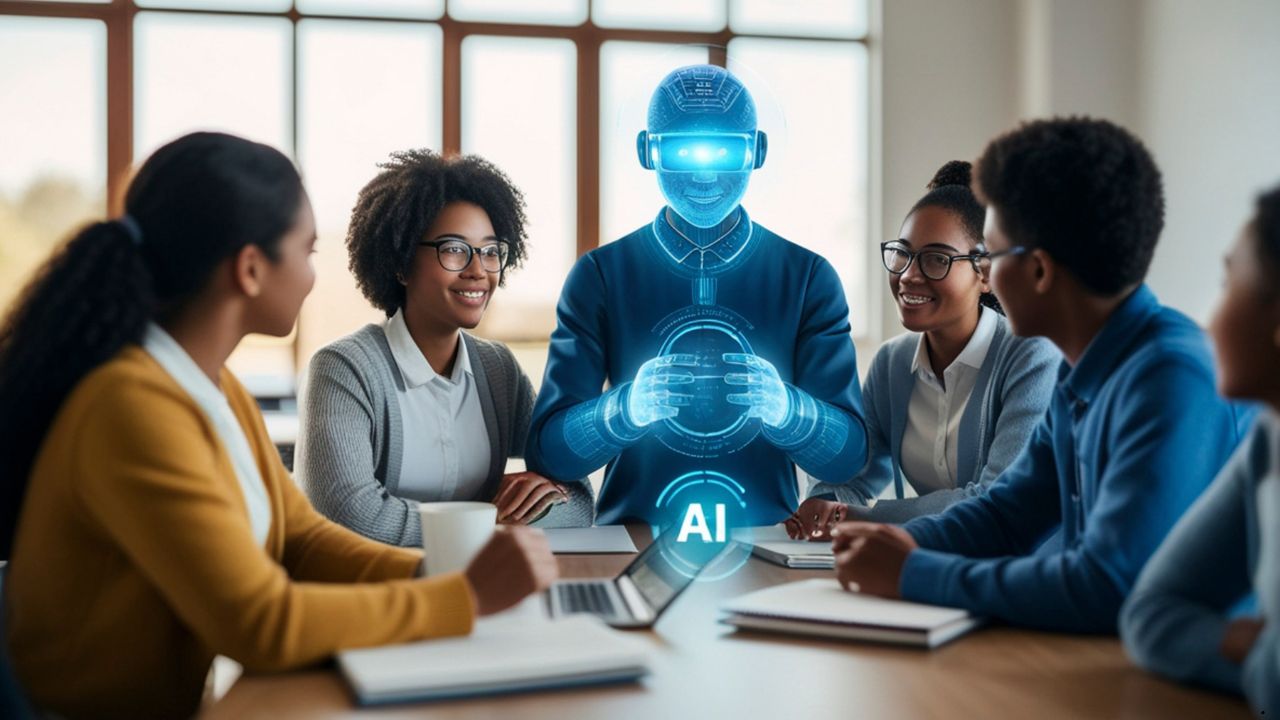
The strategy room just got a new seat.
It’s late evening. Your dashboards glow. Your campaigns ripple across channels like waves in a storm. Data piles high while deadlines inch closer. And in that in-between space, somewhere between human intuition and spreadsheet fatigue, a new strategist quietly takes their seat.
It doesn’t sleep. It doesn’t second-guess. It doesn’t ask for a coffee break.
It just learns. And then it decides.
As agencies scale, as channels multiply, and as client expectations spike to the ceiling, the old strategy models start to creak. You can’t out-hustle complexity. You need something smarter.
Welcome to the era where AI isn’t just a tool. It’s your sharpest strategist. Now, let’s cut to the chase and find out why AI is overtaking humans as a strategist for our agency.
Why traditional agency strategy is reaching its limits
First things first. The marketing ways of traditional agency settings have reached saturation because of three primary reasons.
- Too many channels, too little time.
Modern strategy isn’t about picking a channel. It’s about sequencing six of them in the right order, with the right tone, at the right time, across dozens of segments.
Email. Paid media. Organic search. Social. Conversion optimization.
Lifecycle automation.
No human brain can spin all those plates in real time without dropping a few.
- Data volume has outpaced human interpretation.
Millions of behavioral signals. Dashboards that refresh every five minutes. Insights that expire before they’re even read.
Human strategists still rely on quarterly reviews and manual analysis. But the pace of marketing doesn’t wait for meetings.
- Client expectations have shifted.
Clients want velocity without volatility. They expect:
- Faster performance ramps
- Clear attribution
- Smart forecasting
- Always-on optimization
Saying “we’ll get back to you next week” now feels like a shrug.
And that’s precisely what led to growth, which outpaced traditional agencies.
The evolution of AI inside agencies
Phase 1, AI as an Assistant
At first, AI was the intern you never had to onboard. It helped write content drafts, suggested keywords, and tested subject lines. Useful, but not strategic.
Phase 2, AI as an Analyst
Then it became your eyes and ears. It flagged anomalies. It forecasted performance. It pulled patterns from chaos. Still, it waited to be asked.
Phase 3, AI as a Strategist
Now, it’s the thinker—driven by insights from modern AI agencies that redefine how businesses scale.
It allocates budget based on intent signals. It prioritizes channels based on audience behavior. It models out next-best actions before your strategist opens their laptop.
This isn’t the future. This is the inflection point.
We will mostly focus on AI as a strategist in this article.
What it means for AI to act as a strategist
When you prioritize AI to act as a strategist, it means three things:
- Strategy without fatigue
AI never slows down. It doesn’t need Monday mornings or energy drinks. It reviews performance constantly and adjusts faster than even your most caffeinated team.
- Decision-making at machine speed
Campaigns don’t wait for the next check-in. AI makes real-time optimization possible. Test, learn, adjust, all before the dashboard loads.
- Strategy built on evidence, not guesswork
Instead of intuition-led plans that “feel right,” strategy becomes driven by millions of micro-signals. It’s not just smarter. It’s accountable.
Now, let’s see what the domains are where AI topples human minds.
Strategic areas where AI outperforms humans
Here are five key strategic areas where AI performs better than humans.
- Customer segmentation
AI doesn’t just group by industry or persona. It clusters audiences based on live behaviors, engagement paths, and intent signals, creating segments that shift daily.
- Channel orchestration
It decides when to use email, when to pause paid, when to trigger SMS, and when to go dark. AI sequences like a conductor, not a technician.
- Budget optimization
Real-time reallocation. AI spots diminishing returns and shifts spend accordingly. You don’t lose money wondering what’s underperforming.
- Content strategy
From predicting content fatigue to identifying topics on the rise, AI analyzes what works and what’s about to stop working, before it shows in the numbers.
- Lifecycle mapping
AI doesn’t think in funnels. It maps entire journeys, flags churn risks, and recommends the next action for every single user, personalized and predictive.
What AI can do that human strategists can’t
Here are three core advantages of using AI tools over human strategists.
- AI tools detect patterns invisible to the eye.
Correlations between time-of-day engagement and churn risk? AI finds them. Changes in channel preference before a conversion spike? AI logs it.
- AI tools simulate outcomes before spending a dollar.
AI can run “what if” scenarios, adjusting creative, budget, channel mix, and predict how each path might perform. You get strategic clarity without risk.
- AI tools learn from every interaction instantly.
Humans need time to digest results. AI learns from every open, every scroll, every bounce. The feedback loop never ends.
What AI still can’t (and shouldn’t) do
Here are four areas where AI falls short (but it’s not crucial anyway).
- In understanding brand nuance
Voice. Culture. Subtle emotion. These live in the gray areas where humans shine. AI can mimic tone, but it can’t truly feel it.
- In replacing human creativity
AI can iterate, but it can’t invent. It can optimize a headline, but it doesn’t dream in metaphors. Strategy needs imagination.
- In making ethical or value-based decisions
AI lacks a moral compass. Humans must decide how far is too far, which tactics cross the line, and which trade-offs aren’t worth it.
- In building client relationships
Strategy is trust. It’s context. It’s a conversation. Clients buy a partnership, not platforms.
The new agency operating model: Human + AI
The new-age agencies have devised a hybrid model to develop the most effective strategies. Here are four easy steps in which it operates.
- Strategists become architects. They stop micromanaging deliverables and start designing the systems that scale decisions.
- Creative teams get smarter inputs. Instead of staring at blank pages, creatives get briefs backed by data. The guesswork fades. The impact grows.
- Operations become predictable. With AI removing randomness from reporting and optimization, processes stabilize. Teams breathe easier.
- Agencies shift from reactive to proactive. AI flags issues before they become client escalations. Strategists show up with solutions, not apologies.
Now, let’s see some real-life scenarios of how AI-driven strategies could be useful for agencies.
Real-world use cases of AI-driven strategy in agencies
Here are some examples of how AI-driven strategies can be helpful for agencies.
- Predictive campaign planning
Predictive campaign planning has become a competitive edge for lead generation agencies that rely on AI to anticipate demand, timing, and conversion intent. AI recommends not just what to run, but when, where, and how. Launches feel less like bets and more like inevitabilities.
- Always-on optimization
Creative rotation. Budget reallocation. Audience shifting. All triggered automatically by performance changes.
- Client-specific strategy engines
Each account has a unique model, one that learns, adapts, and improves the longer the partnership lasts.
- Revenue forecasting
Pipeline predictions become dashboards, not dreams. Clients see their future before it happens.
How agencies implement AI as a strategic layer
Here are four practical and efficient ways through which agencies can implement AI as a strategist.
- Centralizing data
If your systems don’t talk, your AI is working blind. Centralized, structured data is the foundation.
- Defining strategic guardrails
AI is powerful, but it needs boundaries. Humans set the ethics. The algorithms obey.
- Choosing the right AI tools
From analytics to journey orchestration to personalization, choose tools that fit your workflow, not just the hype.
- Training AI on agency playbooks
Strategy is codified into frameworks. AI becomes an extension of your best thinking.
Common fears, and why they miss the point
Here are some common fears regarding AI becoming an agency’s smartest strategist.
- “AI will replace strategists.”
Wrong lens. AI replaces guesswork, not judgment. Strategists become more valuable, not less.
- “AI kills creativity.”
False. It removes the busywork that blocks creativity. When AI handles the repetition, humans finally get to invent again.
- “Clients won’t trust AI-driven strategy.”
Clients trust performance. When they see sharper targeting, faster pivots, and clearer ROI, they don’t ask who did it.
What this means for agency growth
Here is what using an AI strategist actually means for an agency in terms of real growth.
- Higher margins
AI doesn’t clock out. Efficiency grows without swelling the team.
- Better retention
AI powers proactive strategy. Clients stay when they feel understood and future-ready.
- Differentiation in a crowded market
AI-native agencies don’t pitch harder. They pitch smarter, and win.
- Scalability without burnout
You grow without breaking your people. That might be the most strategic move of all.
How to prepare your agency for an AI strategist
Here are four quick ways to prepare your agency for an AI strategist.
- Audit current workflows. Find the bottlenecks AI can remove.
- Document your strategic thinking. Turn tacit knowledge into teachable systems.
- Invest in data infrastructure. You can’t build intelligence on a shaky foundation.
- Upskill your teams. Teach your people how to work with AI, not around it.
Wrapping up
The smartest strategist isn’t replacing you. It’s sitting beside you.
The experts at Mavlers echo the same words of wisdom: The future of strategy isn’t man versus machine. It’s intuition guided by data. Creativity sharpened by insight. Decisions made with precision, not pressure.
When AI becomes your agency’s smartest strategist, you don’t lose control.
You gain clarity. You gain speed. You gain confidence.
And maybe for the first time, you stop reacting. You start leading.