

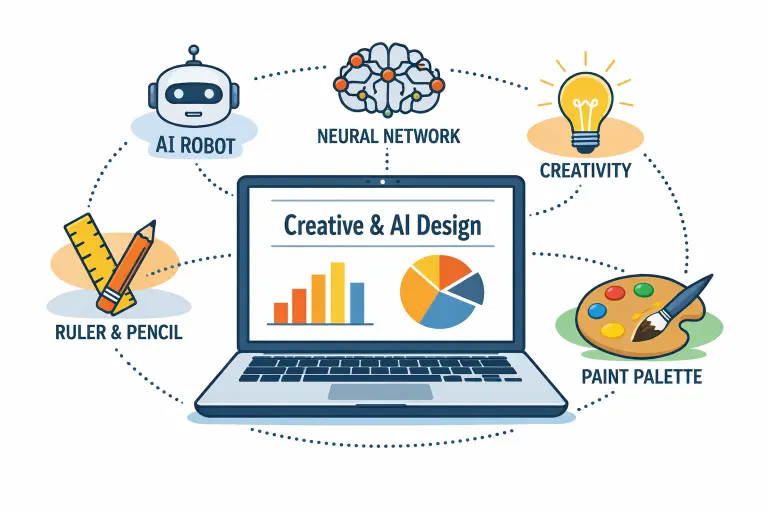
In the ever-evolving digital world, delivering captivating presentations has become more critical and more complex than ever before. Integrating Artificial Intelligence (AI) with classic design concepts is changing how businesses and professionals communicate, bringing efficiency and creativity to the forefront. Whether you are crafting internal pitches or wide-reaching webinars, harnessing tools like an AI presentation maker can transform your entire process, enabling you to develop engaging and persuasive slides with a few clicks.
Modern AI-driven solutions not only save precious hours but also enhance the professionalism and impact of your message. By automating tedious design tasks and helping ensure alignment with proven principles of design psychology, presenters can focus more on storytelling and less on formatting. The dynamic intersection of AI and design thinking is helping people create more memorable experiences in boardrooms, classrooms, and on virtual stages everywhere.
Notably, this shift does not diminish the value of human insight. Instead, it enhances it by offering powerful new ways to personalize, visualize, and elevate information. The result is a smarter workflow—one in which AI-driven suggestions combine seamlessly with your creativity to yield better, more engaging presentations every time.
As a result of these advances, even those with limited design experience can produce high-quality slides that previously required extensive effort or specialized skills. As AI continues to mature, it is crucial to understand both the capabilities and the boundaries that define its partnership with time-tested design principles.
The Evolution of Presentation Design
Decades ago, creating a robust presentation often meant painstakingly arranging each graphic, title, and bullet point by hand. PowerPoint and similar tools ushered in a new era of do-it-yourself design, but they still required a solid grasp of layout, color theory, and audience psychology. Today, AI is shifting the paradigm even further. With advanced algorithms and deep learning models, AI tools can now make split-second recommendations for improving visual consistency and content flow, further streamlining the presenter’s workflow.
Professionals are increasingly turning to AI-powered design applications to eliminate repetitive tasks such as resizing images, adjusting fonts, or aligning graphics. These platforms analyze your content in real time and propose optimizations rooted in the latest research about how audiences process visual information. As a result, presenters can deliver visually cohesive, polished slides without investing hours into manual tweaks.
AI-Powered Content Creation
One of the most revolutionary impacts of AI can be seen in content creation itself. AI models now generate topic outlines, summarize lengthy reports, and suggest relevant graphics or charts based on brief prompts. This boost in productivity helps presenters shape clear, structured narratives much faster. The growing role of AI in presentations is making it easier to create and refine content without starting from scratch every time.
Furthermore, advanced language models help keep messaging focused and audience-specific, enabling greater clarity while reducing the cognitive load for both the speaker and the listener. This ensures that each slide advances the narrative purposefully and cohesively, significantly improving comprehension and retention.
Enhancing Visual Appeal with AI
Beyond content generation, AI’s influence extends to aesthetic design. By analyzing an organization’s branding guidelines or individual user preferences, AI-powered platforms can recommend harmonized color schemes, select compliant imagery, and identify optimal visual arrangements for each slide. These recommendations are not random; they follow proven design principles like contrast and spacing. When combined with 3D animation, presentations can become far more engaging and visually impactful.
For example, AI-driven presentation software will automatically adjust low-contrast text or backgrounds to make information easier for everyone to read, including viewers with visual impairments. Through machine learning, these tools continuously improve, drawing on vast design databases and user feedback to recommend layouts that both attract attention and reinforce the intended message.
Personalization and Audience Engagement
A key advantage of using AI for presentations is its ability to tailor content specifically to each audience. By analyzing prior interactions, demographic data, or real-time feedback, AI can quickly identify and incorporate elements that will resonate most effectively with different groups. This adaptability does not just keep sessions interesting; it significantly increases communication impact by making the material feel more relevant and relatable for any given room.
Personalization capabilities stretch beyond superficial customization. They enable measurable engagement, helping presenters adjust their approach based on predicted or observed attention spans, interests, and content comprehension. This feedback loop creates a more dynamic and immersive experience for everyone involved.
Maintaining Design Integrity
While automation accelerates many aspects of the creative process, foundational principles like alignment, balance, and proximity remain essential. AI tools are most valuable when they complement human creativity rather than attempt to replace it. The most successful presentations strike a balance between algorithmic guidance and authentic, intentional design input. Presenters must keep their audience and message top-of-mind and use AI suggestions as a strong starting point, refining and enhancing each element with a human touch.
The Future of AI in Presentations
The synergy between AI and traditional design is poised to grow even stronger in the coming years. Advancements on the horizon include real-time sentiment analysis, immediate adaptive content modifications, and even AI-powered translation for multilingual audiences. As these technologies mature, they will enable presentations to respond to audience cues, ensuring every session is as engaging and effective as possible.
Conclusion
AI and design principles are shaping presentations for a new era of connection, clarity, and impact. Leveraging AI for content, design, and audience engagement gives every professional the tools to communicate more effectively, while responsible use ensures the unique value of human creativity remains central. Together, these advances are setting a bold new standard for effectiveness in digital and live presentation environments.