
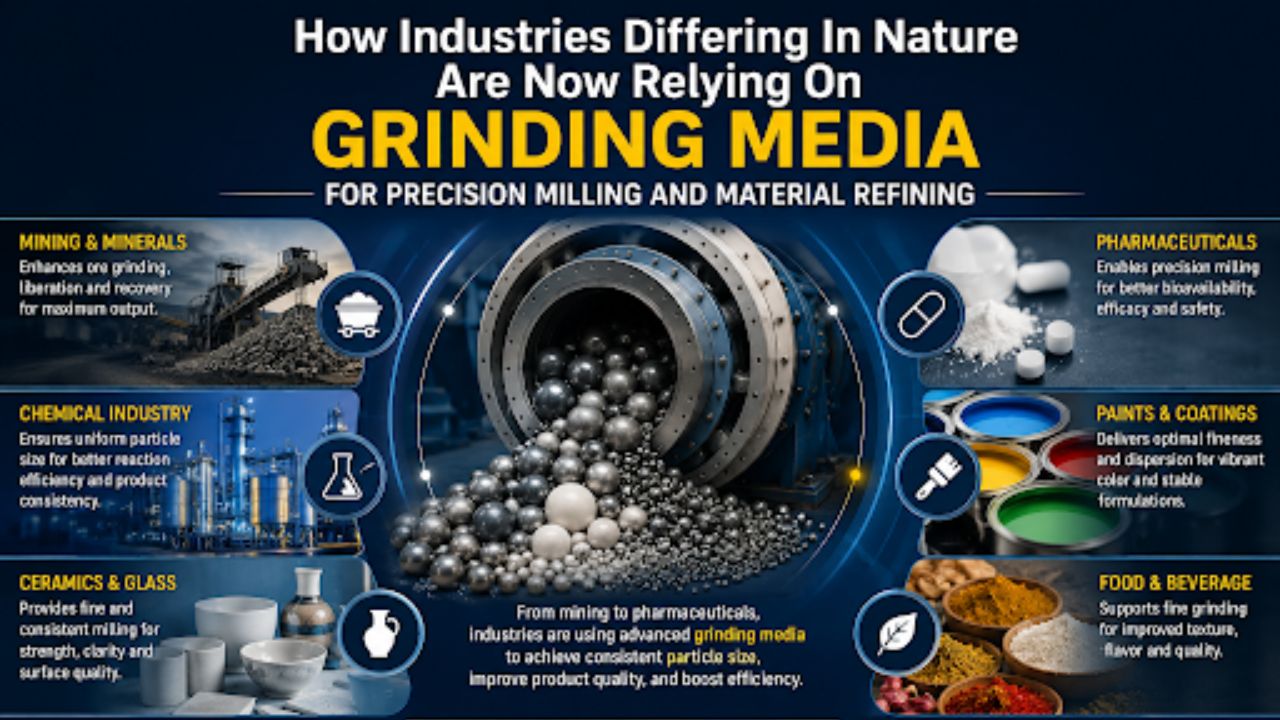
Modern-day industries are placing a huge emphasis on precision milling and material processing to keep products consistent and quality up, all the while saving on costs and improving efficiency. Mining, ceramics, pharmaceuticals, and chemical manufacturing, to name a few, all rely heavily on the most advanced processing systems to ensure consistent particle sizing and reliable performance from the materials they use.
As the demands of industry just keep on going up, the importance of using top quality, high-performance grinding media across a wide range of applications has become more and more apparent.
Why Precision Milling Really Matters When It Comes To Industrial Processing
Precision milling plays a huge role in making sure the products you buy are consistent, and the machinery keeps on rolling. Even the smallest variations in particle size can make a big impact on how products behave, react, and look. And if you’re a large scale producer, you absolutely need reliable systems that can keep processing at pace, without breaking down, or wasting precious resources.
That’s why many manufacturers are turning to advanced milling technologies and good old fashioned, tough-as-nails industrial milling media that can withstand the pressure of high demand, high use situations.
How The Mining Industry Makes Do With Grinding Media
Mining, when you boil it down, is all about getting the raw materials out of the ground, and grinding them down into something you can work with. Mining facilities use heavy duty grinding systems to break down the ore into smaller bits, which are then extracted and refined.
In this tough business environment, grinding media that’s up to the job is essential. Not only does it help to improve the efficiency of milling, by our reckoning, but it also reduces the wear and tear on the equipment, and helps keep the particle distribution consistent.
The Grinding Media Role In Chemical Manufacturing
Chemical manufacturers need precise control over particle size to keep the chemical reactions stable, and the products coming out consistent. And it’s not just a matter of slapping everything together and hoping for the best – milling systems need to be able to process the powders, pigments and whatnot with perfect accuracy.
By using the right, carefully chosen industrial milling media, manufacturers can make sure that the particles are all the same size and shape, thereby eliminating contamination risks. And isn’t that what it’s all about – better reaction efficiency, and improved processing control?
Ceramic And Glass Industries Make The Most Of Grinding Media To Improve Product Quality
The ceramic and glass industries are the epitome of all things precise when it comes to milling and processing. To get those smooth textures, consistent materials and perfect finishes that we all expect from these products, manufacturers are turning to precision milling techniques, and high quality tumbling media designed to take care of fine grinding and polishing applications.
By combining these tools, manufacturers can maintain the strict quality standards that are so essential to keeping the business profitable, and that’s what it’s all about in the end – keeping the product up, and the costs down.
Why Stainless Steel Tumbling Media Really Matters in Finishing Processes
Finishing and polishing operations – and we all know how finicky those can be – rely on materials that can do a smooth, consistent job without wearing out or introducing contaminants into the mix. This is super important in all the industries that turn out metal parts, medical gear, and precision-made goodies.
The high-performance stainless steel tumbling media is doing very well because it just lasts, doesn’t corrode, and gives you nice, uniform polishing. That really helps manufacturers get a better finish without having to replace their stuff all the time.
The Future of Industrial Material Processing – And Why It Matters to Us All
As time goes on and manufacturing tech gets better, the focus is all on getting jobs done faster, with robots doing all the heavy lifting, and producing better results. Companies are shelling out for precision machining systems and tough-as-nails processing materials that really make a difference in getting the job done.
From digging minerals out of the ground to making ceramics and finishing metal, the role of grinding and milling just keeps on growing. That’s because all these industries want more productivity, better products, and longer, more reliable equipment.
The Bottom Line
Precision milling still plays a huge part in modern manufacturing. As industries try to get everything done faster, cheaper, and with more control, the need for cutting-edge material processing solutions just keeps getting bigger and bigger.
The companies that invest in good, reliable processing systems, smart technologies, and consistent practices are the ones that come out on top. They get to reduce downtime, make better stuff, and stay one step ahead in all the fast-changing industrial markets out there.