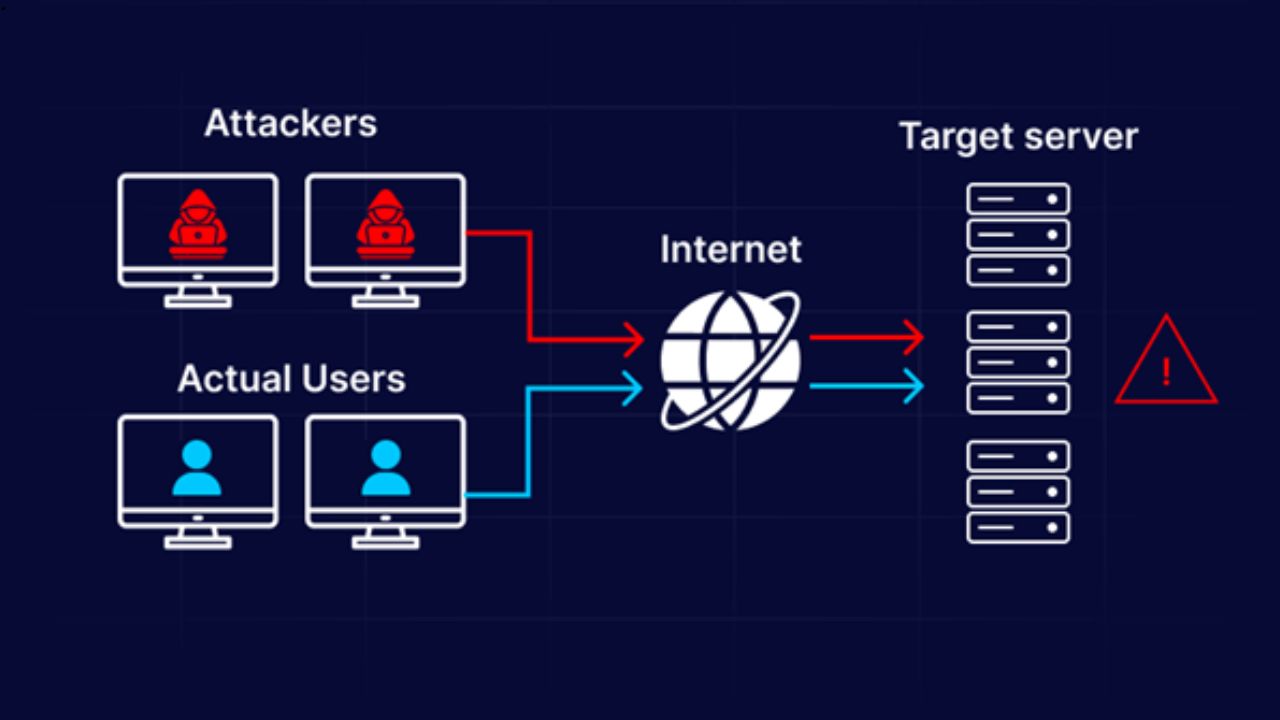
In today’s digital landscape, web applications are constantly exposed to cyber threats, and one of the most disruptive among them is the Distributed Denial-of-Service (DDoS) attack. These attacks flood your application with excessive traffic, making it slow or completely unavailable for legitimate users. For businesses, this can result in revenue loss, poor user experience, and damage to brand reputation. Building a DDoS-resilient application is essential to ensure consistent performance and availability.
Web Development India delivers secure, scalable, and DDoS-resilient web applications that keep your business online, protected, and performing at its best.
Table of Contents
What is a DDoS Attack?
A DDoS attack happens when many compromised devices send massive traffic to a server or web application at the same time. This surge quickly consumes resources such as bandwidth and processing power, making the service unavailable to legitimate users. Learning about different attack types and DDoS protection solutions helps businesses prepare stronger defenses against these disruptions.
A top Website Development Company builds secure, scalable, and DDoS-resilient web applications to ensure your business stays protected, fast, and always online.
Using a Content Delivery Network (CDN)
A Content Delivery Network (CDN) is one of the most effective ways to mitigate DDoS attacks. It distributes incoming traffic across a global network of servers, reducing the burden on your origin server. CDNs can absorb large traffic spikes and filter malicious requests before they reach your infrastructure, while also improving website performance for legitimate users.
Implementing Load Balancing
Load balancing helps distribute incoming requests across multiple servers instead of relying on a single system. This ensures that no single server becomes overwhelmed during a traffic surge. In the event of an attack, load balancers can reroute traffic to healthy servers, maintaining application availability and performance.
Using Web Application Firewalls (WAF)
A Web Application Firewall (WAF) acts as a protective barrier between users and your application. It monitors and filters incoming HTTP requests, blocking malicious traffic such as bots or suspicious patterns. WAFs are especially effective in preventing application-layer DDoS attacks that target specific features of your website.
Rate Limiting and Traffic Control
Rate limiting restricts how many requests a user or IP address can make within a defined time period. This prevents abuse of APIs and limits the ability of attackers to flood your system with requests. By controlling traffic flow, you can ensure fair usage and protect critical endpoints from being overwhelmed.
Intelligent Traffic Filtering
Advanced traffic filtering uses rule-based systems or machine learning to identify unusual behavior. Techniques such as IP reputation analysis, geo-blocking, and behavioral monitoring help detect and block suspicious traffic before it causes harm. This adds an extra layer of intelligent defense against evolving attack patterns.
Auto-Scaling Infrastructure
Cloud-based auto-scaling allows your infrastructure to automatically increase resources during traffic spikes. When a sudden surge occurs—whether legitimate or malicious—your system can handle the load without crashing. This ensures uninterrupted service and improves resilience against large-scale DDoS attacks.
Optimizing Application Architecture
A well-structured application architecture reduces vulnerability to attacks. Using microservices, caching systems, and asynchronous processing can distribute workloads efficiently. Minimizing heavy database queries and optimizing backend operations ensures that your application remains responsive even under pressure.
Enabling Caching Mechanisms
Caching plays a critical role in reducing server load. By storing frequently accessed data, your system can serve responses quickly without repeated processing. This decreases resource consumption and helps absorb traffic spikes, making your application more resistant to DDoS attempts.
Monitoring and Real-Time Alerts
Monitoring your web infrastructure helps identify unusual traffic patterns before they escalate into a serious threat. By analyzing traffic spikes, request behavior, and server performance, teams can detect suspicious activity early. Combining monitoring with strategies to prevent DDoS attacks strengthens the overall security of modern web applications.
Creating a DDoS Response Plan
Having a well-defined response plan ensures that your team is prepared during an attack. This plan should include clear roles, mitigation strategies, backup systems, and communication protocols. A quick and coordinated response can significantly reduce downtime and impact.
Conclusion
Building a DDoS-resilient web application requires a layered approach that combines multiple strategies. From using CDNs and load balancers to implementing firewalls and monitoring systems, each layer adds protection and stability. By investing in these measures, you can ensure your application remains secure, scalable, and always available—even under attack.