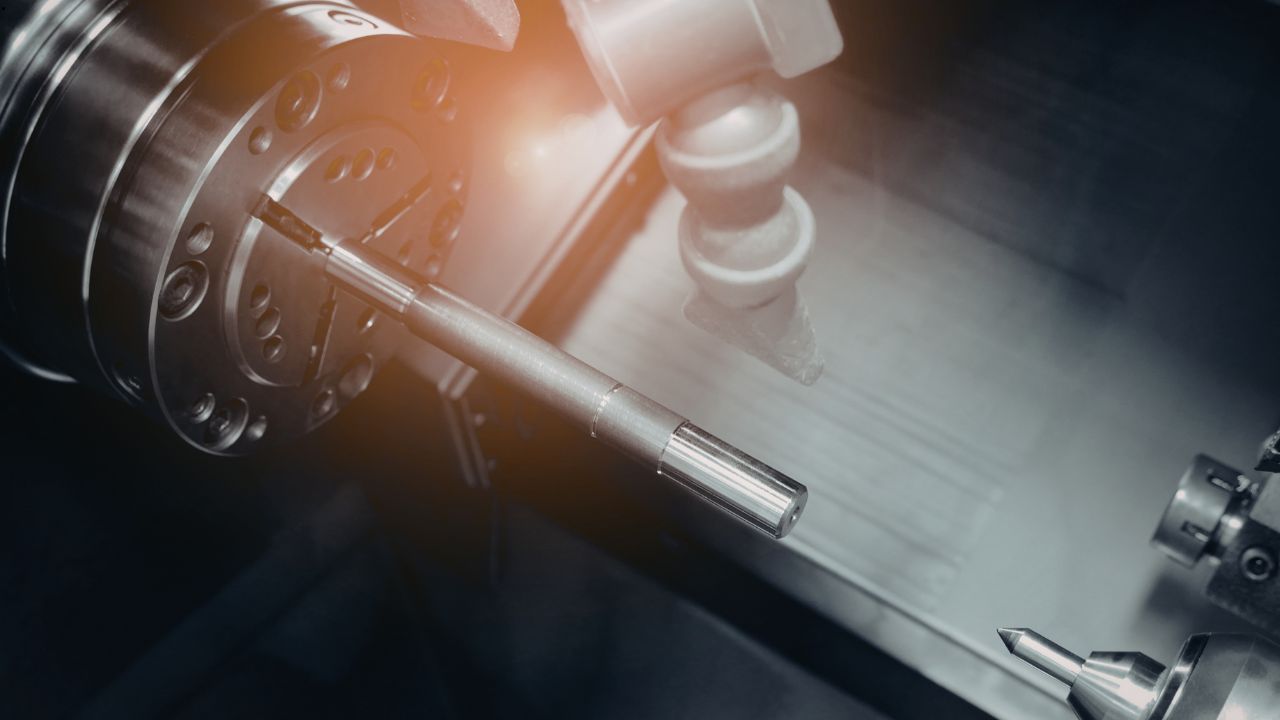
Every piece of technology we use daily—from the smartphone in your pocket to the car you drive and the medical devices that keep people healthy—depends on components that most users never see. These are the precision-machined parts: the pins, connectors, shafts, and housings that must fit together with tolerances measured in microns. While consumer attention focuses on software features and industrial design, the manufacturing processes that create these components have undergone their own quiet revolution. Understanding this evolution matters not just for engineers, but for anyone who relies on the technology that precision machining makes possible.
Table of Contents
The Convergence of Trends Driving Precision Manufacturing
Three powerful forces are reshaping how precision components are designed and produced, with implications rippling through the technology supply chain.
First, the relentless miniaturisation of electronics. As devices shrink, their internal components must shrink with them—but without sacrificing performance or reliability. The connector pins inside a modern laptop, for instance, might measure just 0.3 millimetres in diameter while maintaining precise electrical conductivity and mechanical strength. Producing these features consistently across millions of units requires manufacturing processes that can hold tolerances tighter than a human hair.
Second, the complexity explosion in medical technology. Minimally invasive surgical tools now incorporate articulating joints, fluid channels, and sensor interfaces—all within diameters small enough to navigate blood vessels. A typical endoscopic grasper might contain a dozen precision-machined components, each with multiple features that must align perfectly when assembled. The machining challenges here extend beyond mere size to encompass material compatibility, surface finish requirements, and absolute reliability.
Third, the electrification of transportation. Electric vehicles replace thousands of mechanical parts with a smaller number of thermally and electrically optimised components. Battery contact pins, motor shaft assemblies, and cooling system fittings all require precise automotive machining to ensure dimensional stability. As automotive production scales to meet EV demand, manufacturers need partners who can transition seamlessly from prototype validation to high-volume production.
Why Swiss Machining Became the Preferred Method
Among precision manufacturing techniques, Swiss-type machining has emerged as the dominant solution for complex, small-to-medium components. The method originated in 19th-century Swiss watchmaking, where craftsmen needed to produce tiny, consistent screws for timepieces. The core innovation—a guide bushing that supports the workpiece immediately adjacent to the cutting tool—eliminates the deflection that plagues conventional lathes when machining slender parts.
Modern CNC Swiss machines have evolved far beyond their mechanical ancestors. Today’s equipment uses advanced CNC machining technology for milling, drilling, and continuous operation of complex parts. A single machine can now complete a complex part in one setup, reducing handling errors and shortening lead times.
For technology companies developing new products, this capability translates directly into competitive advantage. When a medical device startup needs to iterate through ten design revisions before finalising a surgical instrument, working with a machining partner who can respond quickly with precision prototypes becomes essential. When an electronics manufacturer ramps production of a new connector design, consistency across millions of parts determines whether field failures occur.
The Engineering Partnership Model
The companies that succeed in navigating these demands typically share one characteristic: they treat their machining suppliers as technical partners rather than order-takers. This partnership approach manifests in several ways.
- Early engagement during design. The most costly mistakes are those discovered after tooling is built and production begins. Experienced machining partners review designs for manufacturability before any metal is cut, suggesting adjustments to radii, wall thicknesses, or feature placement that can dramatically improve producibility without compromising function. A company like Falcon CNC Swiss brings decades of accumulated knowledge across medical, electronics, and automotive applications, enabling them to flag potential issues that less experienced suppliers might miss.
- Material expertise as a core competency. Precision components are specified in materials chosen for specific performance characteristics: titanium for biocompatibility, stainless steel for corrosion resistance, engineering plastics for electrical insulation. Each material behaves differently under cutting tools, with unique requirements for speeds, feeds, and cooling strategies. Suppliers who have developed deep experience across a range of materials and applications can confidently recommend alternatives that might offer better machinability or lower cost while maintaining required properties.
- Scalable quality systems. When a component moves from prototype to production, the quality assurance requirements multiply. Medical devices demand full traceability from raw material certification to final inspection reports. Aerospace components require First Article Inspection documentation aligned with industry standards. Automotive parts need statistical process control data demonstrating capability across production runs. Partners who have invested in certified quality management systems can provide this documentation seamlessly, reducing the burden on their customers’ quality teams.
What Technology Companies Should Look For
For engineering leaders and procurement professionals sourcing precision components, several factors distinguish capable partners from merely adequate suppliers.
Relevant industry experience matters more than general machining volume. A supplier who has produced thousands of medical device components understands the regulatory expectations, documentation requirements, and critical-to-quality characteristics that differ from, say, automotive or consumer electronics work.
Equipment diversity enables flexibility. Shops equipped with both Swiss-type lathes for small complex parts and CNC milling centres for larger components can handle assemblies requiring multiple part types, simplifying vendor management.
Quality certifications provide objective evidence of process discipline. ISO 13485 for medical devices, IATF 16949 for automotive, and AS9100 for aerospace each impose specific requirements that demonstrate a supplier’s commitment to systematic quality.
Communication responsiveness during the quoting and sampling phase predicts how the relationship will function during production. Suppliers who ask intelligent questions about applications, tolerances, and inspection requirements are demonstrating the engagement that prevents problems later.
The Scale Challenge and Opportunity
One of the most demanding transitions in product development is the move from prototyping to volume production. A component that worked perfectly when machined individually may reveal variation when produced in thousands or millions. This is where the combination of advanced equipment and process discipline becomes critical.
Automated bar-feeding systems allow continuous operation across multiple machines, maintaining consistency while achieving volumes that would be impractical with manual loading. In-process probing catches dimensional drift before it produces non-conforming parts. Statistical process control identifies trends that might indicate tool wear or material variation, enabling preventive action.
For technology companies scaling new products, partnering with a supplier who has demonstrated high-volume production capability with precision screw machine products provides confidence that the transition will be smooth. The best suppliers have refined their processes across hundreds of production runs, accumulating knowledge about what can go wrong and how to prevent it.
Looking Ahead
As technology continues its trajectory toward greater miniaturisation, higher performance, and more demanding applications, the importance of precision manufacturing will only increase. The components that enable 5G communication, electric propulsion, and advanced medical procedures will require ever-tighter tolerances and more complex geometries. The companies that succeed will be those who have built relationships with machining partners capable of evolving alongside their needs.
For engineering teams navigating this landscape, the message is clear: treat precision manufacturing as a strategic capability, not a commodity purchase. Invest time in understanding potential partners’ technical depth, quality systems, and industry experience. And when you find a partner who demonstrates genuine expertise and collaborative engagement, cultivate that relationship as the long-term asset it can become.