
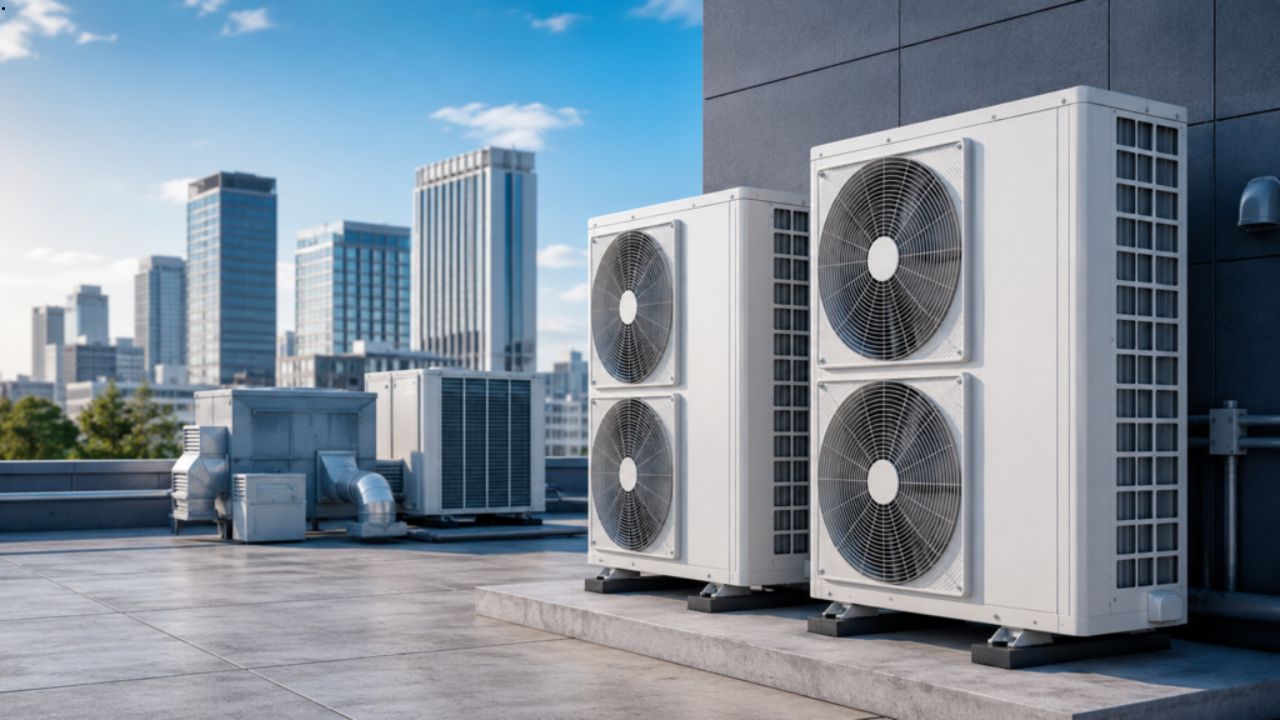
A comfortable indoor environment is more than a convenience for businesses—it is an important contributor to productivity, customer satisfaction, equipment performance, and operating costs. Whether you manage a retail store, office, restaurant, warehouse, medical practice, or small manufacturing facility, selecting the right cooling system is a long-term investment that influences both daily operations and future expenses.
Business owners often begin their research by comparing options such as a daikin mini split, a goodman ac unit, or another air conditioner designed for commercial applications. While brand recognition may influence initial interest, the most effective purchasing decision depends on matching the equipment to the building’s size, usage patterns, energy requirements, and long-term business goals.
Rather than focusing solely on the purchase price, organizations should evaluate the complete lifecycle of a cooling system. Installation costs, maintenance requirements, energy consumption, employee comfort, scalability, and reliability all contribute to the overall value of the investment. Taking a broader perspective helps reduce the likelihood of expensive mistakes while ensuring the system continues meeting business needs as operations evolve.
Why Cooling Systems Matter in Commercial Environments
Every commercial property has unique cooling demands. An office building with standard business hours has very different requirements from a restaurant with kitchen heat loads or a warehouse with large open spaces. Businesses that rely on computers, networking equipment, refrigeration, or manufacturing equipment may also generate significant internal heat that affects indoor temperatures.
A properly designed cooling solution helps:
- Maintain consistent indoor comfort
- Support employee productivity
- Improve customer experience
- Protect temperature-sensitive equipment
- Reduce humidity-related issues
- Lower energy waste
- Extend the lifespan of HVAC equipment
When cooling systems are undersized, they struggle to maintain comfortable temperatures and often operate continuously, increasing electricity consumption and wear. Oversized systems, on the other hand, cycle on and off too frequently, reducing efficiency and creating uneven temperature control.
Finding the appropriate balance is one of the most important steps in commercial HVAC planning.
Understanding Your Building’s Cooling Requirements
Before comparing equipment options, businesses should carefully assess how the building is used. Cooling needs depend on much more than square footage.
Important considerations include:
Building layout plays a significant role. Multiple rooms, open offices, conference spaces, and customer waiting areas each have different cooling demands.
Occupancy levels also influence system sizing. A busy retail store with continuous customer traffic generates considerably more heat than a small administrative office.
Window placement affects solar heat gain. Buildings with large south-facing windows may require greater cooling capacity during warmer months.
Ceiling height changes the total volume of air that must be conditioned.
Equipment loads should never be overlooked. Computers, servers, lighting systems, kitchen appliances, machinery, and manufacturing equipment all contribute additional heat.
Businesses operating outside traditional office hours may require systems designed for longer operating cycles and increased durability.
Understanding these variables helps ensure the selected equipment matches real-world operating conditions rather than relying on generalized estimates.
Energy Efficiency Should Be a Long-Term Priority
While many buyers focus primarily on upfront costs, energy efficiency often has a greater financial impact over the life of the system.
Commercial cooling systems operate for hundreds or even thousands of hours each year. Even modest improvements in efficiency can produce meaningful reductions in electricity expenses over time.
Higher-efficiency equipment may require a larger initial investment, but lower monthly utility bills frequently offset part of that additional cost. Depending on local energy prices and operating hours, businesses may recover their investment through ongoing savings.
However, purchasing the highest-efficiency model is not always the most economical decision. Businesses with limited operating hours may experience a longer payback period, making a moderately efficient system more financially appropriate.
The ideal balance depends on projected usage, utility rates, and long-term ownership plans.
Centralized and Zoned Cooling Approaches
Commercial buildings generally use either centralized cooling or zoned systems, each offering distinct advantages.
Centralized systems distribute conditioned air throughout the building using ductwork. They work well in facilities where temperature requirements remain relatively consistent across all spaces.
Zoned solutions allow different areas to operate independently. Individual offices, meeting rooms, or tenant spaces can maintain separate temperature settings without affecting the entire building.
The primary advantage of zoning is flexibility. Areas that are unoccupied can reduce cooling demand, potentially lowering energy consumption.
However, zoned configurations often involve more complex installation, additional controls, and higher initial costs.
Businesses should consider whether operational flexibility justifies the additional investment.
Installation Quality Is Just as Important as Equipment Quality
Even premium HVAC equipment can perform poorly if installed incorrectly.
Professional system design ensures proper airflow, refrigerant charging, duct sizing, electrical connections, and drainage. Poor installation can lead to reduced efficiency, uneven temperatures, excessive noise, and premature equipment failure.
Business owners should also evaluate the building itself before installation. Older structures may require duct improvements, insulation upgrades, or electrical modifications to support new cooling equipment.
Skipping these assessments to reduce installation costs often results in higher operating expenses later.
Maintenance Planning Protects Your Investment
Routine maintenance is essential for preserving system performance and extending equipment lifespan.
Commercial maintenance typically includes:
- Air filter replacement
- Coil cleaning
- Refrigerant inspection
- Electrical testing
- Thermostat calibration
- Condensate drain inspection
- Fan and motor servicing
Preventive maintenance reduces unexpected breakdowns while helping equipment maintain its designed efficiency.
Businesses that postpone maintenance often experience declining performance, increasing utility costs, and more expensive repairs.
Developing a scheduled maintenance program should be considered part of the original purchasing decision rather than an optional expense.
Balancing Initial Cost and Long-Term Value
Budget considerations naturally influence purchasing decisions.
Lower-priced systems may appear attractive initially, particularly for small businesses managing limited capital. However, lower upfront costs sometimes correspond with reduced efficiency, shorter service life, or increased maintenance needs.
Conversely, premium systems generally offer enhanced performance, quieter operation, and advanced controls but require larger initial investments.
The most appropriate decision depends on several factors:
Expected ownership duration.
Projected annual operating hours.
Utility costs.
Maintenance budget.
Business growth plans.
Available financing options.
Rather than focusing exclusively on purchase price, evaluating total ownership cost provides a more accurate picture of long-term value.
Planning for Business Growth
Businesses rarely remain unchanged.
Companies may hire additional employees, expand customer areas, renovate office layouts, or occupy additional space over time.
Selecting cooling equipment with future expansion in mind can reduce costly upgrades later.
Modular systems often provide greater flexibility because additional indoor units or cooling zones can sometimes be integrated as business needs change.
Planning ahead helps avoid situations where an existing system becomes inadequate only a few years after installation.
Indoor Air Quality Deserves Equal Attention
Modern businesses increasingly recognize that indoor air quality affects employee wellness and customer experience.
Cooling systems contribute significantly to ventilation, humidity management, and airborne particle control.
Poor indoor air quality may contribute to:
- Employee discomfort
- Increased absenteeism
- Dust accumulation
- Odor retention
- Mold development
- Customer dissatisfaction
Businesses should evaluate available filtration options, humidity management capabilities, and fresh-air ventilation when selecting commercial cooling equipment.
Improving indoor environmental quality often supports healthier workplaces while enhancing overall occupant comfort.
Technology and Smart Controls
Today’s commercial HVAC systems offer significantly more intelligent control options than earlier generations.
Programmable thermostats, occupancy sensors, cloud-based monitoring, and automated scheduling help businesses optimize energy use.
Facility managers can remotely monitor temperatures, identify maintenance issues, and adjust schedules based on occupancy patterns.
Although advanced controls increase initial investment, they frequently reduce operating costs through improved system management.
For businesses operating multiple locations, centralized monitoring can simplify facility management while improving consistency across properties.
Environmental Considerations
Sustainability continues to influence purchasing decisions across many industries.
Businesses increasingly evaluate cooling systems not only for financial performance but also for environmental impact.
Higher-efficiency equipment generally reduces electricity consumption, lowering greenhouse gas emissions associated with power generation.
Modern refrigerants are also designed to reduce environmental impact compared with older formulations.
Organizations pursuing sustainability initiatives may benefit from selecting equipment that aligns with broader environmental goals while supporting regulatory compliance.
Although environmentally friendly solutions sometimes involve higher upfront expenses, they can strengthen corporate responsibility initiatives and improve long-term operational efficiency.
Common Mistakes Businesses Should Avoid
Several common purchasing mistakes can significantly reduce the value of a cooling investment.
Choosing equipment based solely on price often overlooks future operating expenses.
Incorrect sizing remains one of the most frequent causes of inefficient performance.
Ignoring insulation problems may result in cooling losses regardless of equipment quality.
Delaying maintenance increases repair costs and shortens equipment lifespan.
Failing to account for future business expansion can require expensive replacements sooner than expected.
Avoiding these mistakes begins with careful planning rather than rushing the purchasing process.
Working with Qualified HVAC Professionals
Commercial HVAC projects involve technical calculations that extend well beyond selecting equipment from a catalog.
Experienced professionals evaluate building characteristics, occupancy levels, ventilation requirements, electrical capacity, airflow patterns, and local climate before recommending suitable solutions.
Business owners benefit from requesting detailed load calculations rather than relying solely on generalized sizing estimates.
Obtaining multiple proposals also provides valuable insight into equipment recommendations, installation approaches, warranty coverage, and long-term maintenance expectations.
The goal is not necessarily to choose the least expensive proposal but to identify the solution that delivers the greatest overall value.
Making a Balanced Decision
Choosing commercial cooling equipment involves balancing numerous competing priorities.
Lower purchase prices may reduce immediate expenses but increase future operating costs.
Premium systems may deliver higher efficiency while requiring greater initial investment.
Flexible zoning improves comfort but often increases installation complexity.
Advanced automation enhances efficiency while adding technology costs.
No single solution is ideal for every business.
The most successful purchasing decisions consider the building’s operational requirements, future growth, employee comfort, customer experience, maintenance expectations, environmental objectives, and total ownership costs together rather than evaluating any single factor in isolation.
Final Thoughts
Selecting the right commercial cooling solution is ultimately a strategic business decision rather than simply an equipment purchase. A carefully planned system supports employee productivity, protects valuable assets, enhances customer comfort, and contributes to predictable operating costs over many years.
Businesses that evaluate their facility requirements, energy efficiency goals, maintenance capabilities, and future expansion plans are better positioned to make informed investments that deliver lasting value. By focusing on long-term performance instead of short-term savings alone, organizations can create comfortable, efficient environments that support sustainable growth while minimizing operational challenges well into the future.