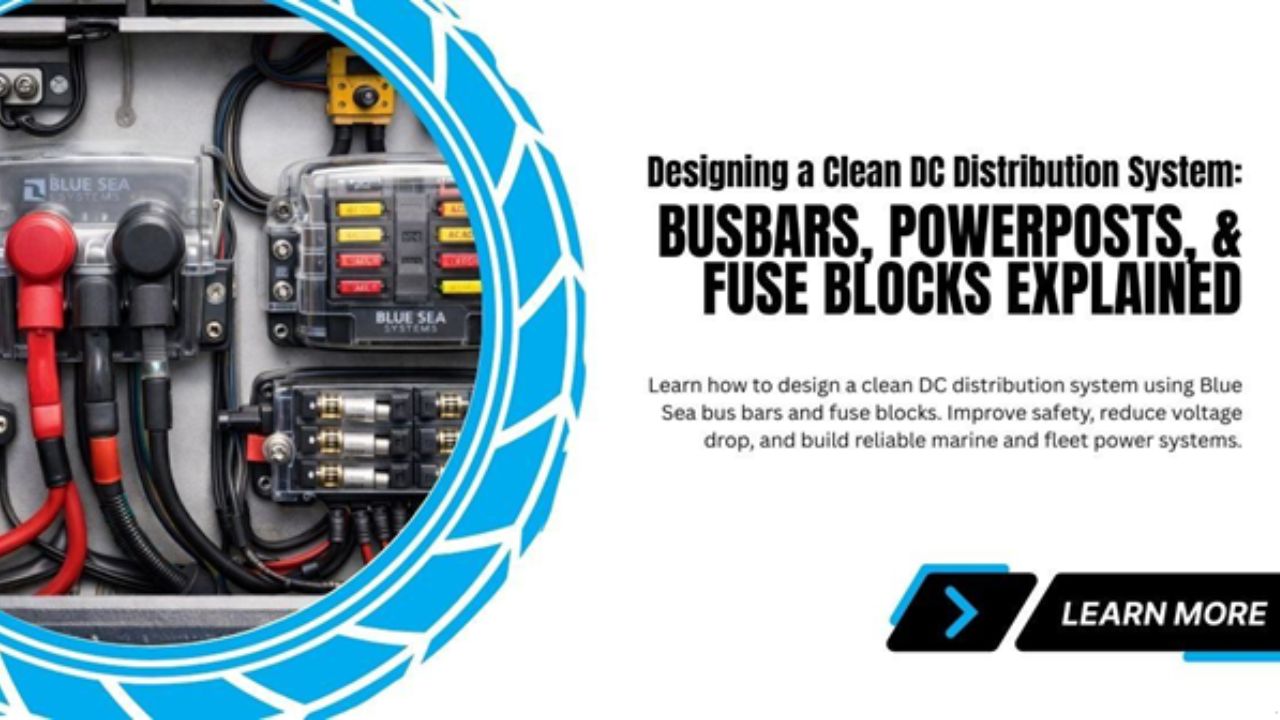
A powerful charging system means nothing if distribution is poorly designed.
Many DC power failures — voltage drop, overheated connections, nuisance fuse trips, intermittent faults — don’t begin at the battery or charger. They begin at the distribution layer.
Whether you are building a marine system, outfitting a patrol vehicle, upgrading an overland rig, or wiring a commercial fleet platform, clean DC distribution is the foundation of reliability.
And that foundation is built with properly selected components from Blue Sea Systems.
Table of Contents
Step 1: Centralizing Power with a Bus Bar
One of the most important upgrades you can make in any DC system is installing a properly rated Blue Sea bus bar.
A bus bar acts as a centralized termination point for multiple conductors. Instead of stacking ring terminals directly on a battery post — which creates uneven contact pressure and heat buildup — a bus bar distributes current safely and cleanly.
High-quality bus bars:
- Use tin-plated pure copper for maximum conductivity
- Feature stainless steel hardware
- Offer insulating covers that meet ABYC and USCG standards
- Support high amperage ratings (200A–1000A+)
In marine, fleet, and emergency systems, centralized bus bars:
- Reduce clutter at battery terminals
- Improve heat dissipation
- Simplify troubleshooting
- Create a professional, scalable layout
Clean power starts with clean consolidation.
Step 2: Protecting Circuits with a Fuse Block
Once current is centralized, it must be protected at the branch level.
This is where a properly sized Blue Sea fuse block becomes essential.
A fuse block allows individual circuits to be isolated and protected. Instead of running accessory wires directly from the battery, power flows:
Battery → Main Bus Bar → Fuse Block → Individual Circuits
This structure ensures:
- Each accessory is properly fused
- Circuits can be serviced independently
- Faults do not cascade across the system
- Wiring remains organized
In patrol vehicles, marine vessels, and commercial builds, fuse blocks protect:
- Radios
- Lighting systems
- Navigation electronics
- Refrigeration
- Pumps and accessory loads
Branch protection is not optional — it is structural.
Step 3: Managing High-Amperage Connections with PowerPosts
PowerPosts are insulated high-current termination points used when multiple large cables must land on a single stud.
They are ideal for:
- Inverter feeds
- Alternator charging lines
- DC-DC charger inputs
- High-current auxiliary loads
Separating high-amperage terminations from fuse blocks improves safety and simplifies layout in tight engine rooms or vehicle compartments.
Why Clean Layout Reduces Heat and Voltage Drop
Voltage drop increases with:
- Higher amperage
- Longer cable runs
- Poor contact surfaces
- Stacked terminals
Clean distribution reduces resistance by:
- Shortening cable paths
- Centralizing connection points
- Using properly rated bus bars
- Ensuring even terminal pressure
Heat is the silent killer of electrical systems. Proper distribution dramatically reduces thermal stress.
Marine vs Fleet DC Distribution
Marine Installations Prioritize:
- Corrosion resistance
- Insulated covers
- Sealed hardware
- Clean negative bus integration
Fleet & Emergency Vehicles Prioritize:
- Vibration resistance
- Compact layout
- Service accessibility
- Expandability
In both cases, bus bars and fuse blocks form the structural backbone of the DC system.
Planning for Expansion
Many builds evolve.
You may later add:
- Inverters
- Additional lighting
- Communication equipment
- Monitoring systems
- Solar integration
Without centralized distribution, upgrades become messy and unsafe.
A properly designed layout using Blue Sea components ensures scalability from day one.
The Professional Standard
A professional DC setup always looks organized and deliberate. Clean battery terminals, properly isolated high-current connections, and clearly fused circuits all play a role in system stability. Following the DC distribution benchmark used by experienced installers helps ensure the system stays reliable even under heavy loads.
- Battery terminals are uncluttered
- High-current connections are isolated
- Circuits are clearly fused
- Wiring is symmetrical
- Hardware is marine-grade
This is not cosmetic — it directly impacts reliability.
In commercial marine vessels, patrol boats, and fleet vehicles, downtime costs money. Clean distribution reduces troubleshooting time and increases operational confidence.
The Bottom Line
Charging systems supply power.
Batteries store power.
Distribution determines whether power flows safely and efficiently.
A centralized bus bar reduces clutter.
A properly rated fuse block protects branch circuits.
PowerPosts manage high-amperage terminations.
Together, they create a clean, expandable, and serviceable DC power system.
Build It Right with 12VoltPower
Explore professional-grade DC distribution components from Blue Sea Systems at 12VoltPower and design your next power system with safety, clarity, and long-term reliability in mind.