
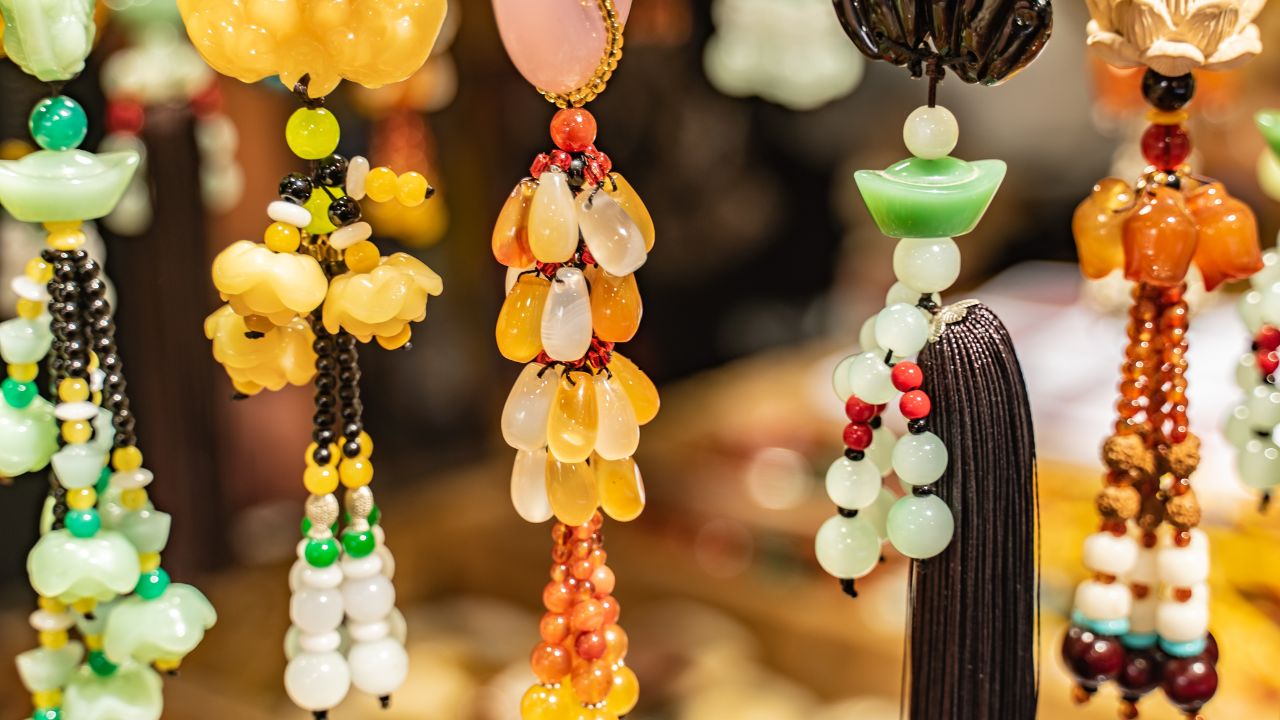
How a single stone became inseparable from Chinese civilization itself — and why every piece of jade jewelry today carries the weight of forty centuries
No other gemstone occupies the position that jade holds in Chinese civilization. Diamonds were prized in India and the West, lapis lazuli in ancient Egypt, amber in the Baltic — but each was simply a luxury material associated with wealth or beauty. Jade is something different. For four thousand years and across more than a dozen dynasties, jade has carried in China the weight of moral philosophy, religious ritual, political legitimacy, scholarly identity, and the very idea of cultural continuity. To understand jade in China is to understand China itself.
This article traces the journey of jade through Chinese history, from the earliest carved ritual objects of Neolithic peoples to the contemporary luxury market that exports Burmese jadeite jewelry to over a hundred countries. By the end, readers will see why every modern jade pendant, bracelet, and ring carries connections to a tradition older than the pyramids of Giza — and why that history is what makes a fine piece of jade jewelry feel different from any other stone you can buy.
Before History: Jade in Neolithic China
The Hongshan Culture: The First Masters of Jade
The story of jade begins long before the invention of Chinese writing. Approximately 4,700 years before the common era — more than two thousand years before the construction of the Great Pyramid — communities along the Liao River in what is now Liaoning Province and Inner Mongolia were already shaping nephrite into objects of remarkable sophistication. These people, known to archaeologists as the Hongshan Culture, flourished from roughly 4700 to 2900 BCE and produced the earliest known examples of advanced jade carving anywhere in the world.
Hongshan jade was overwhelmingly ritual in purpose. The most famous Hongshan form is the “pig-dragon,” a curled creature that combines features of a pig’s snout with a serpentine body, believed to represent fertility, weather, and the supernatural authority of shaman rulers. C-shaped jade dragons, jade hoof-shaped ornaments, and finely carved figures of birds, fish, cicadas, and turtles have been recovered from elite Hongshan burials — sometimes as the only objects placed alongside the deceased, suggesting that jade was understood not merely as wealth but as a spiritual passport into the afterlife.
The Liangzhu Culture: Where Cosmology Took Form
Roughly a thousand years after Hongshan reached its peak, the Liangzhu Culture (3400 to 2250 BCE) emerged in the Yangtze River Delta region of southeastern China. Liangzhu artisans developed jade working into something approaching a state religion. Their most distinctive forms — the bi disk and the cong tube — would shape Chinese ritual practice for the next four millennia.
The bi is a circular flat disk of jade with a central hole, traditionally interpreted as a symbol of heaven. The cong is a square tube with a circular interior bore, understood as a symbol of earth. Together, the pairing of bi and cong embodies the most fundamental cosmological idea in early Chinese thought: that heaven is round and earth is square, and that the proper ordering of human society depends on aligning with this cosmic structure. Liangzhu artisans carved these objects with extraordinary precision using only stone tools, abrasive sand, and bamboo drills — a level of patience and skill that even modern carvers find remarkable.
Liangzhu also gave us the taotie mask — a stylized monster face with bulging eyes and bared fangs that would be inherited by Shang and Zhou bronze-casters fifteen hundred years later. The visual vocabulary of Chinese ritual art was, in this real sense, established in jade before it was ever cast in bronze.
The Shang and Zhou: Jade Enters the Royal Courts
With the rise of the Shang Dynasty (1600 to 1050 BCE), Chinese civilization passed from prehistory into recorded history. Bronze became the dominant ritual material of the new royal courts, but jade did not retreat into the background — it joined bronze at the highest levels of state ceremony. Shang kings wore jade ornaments, used jade ceremonial weapons, and placed jade objects in their tombs in numbers that suggest the stone had become inseparable from the very idea of royal authority.
It was during the subsequent Zhou Dynasty (1050 to 221 BCE), however, that jade acquired the philosophical meanings that would define it for the rest of Chinese history. The Zhou ritual codes formalized which kinds of jade ornaments could be worn by which ranks of nobility, established jade tablets as instruments of imperial appointment, and codified the use of jade in diplomatic gift exchange between states. By the late Zhou, jade was no longer simply a precious material — it was a language through which political and social relationships were expressed.
Confucius and the Five Virtues of Jade
The most influential moment in jade’s cultural history came near the end of the Zhou period, with the teachings of Confucius (551 to 479 BCE). In a famous passage from the Book of Rites, Confucius explained why the gentleman values jade above all other stones: not because of its rarity or beauty, but because the qualities of jade correspond to the moral virtues a gentleman must cultivate.
Jade’s warm and gentle luster, Confucius taught, is like benevolence (ren). Its translucency, which reveals every internal flaw honestly, is like righteousness (yi). Its pure ringing tone when struck is like wisdom (zhi). Its ability to break before it bends is like courage. Its sharp edges that do not cut is like equity. Han-dynasty Confucian scholars expanded this list, with the scholar Xu Shen identifying “five constant virtues of jade” in his great dictionary — benevolence, righteousness, wisdom, courage, and integrity. From this point forward, every Chinese gentleman who wore jade understood himself to be wearing a daily reminder of his moral commitments.
This identification of jade with personal virtue is central to why the stone has held its cultural authority for so long. A diamond is admired but does not instruct. A jade pendant, in the Confucian understanding, was a teacher worn against the chest.
The Han Dynasty: Jade and the Quest for Immortality
The Han Dynasty (206 BCE to 220 CE) elevated jade to its most spectacular cultural function: as a substance that could preserve the human body itself beyond death. Han Daoist beliefs held that jade possessed properties that could prevent bodily decay and facilitate the soul’s passage into immortality. From this belief came one of the most extraordinary artifacts in world archaeology — the jade burial suit.
The Jade Burial Suits of the Han Royal Tombs
Jade burial suits were full-body coverings constructed from thousands of small jade plaques, each plaque pierced at the corners and sewn together with gold, silver, or copper wire according to the rank of the deceased. The most famous surviving example, discovered in 1968 in the tomb of Prince Liu Sheng at Mancheng, contains 2,498 jade pieces sewn together with approximately 1,100 grams of pure gold wire. The suit covers the entire body — head, torso, arms, legs, and even fingers — in a continuous shell of polished jade.
The labor required to produce such suits was staggering. Modern estimates suggest that a single suit required ten years of work by a team of skilled craftsmen, working with bronze tools and abrasive sand. The practice was eventually banned in 222 CE because it had become impossibly expensive and was diverting resources from the living. But the surviving suits, preserved in tombs sealed for two thousand years, remain among the most powerful physical embodiments of jade’s spiritual meaning in Chinese civilization.
Jade Cicadas and the Body’s Nine Orifices
Even commoners with means used jade in burial rituals during the Han period. Small jade objects were placed at the body’s nine orifices to prevent the escape of life force. The most distinctive of these was the jade cicada, placed on the deceased’s tongue — the cicada’s underground larval stage and emergence into flight serving as a metaphor for the soul’s expected emergence from the tomb into a new spiritual life. Han jade cicadas remain among the most collected categories of archaic Chinese jade today.
From Tang to Ming: Jade in Imperial Court and Scholar’s Studio
The Tang Dynasty: International Influence
The Tang Dynasty (618 to 907 CE) opened China to the cosmopolitan currents of the Silk Road, and jade carving absorbed influences from Central Asia, Persia, and the Eurasian steppes. Tang jade pieces show new motifs — winged horses, griffins, lotus blossoms, and figures in foreign dress — alongside the inherited Chinese tradition. The Tang capital of Chang’an became one of the great jewelry markets of the medieval world, and jade hairpins, belt plaques, and personal ornaments traveled along trade routes from China across to the Mediterranean.
The Song Dynasty: Jade as a Scholar’s Companion
The Song Dynasty (960 to 1279 CE) saw the emergence of a literati culture that transformed jade from an aristocratic ornament into the inseparable companion of the scholar-gentleman. Song scholars carried jade seals, used jade brush rests on their writing desks, wore jade pendants, and collected antique jade pieces for connoisseurship study. Books on jade authentication, classification, and aesthetic appreciation appeared in significant numbers for the first time.
This is also the period during which the practice of “playing with jade” (wan yu) became formalized in elite culture — the daily handling, polishing, and contemplation of small jade objects as a form of meditative practice and tactile pleasure. The patina that develops on long-handled nephrite pieces, deepening their color and softening their luster, became prized as evidence of the piece’s history with its owner.
The Ming Dynasty: The Golden Age of Jade Carving
The Ming Dynasty (1368 to 1644 CE) is often called the golden age of Chinese jade carving. Ming workshops in Suzhou, Beijing, and Yangzhou refined techniques that had been developing for centuries, producing pieces of unprecedented complexity. Multi-layer carvings, suspended chains carved from a single block of jade, and intricate three-dimensional landscape scenes — these technical achievements set standards that influenced jade carving for the next four centuries.
Ming jade also expanded into new social classes. Where earlier dynasties had restricted fine jade to the nobility, the prosperity and commercial sophistication of the Ming period created a wealthy merchant class that became significant patrons of jade arts. Jade jewelry, jade snuff bottles, jade incense burners, and jade scholar’s items proliferated in the homes of well-to-do families across the empire.
The Qing Dynasty: Burmese Jadeite Arrives in China
Until the eighteenth century, the entire 4,000-year history of Chinese jade had been a history of nephrite. Then, during the reign of the Qianlong Emperor (1735 to 1796) of the Qing Dynasty, a new material began arriving via trade caravans from Yunnan: Burmese jadeite, a harder and more vividly colored stone from the Hpakant region of what is now northern Myanmar.
The Qianlong Emperor’s Love Affair with Jadeite
The Qianlong Emperor was a passionate connoisseur of all the arts, and he became personally obsessed with the new stone. The vivid emerald greens, soft lavenders, and translucent ice-whites of fine jadeite were unlike anything in the traditional Chinese jade vocabulary, and the imperial workshops at the Forbidden City began producing jadeite pieces in significant quantities for the imperial collection. “Imperial green” jadeite — the deep, saturated emerald color produced by trace chromium — took its name from this period and the emperor’s particular favor for it.
Within a generation, jadeite had been integrated into Chinese jade culture without displacing nephrite. The educated classes continued to value Hetian nephrite for its classical resonance and traditional cultural meanings, while jadeite became the preferred material for showcase jewelry — bangles, cabochon rings, and pendants where vivid color and translucency could be displayed to maximum effect. This division of cultural roles continues today.
Empress Dowager Cixi and the Imperial Jadeite Tradition
In the late Qing period, Empress Dowager Cixi became perhaps the most enthusiastic jadeite collector in Chinese history. Her personal collection of imperial green and lavender jadeite included pieces of legendary quality, and her preferences set the trends followed by aristocratic women throughout the empire. Many of the jadeite designs that contemporary collectors now consider classically Chinese — the cabochon ring set in gold, the pendant with carved imagery of dragons or flowers, the bangle worn singly on the wrist — were established in their modern form during her reign.
Four Thousand Years of Jade: A Timeline
The long arc of jade’s place in Chinese civilization can be summarized in the following timeline, which covers the major eras of Chinese history and the role jade played in each.
| Era | Approximate Dates | Jade’s Cultural Role |
| Hongshan Culture | 4700 to 2900 BCE | Earliest sophisticated jade carving; ritual pendants, pig-dragons, C-shaped ornaments |
| Liangzhu Culture | 3400 to 2250 BCE | Bi disks (heaven) and cong tubes (earth); cosmological ritual objects |
| Shang Dynasty | 1600 to 1050 BCE | Jade enters royal courts; ceremonial weapons, ornaments, and divination objects |
| Zhou Dynasty | 1050 to 221 BCE | Confucian period; jade becomes metaphor for moral virtue; ritual codes formalized |
| Han Dynasty | 206 BCE to 220 CE | Jade burial suits for royalty; jade as symbol of immortality and incorruption |
| Tang Dynasty | 618 to 907 CE | Silk Road expands jade trade; influence from Central Asian carving traditions |
| Song Dynasty | 960 to 1279 CE | Scholar-official culture; jade as object of literary appreciation and connoisseurship |
| Ming Dynasty | 1368 to 1644 CE | Jade carving achieves technical mastery; expansion of decorative arts |
| Qing Dynasty | 1644 to 1912 CE | Burmese jadeite introduced via Yunnan; Qianlong Emperor establishes jadeite as imperial favorite |
| Modern Era | 1912 to Present | Global luxury market; revival of traditional craftsmanship; international collector demand |
Jade in the Modern Era: Continuity and Change
The Twentieth Century: Disruption and Survival
The fall of the Qing Dynasty in 1912 ended the imperial patronage system that had supported Chinese jade carving for thousands of years. The Republican period (1912 to 1949) was difficult for traditional crafts, and the early decades of the People’s Republic created additional challenges, with cultural disruptions affecting connoisseurship and craft transmission. Many master carvers emigrated to Hong Kong and Taiwan, where they continued their traditions in private workshops and helped establish those cities as the new commercial centers of the global jade trade.
Despite these disruptions, the unbroken transmission of carving skills continued in important regional centers, particularly in Yunnan Province — the historical gateway through which Burmese jadeite had entered China for two centuries. The cities of Kunming, Tengchong, and Ruili maintained workshops where master carvers preserved the techniques inherited from Qing-era court ateliers, training new generations of apprentices in the traditional methods.
The Late Twentieth Century: Global Recognition
The reopening of Chinese markets from the late 1970s onward, combined with growing international interest in Asian luxury goods, brought Chinese jade to a global audience for the first time. International auction houses began holding dedicated jade sales, with prices for fine Burmese imperial-green jadeite climbing dramatically. The 2014 Sotheby’s Hong Kong sale of the Hutton-Mdivani Cartier necklace for over $27 million set a record that signaled jade’s emergence as a recognized investment-grade luxury material on the world stage.
The Twenty-First Century: Tradition Meets E-Commerce
The current era is defined by a paradox. The traditional supply chain of Chinese jade jewelry — Burmese rough material carved by Yunnan masters — remains essentially unchanged from its eighteenth-century origins. But the way that jewelry reaches buyers has been transformed. Online sellers now ship NGTC-certified pieces directly to customers in over a hundred countries. Authentication can be performed remotely using verifiable certificate numbers. The cultural conversation about jade — once limited to Chinese-speaking communities and specialist collectors — now happens in dozens of languages on social media and educational platforms.
Modern Yunnan ateliers operating in this contemporary mode include sellers like Bmjade, whose workshop in Kunming continues the same source-to-finished-piece chain that has defined Chinese jade jewelry since the Qianlong era — Burmese rough material from Hpakant, hand carving by Yunnan craftsmen, and NGTC certification — but reaches customers worldwide rather than only within China. This combination of traditional craftsmanship and modern logistics represents one of the more interesting developments in contemporary jade culture.
Why This History Still Matters Today
It would be possible to enjoy a jade pendant simply as a piece of green jewelry, without any awareness of the history attached to it. But understanding the four-thousand-year context transforms the experience. A bi disk pendant worn today connects its wearer to the cosmological imagination of Liangzhu shamans five thousand years ago. A jade cabochon ring traces back to the Qianlong Emperor’s eighteenth-century enthusiasm for Burmese material. A nephrite pendant carved with auspicious symbols carries the same vocabulary of meaning that Confucian scholars used to teach moral philosophy.
Jade as Living Heritage
Unlike many ancient art forms, jade carving in China has never been a dead tradition. The same workshops in Suzhou, Beijing, and Yunnan have been producing jade jewelry continuously for centuries. The techniques, motifs, and aesthetic standards used today connect directly to those used in the Ming and Qing imperial workshops. When a contemporary craftsman carves a peach blossom into a jadeite ring or a bat-and-cloud pattern into a nephrite pendant, he is using a visual vocabulary developed and refined across forty generations of practitioners.
The Symbolism Embedded in Modern Pieces
Many of the design elements seen in contemporary jade jewelry carry meanings established in historical periods. The dragon represents imperial authority and male strength, traditions inherited from Han and Tang court culture. The phoenix represents feminine grace and resurrection, paired with the dragon as a symbol of marriage. The peach represents longevity, derived from Daoist mythology of immortal peach gardens. The lotus represents purity and Buddhist enlightenment. The bat represents good fortune through a Chinese-language pun. The Pixiu, a winged lion-like creature, attracts wealth — a popular motif in modern feng shui jewelry that traces back to Han-period funerary art.
A modern jade pendant carved with these motifs is not merely decorative. It is a small ritual object, in the same lineage as the Liangzhu cong tube and the Confucian gentleman’s belt pendant — an item meant to carry meaning, to remind the wearer of values, to establish connection to a tradition larger than any individual life.
Forty Centuries Worn at the Wrist
The history of jade in Chinese culture is not a history of a stone. It is a history of how a particular material became woven into the deepest layers of a civilization’s self-understanding — its ideas about heaven and earth, life and death, virtue and beauty, tradition and continuity. To wear a piece of jade is, in some real sense, to participate in that history.
Whether the piece is a simple Hetian nephrite bangle, a vivid Burmese jadeite ring, or a carved pendant depicting one of the traditional symbols, what makes jade jewelry feel different from other gemstone jewelry is precisely the weight of accumulated meaning. The Hongshan shaman, the Liangzhu artisan, the Han prince in his jade burial suit, the Confucian scholar wearing a virtue-reminder at his belt, the Qianlong Emperor cradling an imperial-green cabochon, the modern Yunnan craftsman bent over his polishing wheel — all of these figures stand behind any jade piece worn today.
For readers interested in seeing how this living tradition continues today through contemporary Yunnan craftsmanship, the catalog at https://bmjade.com/ offers one window into how the source-to-customer chain of authentic Type A Burmese jadeite operates in the modern era — with rough material selected at Myanmar’s Hpakant trade markets, carving completed in Kunming workshops descended from Qing-era traditions, and NGTC certification accompanying every finished piece.