Mobile banking applications have become the primary touchpoint between financial institutions and their customers. A well executed mobile banking app drives customer satisfaction, reduces operational costs, and creates competitive differentiation in an increasingly crowded market. Yet the journey from concept to launch involves multiple stages, each requiring careful planning, technical expertise, and attention to detail.
Understanding these stages helps banks and fintech companies set realistic timelines, allocate resources effectively, and avoid common pitfalls that can derail projects or result in substandard products. Whether you are building your first mobile banking app or modernising an existing one, following a structured development process increases the likelihood of success and ensures the final product meets both business objectives and customer expectations.
Table of Contents
Stage 1: Discovery and requirements gathering
Every successful mobile banking app begins with a clear understanding of what you are trying to achieve and who you are building for.
This stage involves:
- Market research and competitive analysis: Study existing mobile banking apps to understand industry standards, identify gaps in the market, and learn from competitors’ successes and failures.
- User research: Conduct interviews, surveys, and focus groups with current and potential customers to understand their needs, pain points, and preferences.
- Stakeholder alignment: Engage with internal teams including product, technology, compliance, risk, marketing, and customer service to gather requirements and ensure alignment.
- Feature prioritisation: Create a comprehensive list of desired features and prioritise them based on customer value, business impact, technical complexity, and regulatory requirements.
- Success metrics definition: Establish clear, measurable goals such as user adoption rates, transaction volumes, customer satisfaction scores, or cost savings.
Thorough discovery prevents scope creep and ensures alignment across teams. You can also find an international banking consultant to guide your strategy.
Stage 2: Strategic planning and architecture design
With requirements defined, the next stage focuses on how the app will be built and integrated into your broader technology ecosystem.
Key activities include:
- Platform selection: Decide whether to build native apps for iOS and Android separately, use cross platform frameworks such as React Native or Flutter, or develop a progressive web app.
- Architecture design: Define the technical architecture including frontend components, backend services, databases, APIs, and integration points with core banking systems.
- Security framework: Plan authentication mechanisms, encryption standards, secure storage, and compliance with regulations such as PSD2, GDPR, and PCI DSS.
- Technology stack selection: Choose programming languages, frameworks, cloud providers, and third party services that align with your requirements and team capabilities.
- Project roadmap: Create a phased delivery plan that balances speed to market with quality and risk management.
Solid architecture and planning reduce technical debt and create a foundation that can scale as your user base grows.
Stage 3: User experience and interface design
Design is not just about aesthetics. It determines whether customers find your app intuitive, trustworthy, and pleasant to use.
This stage includes:
- User journey mapping: Document the step by step flows for key tasks such as logging in, checking balances, making transfers, and paying bills.
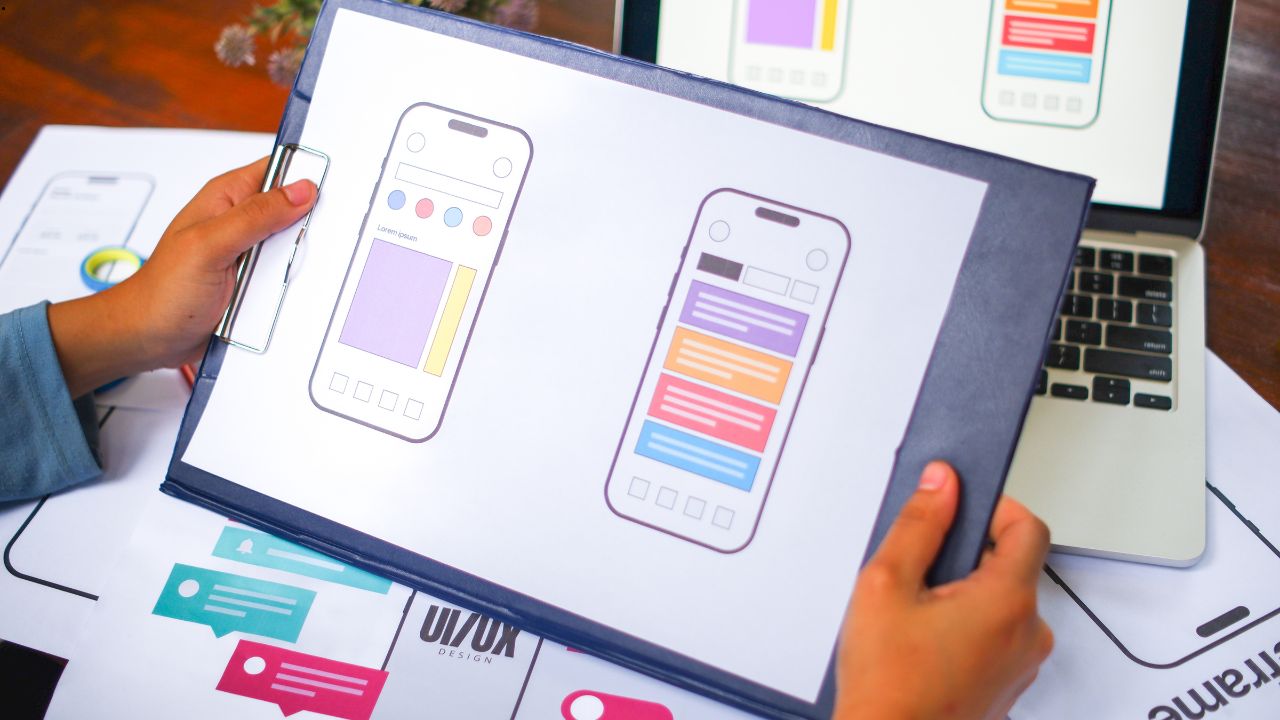
- Wireframing: Create low fidelity sketches that define layout, navigation, and information hierarchy without visual design details.
- Prototyping: Build interactive prototypes that simulate the user experience and allow stakeholders to test flows before development begins.
- Visual design: Develop the final look and feel including colour schemes, typography, icons, and branding elements.
- Usability testing: Test designs with real users to identify confusion, friction, or accessibility issues before committing to development.
Investing in design upfront reduces costly changes during development and improves customer satisfaction after launch.
Stage 4: Development and integration
This is where the app comes to life through code. Development typically proceeds in iterative cycles with regular testing and feedback.
Core development activities include:
- Frontend development: Building the mobile app interface for iOS and Android using the chosen technology stack.
- Backend development: Creating APIs, business logic, and data processing services that power the app.
- Core banking integration: Connecting the app to existing systems for account data, transaction processing, and customer information.
- Third party integrations: Implementing services such as identity verification, payment gateways, push notifications, and analytics.
- Security implementation: Building authentication, encryption, secure storage, and fraud detection mechanisms.
- Continuous testing: Running automated tests, manual QA, security assessments, and performance testing throughout development.
Agile methodologies with short development sprints allow teams to adapt to changing requirements and deliver working software incrementally.
Stage 5: Compliance and security testing
Financial applications face stringent regulatory requirements. This stage ensures your app meets all necessary standards before launch.
Activities include:
- Penetration testing: Simulating attacks to identify security vulnerabilities
- Compliance audits: Verifying adherence to regulations such as GDPR, PSD2, and local banking laws
- Accessibility testing: Ensuring the app works for users with disabilities
- Performance testing: Validating that the app performs well under high load and poor network conditions
- User acceptance testing: Having stakeholders and selected customers validate that the app meets requirements
Addressing compliance and security issues before launch prevents costly fixes and regulatory penalties later.
Stage 6: Launch and deployment
Launching a mobile banking app requires coordination across multiple teams and careful risk management.
Key steps include:
- App store submission: Preparing app store listings, screenshots, descriptions, and submitting for review on Apple App Store and Google Play Store.
- Phased rollout: Releasing to a small percentage of users first, monitoring performance and feedback, then gradually expanding availability.
- Marketing and communication: Informing customers about the new app through email, website, branches, and other channels.
- Support readiness: Training customer service teams and preparing help documentation and FAQs.
- Monitoring setup: Implementing real time monitoring for crashes, errors, performance issues, and security incidents.
A controlled launch reduces risk and helps ensure smooth service for both personal and commercial banking customers. Learn more about banking services to enhance your app’s offerings.
Stage 7: Post launch optimisation and iteration
Launching the app is not the end of the journey. Continuous improvement based on user feedback and data keeps the app competitive and relevant.
Ongoing activities include:
- Monitoring usage analytics and performance metrics
- Gathering and analysing customer feedback
- Fixing bugs and addressing technical issues
- Adding new features based on customer demand
- Updating security measures and compliance requirements
- Optimising performance and user experience
Treating your mobile banking app as a living product rather than a finished project ensures long term success.
Partnering for mobile banking app development success
The stages outlined above require expertise across multiple disciplines including mobile development, backend engineering, security, compliance, design, and financial services. Many organisations find that partnering with specialists accelerates delivery and improves outcomes.
Experts in mobile application development for banking bring proven methodologies, technical capabilities, and industry knowledge that reduce risk and time to market. WislaCode Solutions focuses on NextGen fintech solutions development and helps organisations transform their digital landscape. The team develops multifunctional mobile and web applications that fast track businesses and redefine user experiences, with comprehensive full stack capabilities covering data storage, backend, middleware, frontend architecture, design, and development.
Mobile banking app development stages: delivering quality financial applications
Each stage of mobile banking app development builds on the previous one, creating a structured path from initial concept to successful launch and beyond. Discovery and planning ensure you build the right product. Design creates an intuitive experience. Development brings the vision to life. Testing ensures quality and compliance. Launch introduces the app to customers. Ongoing optimisation maintains relevance and competitiveness.
By following these stages with discipline and attention to detail, financial institutions can deliver mobile banking applications that customers trust, regulators approve, and businesses benefit from in an increasingly digital financial services landscape.