
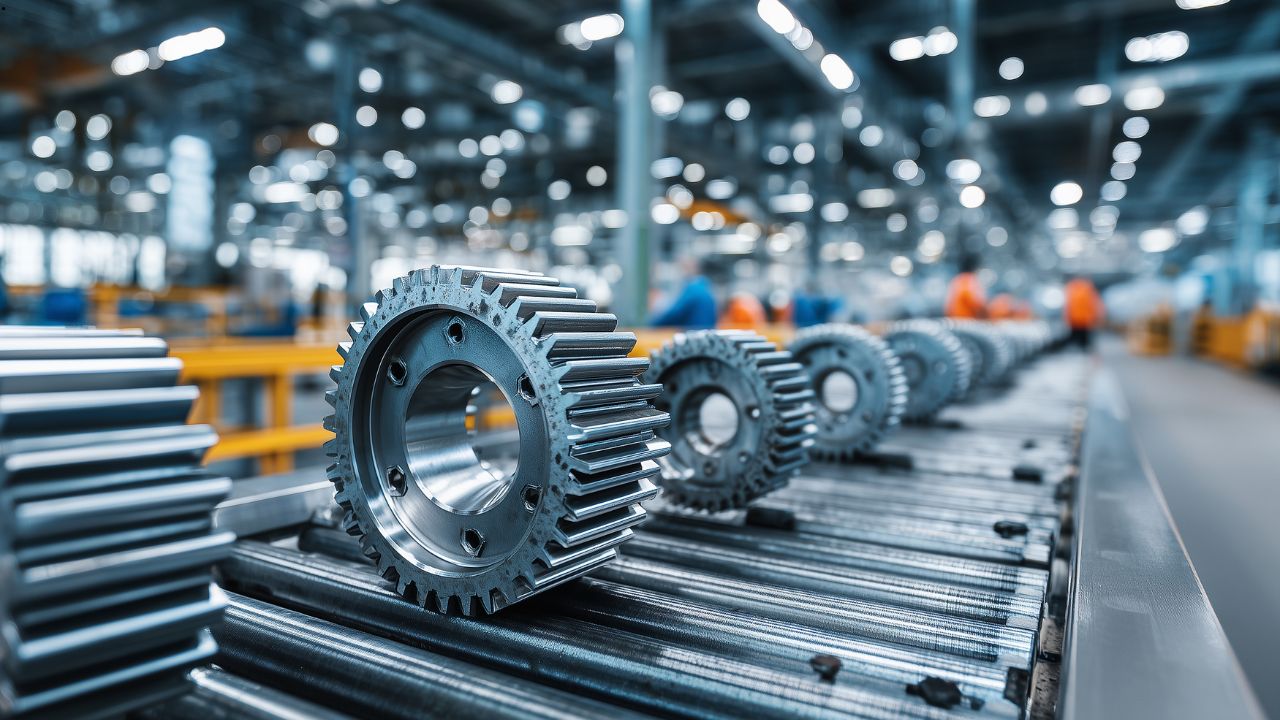
When people talk about innovation in technology, the conversation often revolves around software, artificial intelligence, robotics, or cloud systems. Yet behind almost every physical device that enables these technologies, there is a less visible but equally important foundation—precision manufacturing.
From data center infrastructure and telecom hardware to automotive systems and medical devices, the physical reliability of modern technology depends heavily on how accurately components are machined. As devices shrink and performance requirements increase, traditional manufacturing approaches are being pushed to their limits.
This shift has led to a renewed focus on highly specialized machining processes that prioritize consistency, repeatability, and micro-level precision. Among these, screw machining and Swiss-type CNC processes have become especially important in bridging the gap between design complexity and large-scale production.
The Hidden Backbone of Modern Hardware
Most end users never think about the metal components inside the devices they rely on every day. But engineers know that even the smallest deviation in a part’s geometry can lead to system instability, heat inefficiency, or mechanical failure.
Industries such as aerospace, telecommunications, automotive electronics, and medical technology all share a common requirement: high-volume production of extremely consistent parts.
This is where precision machining plays a foundational role. It is particularly effective for producing large quantities of small, cylindrical, or threaded components with high repeatability. In industries where millions of identical parts are required, this level of efficiency is critical.
A good example of how this capability is applied in real production environments can be seen in specialized manufacturing setups focused on precision-produced screw machine components, where consistency and speed must coexist without sacrificing dimensional accuracy.
These types of components often become invisible once assembled into larger systems, yet they are essential to structural integrity and long-term performance.
Why Traditional Machining Alone Is No Longer Enough
Conventional machining methods are still widely used across the manufacturing industry, but they face increasing limitations in today’s engineering environment.
Product designs are becoming more compact, while functional density is increasing. At the same time, industries are demanding faster turnaround times and tighter tolerances. This combination puts pressure on manufacturers to rethink how parts are produced at scale.
Another challenge is material diversity. Modern engineering now uses a wider range of metals and alloys, including stainless steel, titanium, and specialized composites. Each material behaves differently during cutting and forming, requiring highly controlled machining strategies.
As a result, manufacturers are increasingly turning to more specialized processes that combine automation with precision engineering principles.
The Role of Swiss-Type Screw Machining in High-Precision Production
Among the most advanced approaches in modern machining is Swiss-type screw machining. Unlike conventional lathes, Swiss machines support the workpiece very close to the cutting zone using a sliding headstock mechanism. This drastically reduces deflection and allows for extremely precise machining of long, slender, or complex parts.
This capability is especially valuable in industries such as medical device manufacturing, aerospace systems, and high-end electronics, where even microscopic deviations can affect performance.
In practical terms, Swiss screw machining allows manufacturers to produce parts with tight tolerances at high volume without sacrificing consistency. It also reduces the need for secondary operations, improving overall production efficiency.
Manufacturers offering dedicated solutions such as advanced Swiss screw machining services typically operate in highly controlled environments where tooling, feed rates, and material behavior are continuously optimized.
This level of specialization is one of the reasons Swiss machining has become a preferred method for producing mission-critical components in regulated industries.
CNC Swiss Machining and the Push Toward Integrated Manufacturing
While screw machining and Swiss-type turning focus on specific geometries and applications, CNC Swiss machining represents a more integrated approach to precision production.
By combining multi-axis control with Swiss-style stability, CNC Swiss systems allow manufacturers to handle complex geometries in a single setup. This reduces handling errors, improves cycle times, and ensures better consistency across production batches.
This approach aligns closely with broader trends in manufacturing digitalization. As CAD/CAM systems become more advanced, machining processes are increasingly simulated and optimized before production begins. This reduces material waste and shortens development cycles.
In many modern supply chains, this type of machining is no longer considered a niche capability but a core requirement for competitive production.
Companies that invest in capabilities such as high-precision CNC Swiss machining solutions are often better positioned to serve industries where engineering complexity and production speed must coexist.
This combination of flexibility and precision is becoming especially important in sectors like EV manufacturing, telecommunications infrastructure, and advanced robotics.
Manufacturing Trends Driving Demand for Precision Components
Several macro trends are accelerating demand for advanced machining capabilities:
1. Miniaturization of electronics
Devices are becoming smaller, but more powerful. This requires compact components with extremely tight tolerances.
2. Electrification of transportation
Electric vehicles rely heavily on precision-engineered metal components for thermal management, structural integrity, and energy efficiency.
3. Growth of data infrastructure
Data centers and communication networks require high-performance mechanical and electrical components that can operate reliably under continuous load.
4. Supply chain localization
Companies are increasingly diversifying suppliers to reduce geopolitical risk, increasing demand for flexible, high-capability machining partners.
These trends are reshaping how manufacturers think about sourcing and production strategy. It is no longer just about cost efficiency—it is about engineering reliability and supply resilience.
Choosing the Right Manufacturing Partner Matters More Than Ever
As machining processes become more advanced, selecting the right production partner has become a strategic decision rather than a procurement task.
A strong partner is not defined only by equipment capability, but also by process control, engineering communication, and quality assurance systems. The ability to maintain consistency across long production runs is often more important than achieving one-off precision.
Equally important is adaptability. Engineering designs frequently evolve during product development cycles, and manufacturers must be able to respond quickly without disrupting production schedules.
In this context, working with specialized machining providers who understand both engineering intent and production constraints becomes a significant competitive advantage.
Conclusion
Precision manufacturing is no longer a supporting function in modern technology—it is a core enabler of innovation. From small screw machine components to advanced CNC Swiss machined parts, the accuracy and reliability of physical components directly influence how far technology can evolve.
As industries continue to demand higher performance in smaller and more complex systems, the importance of specialized machining will only increase. Companies that invest in advanced manufacturing partnerships today are effectively building the foundation for tomorrow’s technological breakthroughs.
In the end, innovation does not only happen in software or design labs—it is also shaped quietly on the shop floor, one precision component at a time.