
Many startups move fast. They come up with a product idea, run a few small trial batches, get good results, and then assume the hard part is over. But when it comes to capsule products — supplements, nutraceuticals, or pharma formulations — that assumption can lead to real trouble.
Scaling capsule production is not simply doing more of the same thing. It brings new problems that small batches never showed. For technology-driven brands and manufacturing startups, understanding these challenges early can save a lot of money and time later.
Powder Flow Is More Complicated Than It Looks
At small scale, most powders seem manageable. You can stir, shake, or manually adjust when things go wrong. However, once you move to larger production volumes, powder behavior becomes a critical factor.
Different powder blends flow at different rates. Some powders clump. Others are too light and create air pockets. When filling capsules at scale, uneven flow causes inconsistent fill weights. Some capsules end up overfilled. Others are underfilled. Both are problems — one wastes material, and the other fails quality standards.
Powder flow depends on several factors:
- Particle size — finer powders tend to flow poorly
- Moisture content — humidity can cause clumping even in a controlled room
- Blend ratios — adding one ingredient can change how the whole mix behaves
So, before scaling, it helps to test your formulation under conditions that match your production environment. Small-batch results may not tell the whole story.
Capsule Size Changes Create Unexpected Problems
Startups often finalize a capsule size during early development and then treat it as fixed. But as production grows, many brands revisit their capsule size — either to fit more powder, reduce cost, or match retailer requirements.
Even a minor change in capsule size affects everything else in the process. The tooling on filling equipment must match capsule dimensions precisely. If you switch from a size 0 to a size 00 capsule, for instance, you may need new tooling sets or even different equipment.
Furthermore, the density of your powder blend determines how much actually fits inside a capsule. A blend that fills a size 0 perfectly at small scale might not behave the same after reformulation. So capsule size decisions should be made with production capacity in mind — not just what works on a lab bench.
Manual Capsule Filling Has Real Labor Limits
Many early-stage brands start with manual filling using hand-operated boards or simple desktop tools. This works fine at low volumes. It gives teams control, flexibility, and low startup cost.
But manual filling does not scale well. A hand-operated filling board can produce a few hundred capsules per hour at best. As order volumes grow, you need more workers doing repetitive tasks. This brings several issues:
- Consistency drops — human variation affects fill weights across batches
- Labor costs rise — more staff, more hours, and more training time
- Error rates increase — fatigue leads to mistakes that affect product quality
Beyond output limits, hygiene becomes harder to maintain when more people are handling product. Each additional person is a potential contamination risk. As a result, many brands hit a wall where manual filling simply cannot keep up without compromising quality or safety.
Hygiene and Cleaning Take More Effort at Scale
Cleaning might seem straightforward, but it becomes one of the most time-consuming parts of capsule production as volume grows. Equipment must be thoroughly cleaned between batches — especially when switching formulations. Cross-contamination between products is a serious quality and safety risk.
At small scale, cleaning is quick. At large scale, it can take hours. In addition, some equipment has components that are difficult to disassemble or clean properly. If cleaning is rushed or done incorrectly, residue from one batch ends up in the next.
Regulatory standards for supplement and pharma manufacturing are also strict about cleaning records. So, as you scale, cleaning protocols need to be documented, verified, and consistently followed. This adds process overhead that many startups underestimate when planning production timelines.
Batch Consistency Becomes Harder to Maintain
One of the most common surprises in scaling is that batch-to-batch consistency gets harder to achieve, not easier. At small scale, one person can oversee the entire process. At larger scale, multiple people, machines, and shifts are involved — and small variations add up.
Consistent capsule products require:
- Uniform blending — ingredients must be evenly distributed throughout the mix
- Stable fill weights — each capsule should contain the right amount, within tolerance
- Controlled environment — temperature and humidity affect powder behavior and capsule shell integrity
Without strong quality control at each step, you can end up with batches where some capsules meet spec and others do not. In regulated markets, failing a batch means losing product, time, and money.
When Automated Equipment Becomes Necessary
There is a point in almost every growing capsule brand’s journey where automation stops being optional. The exact threshold depends on your product and market, but when manual methods can no longer meet demand without quality trade-offs, it is time to look at automated solutions.
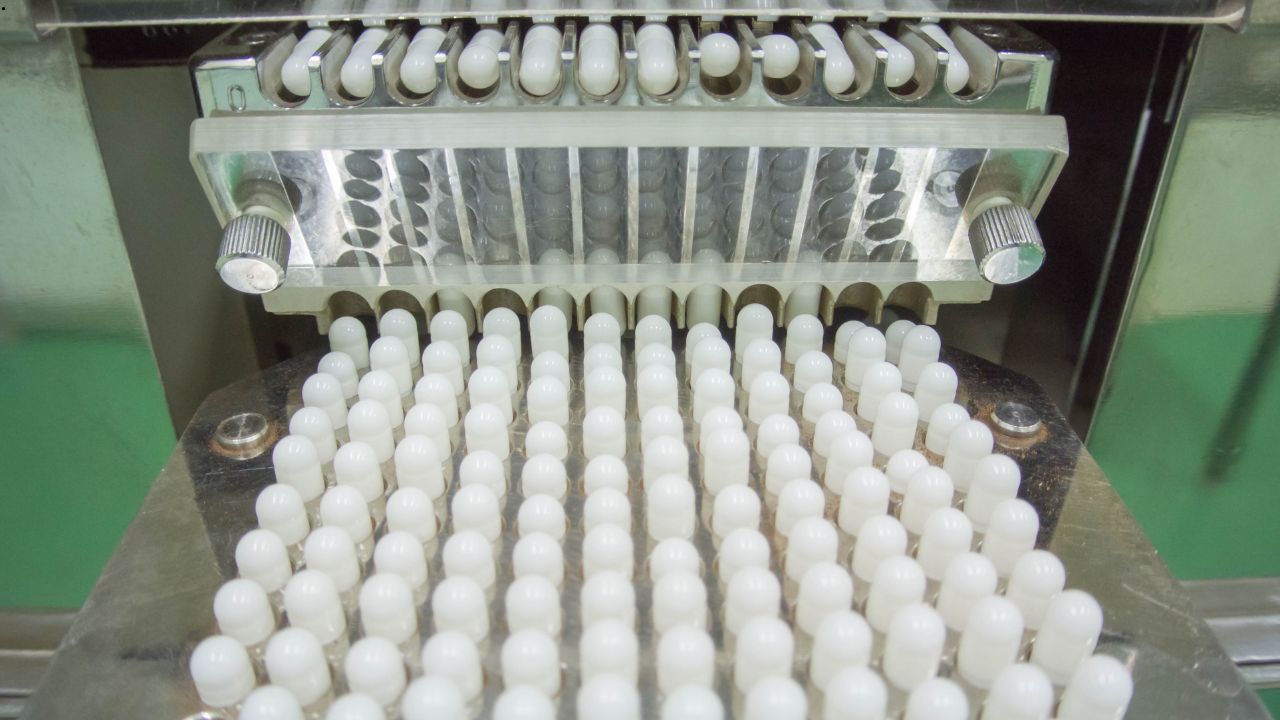
Automatic capsule filling machines handle filling at speeds that manual methods cannot match — often thousands of capsules per hour. They also apply consistent pressure and measure fill weights with greater precision. This is where choosing the right capsule filling machine becomes a real business decision, not just an equipment purchase.
However, automation is not a plug-and-play solution. It still requires properly formulated powders that flow well through machine dosing systems. It requires operator training. And it requires that your facility has the space, power supply, and environmental controls to support industrial equipment.
Additionally, automated equipment comes with its own cleaning and maintenance requirements. So the move to automation should be planned carefully, not made in a rush when production hits a crisis point.
Early Equipment Planning Makes a Difference
One of the best things a scaling brand can do is plan for equipment needs before they become urgent. Many startups wait until they are overwhelmed with orders before thinking about automation. By then, lead times for equipment, facility upgrades, and training become a bottleneck.
Planning early means you can:
- Choose a facility that is compatible with the equipment you will eventually need
- Design your formulation with machine filling in mind, not just hand filling
- Budget for equipment, training, and validation without financial shock
- Test equipment compatibility during lower-volume periods when there is room for adjustment
Even if you are not ready to invest in automated equipment right away, knowing what your production roadmap looks like helps you make smarter decisions today. For instance, it might influence which contract manufacturer you partner with, or how you design your product formulation.
Putting It Together
Capsule products look simple from the outside. But behind every bottle on a shelf is a production process that involves careful powder management, equipment decisions, hygiene protocols, and quality control. Each of these areas becomes more complex as volume grows.
For technology and manufacturing startups entering this space, the lesson is consistent: do not treat small-batch success as proof that large-scale production will be smooth. The two environments are genuinely different.
Brands that build production thinking into their early planning — testing formulations under realistic conditions, researching equipment options before they are needed, and building proper quality systems from the start — tend to have far less trouble when the time comes to scale.
The challenges are real. But they are also manageable, as long as you see them coming.