
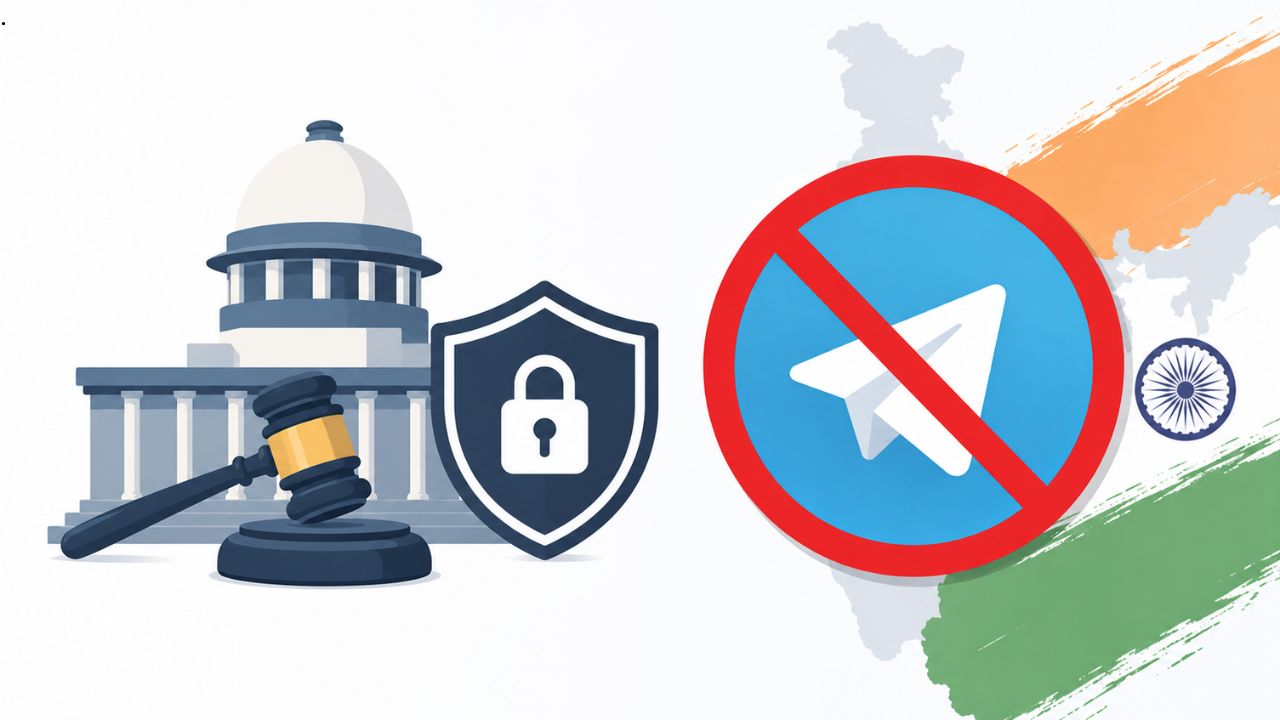
India blocked Telegram this week. For millions of users, the app simply stopped working. No warning. No countdown. Just gone.
The Indian government said it had a good reason. Channels on Telegram were selling what people claimed were leaked question papers from NEET-UG — the country’s biggest medical entrance exam. NEET-UG is taken by millions of students every year. The stakes are incredibly high. So when fake or real leaked papers started spreading, the government moved fast.
The ban came into effect on June 16, 2026. It was set to last until June 22.
Why Did India Ban Telegram?
India’s Ministry of Information Technology said that channels on Telegram were selling undergraduate medical entrance exam questions. They added that even fake questions could mislead students preparing for the test.
This was not the first time NEET-UG caused trouble. A month before this ban, India cancelled the results of the same exam. That too was linked to cheating allegations. So the pressure on authorities to act was already very high.
This time, they decided to go after the platform itself.
Telegram responded quickly. Its legal team argued in the Delhi High Court that the government should target specific channels instead of blocking the whole app. Telegram said it had already removed more than 900 links tied to illegal exam-related content. The company called the government’s account of their meetings “one-sided and inaccurate.”
However, the court sided with the government. On Friday, Delhi High Court judge Tejas Karia said the ban orders were properly reasoned and had followed legal procedure. The temporary block was upheld.
What Happened After the Ban?
As soon as India blocked Telegram, users started looking for workarounds. The response was almost immediate.
VPN downloads went through the roof. App intelligence firm Appfigures reported that the day the ban was announced was the biggest single day for VPN downloads in India since at least early 2025. Downloads jumped from a daily average of around 139,000 to more than 208,000 — a 49% increase in one day.
Some VPN apps saw even bigger jumps:
- Proton VPN downloads on Apple’s App Store rose 113%
- Turbo VPN downloads climbed 85% on the App Store
- NordVPN’s App Store downloads increased 41%
- Proton VPN on Google Play climbed from 8th to 2nd in the Tools category
Proton VPN also said its daily registrations from India rose 120% above normal levels the day after the ban. Windscribe, a Canadian VPN provider, said signups from India peaked about 100% above baseline.
Furthermore, people also moved away from Telegram groups and switched to other messaging apps. Signal downloads in India rose 72% on Apple’s App Store and a striking 322% on Google Play. Viber saw a 216% jump in App Store downloads. Even Telegram-linked app iMe went from about 827 daily downloads to more than 50,000 on Google Play.
But Did Anyone Actually Stop Using Telegram?
Here is the interesting part. Despite the block, Telegram’s daily active users in India actually went up.
Sensor Tower reported that Telegram’s active user count in India rose 17% on the very day the ban was announced. That was the app’s biggest single-day increase in the country since Meta’s massive outage in 2021.
Cloudflare also noticed a sharp rise in DNS requests for Telegram’s domains after the restriction. In other words, people were actively trying to reach Telegram even after it was blocked. VPNs clearly helped many of them get through.
This tells us something important. Banning an app does not always mean people stop using it. Often, it just pushes them toward workarounds.
What Did Telegram Say?
Telegram founder Pavel Durov publicly criticized the ban, saying it punished over 150 million ordinary Indian users rather than the actual fraudsters.
Durov pointed out that the leaked exam material had already spread elsewhere before Telegram even came into the picture. Blocking the app, he argued, would not undo the damage.
In court, Telegram’s lawyers said the company had cooperated with authorities. They removed channels when asked. They questioned whether a full platform ban was a fair response to content that was already circulating on other platforms too.
The government, on the other hand, defended the move. India’s Solicitor General Tushar Mehta told the court that a permanent ban might raise concerns about fairness and proportionality. But for now, the temporary measure had a clear purpose tied to the NEET retest.
Is India’s Telegram Ban Permanent?
No — at least not yet.
The current ban was set as a short-term measure running until June 22. It was directly tied to the NEET-UG retest. Government lawyers made clear in court that this was an emergency response, not a long-term policy decision.
That said, India has blocked Telegram before. Back in 2024, it temporarily shut down access over similar fraud concerns linked to another exam. So there is a pattern here.
Additionally, India is not alone. According to Surfshark’s Internet Shutdown Tracker, Telegram is currently blocked in 13 countries. It has faced disruptions in at least 40 others over the years. China and Iran have maintained long-term bans since 2015 and 2018. Russia blocked Telegram in 2018, lifted the ban in 2020, and then blocked it again more recently.
For now, India’s block appears to be temporary. But with the case now on record in the Delhi High Court, and with the government showing it is willing to take this step, future bans cannot be ruled out — especially if Telegram is linked to more fraud cases.
What This Means for India’s Internet Users
India is Telegram’s largest market. More than 150 million people use the app there. A ban of this scale affects journalists, students, businesses, and everyday people who rely on the platform for communication.
The surge in VPN usage shows that people are getting better at working around restrictions. NordVPN’s privacy team noted that users are reacting faster to platform blocks than they were even a few years ago. That reflects growing familiarity with digital tools.
At the same time, the case raises bigger questions about platform responsibility. When fraud spreads on a messaging app, who is accountable? The platform? The users? The fraudsters themselves?
These are not easy questions. But India’s handling of this ban — temporary, court-backed, and tied to a specific event — suggests the government is at least trying to find a middle ground between full-scale censorship and doing nothing.
Whether that balance holds in the long run remains to be seen.
Telegram’s temporary ban in India ended on June 22, 2026, following the NEET-UG retest. The case has been closely watched as one of the most significant legal clashes between a global tech platform and the Indian government this year.