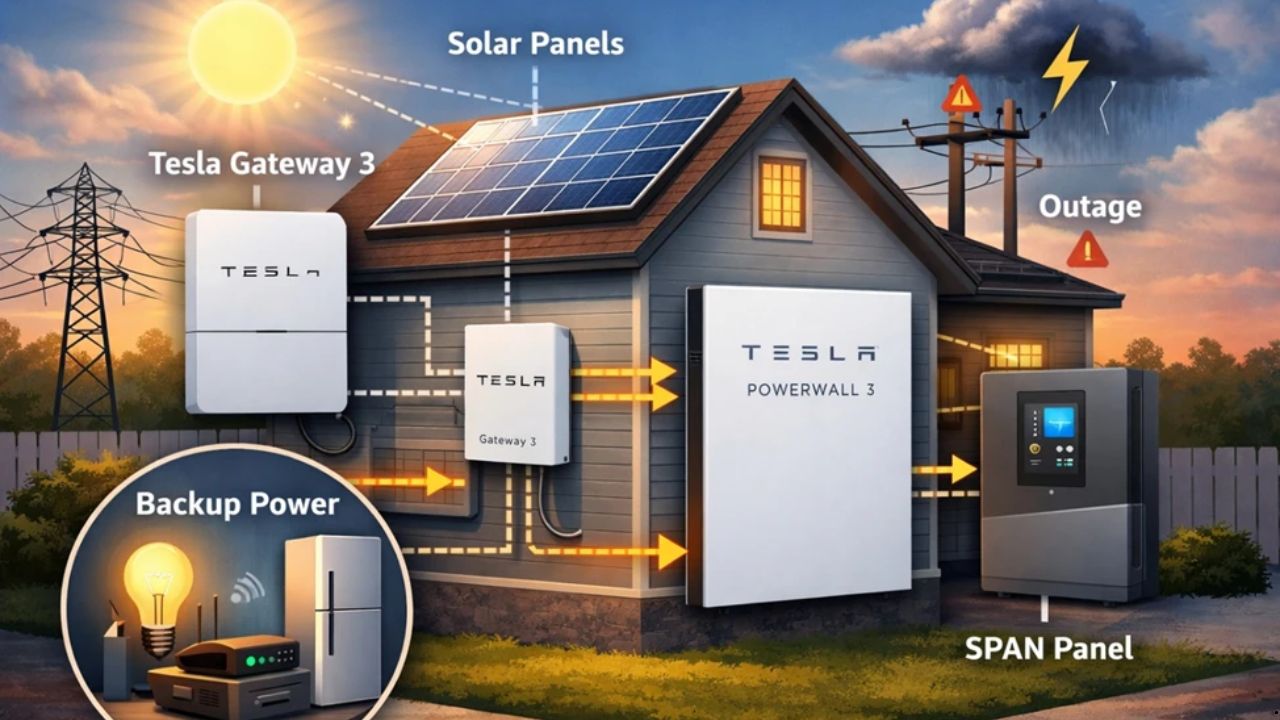
As solar energy adoption continues to grow across the United States, more homeowners are looking for reliable ways to store energy and maintain power during outages. In Texas, where grid instability and extreme weather events can disrupt electricity supply, combining solar panels with battery storage has become a smart and practical solution. One of the most advanced systems available today includes the Tesla Powerwall 3 and the Tesla Gateway.
If you’re planning a system, starting with a proper solar consultation helps you understand what setup fits your home best.
Table of Contents
What Is Tesla Gateway 3?
The Tesla Gateway 3 is a key component of the Tesla energy ecosystem. It acts as the control center that manages the flow of electricity between your solar panels, home, battery, and the utility grid. Unlike traditional systems, the Gateway automatically detects outages and seamlessly switches your home to backup power provided by the battery.
This intelligent system ensures that your home continues to receive electricity without interruption. When paired with solar panels and battery storage, it creates a fully integrated energy solution.
To better understand how this system works in real installations, you can explore the detailed explanation of tesla gateway 3 and its role in solar energy systems.
How Tesla Powerwall 3 Works with Gateway
The Tesla Powerwall 3 is part of modern battery storage systems that store extra solar energy for use at night or during outages.
The Gateway and Powerwall work together in a coordinated system:
- During the day, solar panels generate electricity
- Excess energy is stored in the Powerwall
- The Gateway monitors energy usage and grid conditions
- In case of a power outage, the Gateway instantly disconnects from the grid
- The Powerwall supplies backup power to the home
This seamless transition happens automatically, often without the homeowner even noticing.
Backup Power in Texas: Why It Matters
Texas homeowners are increasingly investing in battery storage systems due to unpredictable weather and grid challenges. From winter storms to summer heatwaves, having a reliable backup system is no longer a luxury — it’s a necessity.
With Tesla Powerwall 3 and Gateway, homeowners can:
- Keep essential appliances running
- Maintain lighting and internet access
- Avoid disruptions during outages
- Reduce dependence on the grid
In addition, integrating solar panels allows homeowners to recharge their batteries daily, making the system even more efficient.
Smart Energy Management with SPAN Panel
Modern solar systems go beyond just generating and storing energy. Many homeowners are now combining battery storage with smart energy management solutions like the SPAN Panel.
Unlike traditional electrical panels, SPAN allows users to monitor and control energy usage in real time. When used alongside Tesla Powerwall 3 and Tesla Gateway, it gives homeowners more control over which appliances receive power during outages.
This combination creates a smarter and more flexible home energy system.
Understanding Tesla Powerwall 3 Pricing
One of the most common questions homeowners ask is about the cost of installing a battery system. The tesla powerwall 3 price depends on several factors, including system size, installation complexity, and integration with solar panels.
While the upfront investment can seem significant, many homeowners find that the long-term savings, energy independence, and peace of mind make it worthwhile.
Is Tesla Gateway and Powerwall Worth It in 2026?
In 2026, solar energy systems are more advanced, efficient, and accessible than ever before. The combination of Tesla Gateway 3 and Powerwall 3 represents one of the most reliable solutions for homeowners who want energy security and control.
For those living in Texas, where energy reliability can be uncertain, investing in a solar battery system is a strategic decision. Not only does it protect against outages, but it also helps reduce electricity bills and increase property value.
As more homeowners adopt solar and battery storage, systems like Tesla’s will continue to play a key role in the future of residential energy.