
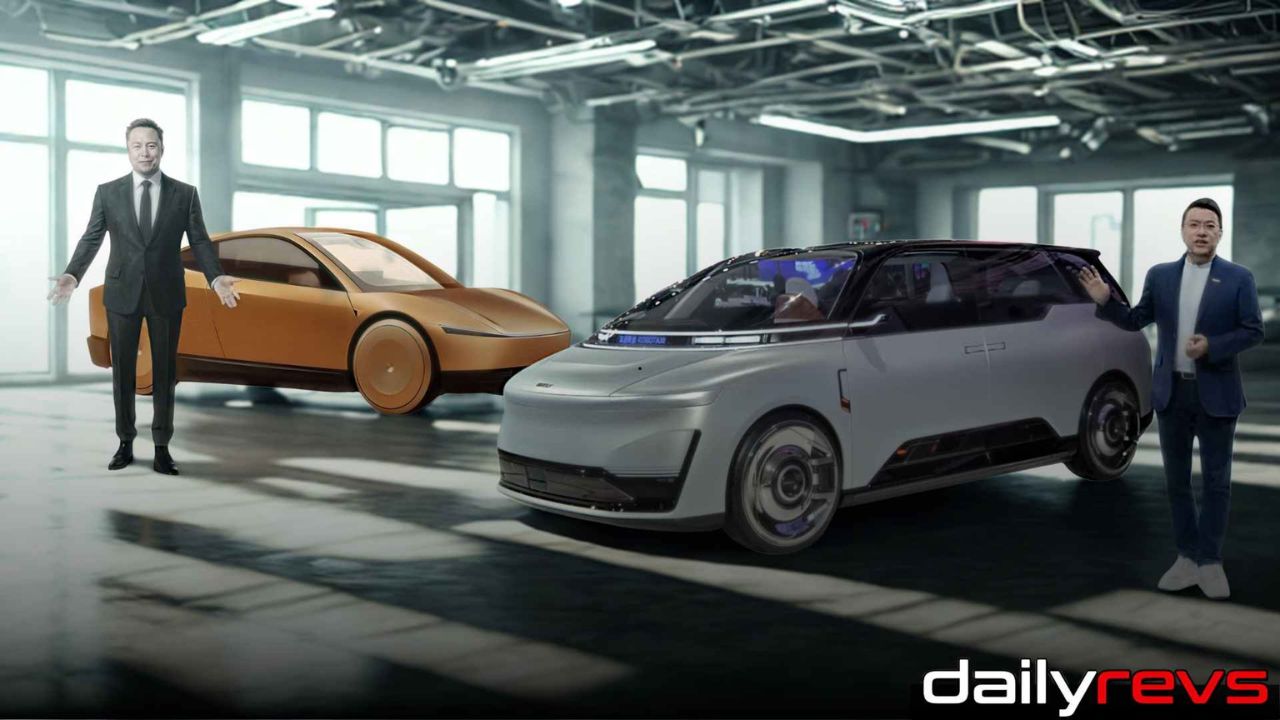
There are two emerging forms of robotaxi technology. The Tesla Cybercab will be a fully autonomous vehicle utilizing cost-effective production methods and very advanced software. The Geely EVA Cab is designed with existing ride-hailing/ride-sharing functionality in mind, and will also eliminate the need for a driver.
What will replace that driver is the main difference between these 2 products.
Tesla Starts With the System
Tesla’s Cybercab is a two-seat autonomous vehicle with no steering wheel or pedals. It’s built to operate as part of a larger network, where scale and frequency drive efficiency.
The idea is simple: keep the car inexpensive, keep it in use, and rely on a high number of trips.
This works in cities where most journeys are short and involve one or two passengers.
It also limits the car. Two seats and minimal storage restrict the types of trips it can handle. Group travel, airport runs, and shared rides fall outside its core use.
Geely Starts With the Ride
Geely’s EVA Cab follows a more familiar format. It’s designed to function as a direct replacement for a taxi. The cabin is upright, easy to access, and built to handle different types of trips. It can carry more passengers and adapt to a wider range of daily use.
Geely plans to deploy the EVA Cab through its Caocao ride-hailing platform, with a large-scale rollout expected over the next few years.
Where They Split
The difference isn’t autonomy alone. Tesla is focused on building a tightly connected ecosystem where software, energy systems, and autonomous vehicles work together to improve efficiency at scale. This approach is similar to how the Tesla Gateway 3 manages energy flow and system coordination. Geely, meanwhile, is prioritizing flexibility and passenger utility for everyday ride-hailing use.
Concerns Around the Cybercab
The two-seat layout raises practical concerns.
A taxi is expected to handle airport transfers, small groups, and shared rides. A two-seat vehicle cannot cover all of these.
Tesla’s response is scale. More vehicles, more trips.
That approach depends on demand staying within those limits.
Two Different Risks
Tesla depends on:
- autonomy working at scale
- regulatory approval
- consistent demand for short, individual trips
Geely depends on:
- fleet execution
- cost control
- steady expansion
Explore the Full Details
For a closer look at both vehicles, including image galleries and technical specifications:
- View full image galleries and specs of All Geely Models on Sale
- View full image galleries and specs of All Tesla Models on Sale
Conclusion
Tesla is building a network and shaping the vehicle around it.
Geely is building a taxi and scaling a system around that.