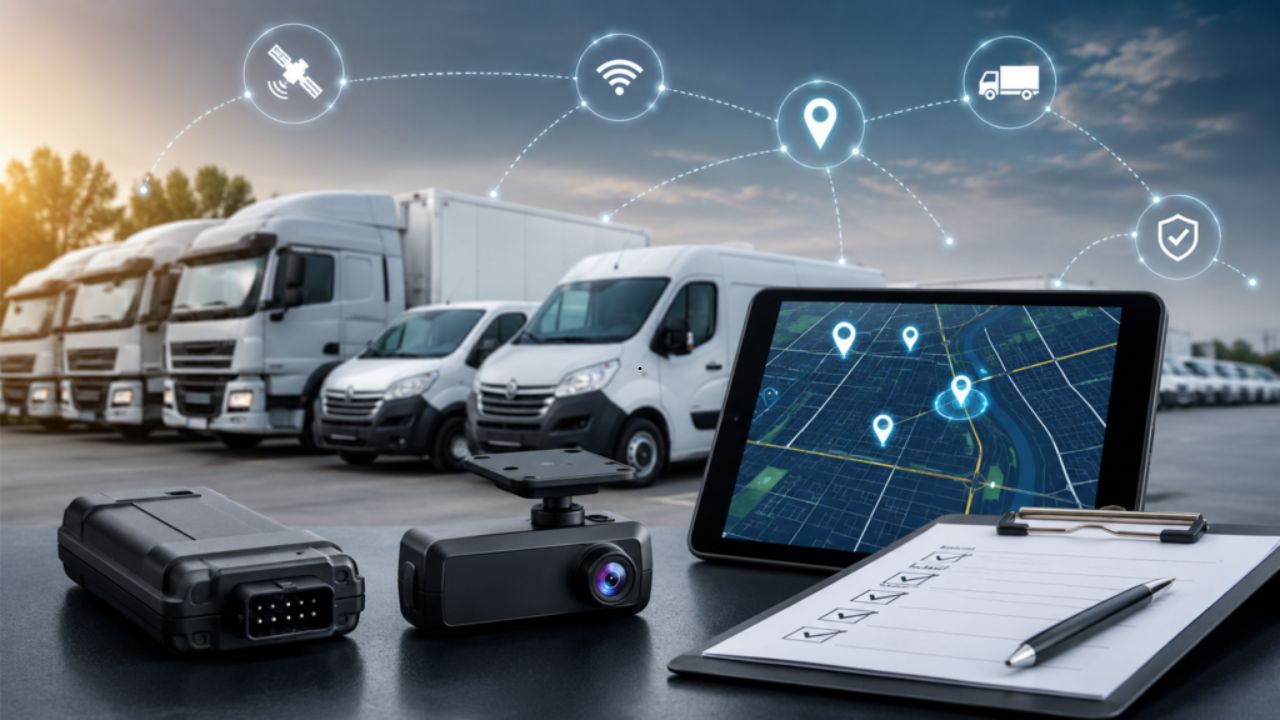
Investing in fleet technology is no longer limited to large transportation companies. Businesses across industries—from construction and field services to delivery, utilities, and municipal operations—are increasingly relying on connected solutions to improve vehicle visibility, strengthen driver accountability, and streamline daily operations. However, purchasing the right vehicle tracking equipment requires more than comparing prices or selecting the newest technology. Fleet buyers must carefully evaluate how a solution aligns with operational goals, long-term costs, and future business needs.
Many organizations begin their research by comparing a GPS Tracker with a dash cam with gps, only to realize that effective fleet management depends on a broader ecosystem of hardware, software, analytics, and support services. Choosing the right combination requires balancing functionality, scalability, budget, security, and ease of implementation. A thoughtful evaluation process helps businesses avoid costly upgrades, compatibility issues, and underutilized technology while maximizing the value of their investment.
Start with Clear Business Objectives
Every fleet operates differently, making it essential to define business priorities before evaluating available solutions. Some organizations focus on reducing fuel consumption, while others prioritize driver safety, regulatory compliance, theft prevention, or customer service. Understanding these priorities creates a framework for comparing different technologies objectively.
For example, a delivery company may value route optimization and accurate arrival estimates, whereas a construction business may place greater emphasis on monitoring equipment movement and preventing unauthorized vehicle use. Companies that operate service fleets often need better dispatch visibility and maintenance scheduling rather than advanced driver behavior analytics.
Without clearly defined objectives, organizations risk purchasing features they rarely use while overlooking capabilities that directly support operational improvements.
Evaluate Hardware Reliability
Fleet technology performs only as well as the hardware installed in each vehicle. Durable equipment designed for commercial environments typically delivers more reliable performance than low-cost consumer alternatives.
Buyers should consider installation quality, resistance to vibration, temperature extremes, moisture, and long-term durability. Commercial vehicles often operate in demanding environments where equipment is exposed to continuous movement, changing weather conditions, and extended operating hours.
Choosing dependable hardware may involve a higher initial investment, but frequent replacements and maintenance interruptions often make inexpensive devices more costly over time.
Consider Installation Requirements
Installation complexity affects both implementation costs and operational downtime. Some systems can be installed quickly using plug-in connectors, while others require professional wiring into the vehicle’s electrical system.
Plug-and-play options generally offer faster deployment and lower installation expenses. However, permanently installed devices often provide improved security, greater reliability, and reduced risk of tampering.
Organizations managing large fleets should evaluate how installation timelines may impact daily operations. Scheduling dozens or hundreds of vehicles for installation requires careful planning to minimize service disruptions.
Look Beyond Real-Time Location Tracking
While knowing vehicle locations is valuable, modern fleet management systems provide significantly more operational insight.
Advanced solutions can monitor vehicle utilization, idle time, route efficiency, engine diagnostics, maintenance schedules, fuel usage, harsh braking, rapid acceleration, speeding events, and unauthorized vehicle operation.
The goal is not simply collecting data but generating actionable information that helps managers make informed decisions. Businesses should determine which performance indicators genuinely support their operational goals rather than selecting every available metric.
Assess Reporting and Analytics
Raw data has limited value unless it can be converted into understandable reports.
Good reporting tools help managers spot long-term trends, compare driver performance, and track operating costs without digging through spreadsheets. Many fleets now lean on vehicle tracking analytics to turn raw GPS and sensor data into decisions they can actually act on, rather than numbers that just sit in a dashboard.
Some organizations require simple daily summaries, while others benefit from advanced analytics capable of supporting strategic planning and operational forecasting.
Choosing the appropriate level of reporting depends largely on organizational size, available staff, and decision-making processes.
Understand Mapping and Route Optimization Features
Accurate mapping capabilities contribute directly to operational efficiency.
Businesses operating service vehicles or delivery fleets benefit from intelligent routing that accounts for traffic patterns, travel distances, customer locations, and scheduling priorities.
However, route optimization should remain flexible. Automatically generated routes may not always account for local road conditions, customer preferences, temporary closures, or specialized service requirements.
The most effective solutions combine automated recommendations with the ability for dispatchers and drivers to make informed adjustments when necessary.
Evaluate Driver Safety Features
Driver safety has become one of the primary reasons organizations invest in connected fleet technologies.
Modern systems can identify behaviors such as speeding, distracted driving, harsh braking, aggressive acceleration, excessive cornering, and prolonged idling. Some solutions provide immediate coaching alerts that encourage safer driving habits before risky behavior leads to accidents.
Organizations should evaluate whether these features align with their safety culture. Excessive monitoring may create resistance among employees if communication and training are not handled appropriately.
Balancing accountability with employee trust is essential for successful implementation.
Consider Video-Based Monitoring
Video technology has become increasingly valuable for commercial fleets because it provides context that location information alone cannot deliver.
Recorded footage can assist with accident investigations, insurance claims, driver training, and dispute resolution. Multiple camera angles may also improve visibility around larger commercial vehicles.
However, video systems generate significantly larger amounts of data than location tracking alone. Organizations should evaluate storage requirements, video retrieval speed, privacy policies, and bandwidth usage before selecting a solution.
Finding the right balance between comprehensive video coverage and manageable operational costs is an important consideration.
Examine Maintenance Management Capabilities
Unexpected vehicle breakdowns often create expensive disruptions.
Fleet management solutions that integrate maintenance scheduling with vehicle diagnostics help organizations identify potential issues before they develop into major repairs.
Automated reminders for inspections, oil changes, tire rotations, and preventive servicing reduce the likelihood of unexpected downtime while extending vehicle lifespan.
Some organizations may require sophisticated diagnostic capabilities, while smaller fleets may only need maintenance scheduling and service reminders.
Selecting features that match actual maintenance processes prevents unnecessary complexity.
Analyze Scalability
Business needs rarely remain static.
A fleet consisting of twenty vehicles today may expand significantly over the next several years. Choosing technology that accommodates future growth reduces the need for costly replacements and system migrations.
Scalable platforms should support additional vehicles, multiple business locations, expanding reporting requirements, and integration with new operational tools.
Planning for future growth often results in greater long-term value than selecting the least expensive option available today.
Evaluate Software Usability
Even the most advanced technology delivers limited value if employees struggle to use it.
Fleet managers, dispatchers, maintenance personnel, and executives often require different interfaces and reporting tools.
An intuitive platform reduces training time, improves adoption rates, and increases the likelihood that valuable information will actually influence daily decisions.
Organizations should request demonstrations, trial periods, or pilot programs to evaluate software usability before making a long-term commitment.
Assess Mobile Accessibility
Today’s fleet managers rarely remain behind a desk throughout the workday.
Mobile applications allow supervisors to monitor vehicles, receive alerts, approve maintenance activities, communicate with drivers, and review operational reports from virtually anywhere.
A well-designed mobile experience improves responsiveness without requiring constant access to desktop systems.
Businesses should evaluate whether mobile functionality includes the same critical features available through the primary management platform.
Review Data Accuracy
Decision-making depends heavily on reliable information.
Inaccurate location updates, delayed reporting, inconsistent diagnostics, or unreliable alerts reduce confidence in the system and may lead managers to ignore valuable insights.
Organizations should investigate update frequency, positioning accuracy, historical data reliability, and independent performance reviews before investing.
Reliable data supports better planning, while inconsistent information may create additional operational uncertainty.
Understand Data Security and Privacy
Connected fleet technologies collect significant amounts of operational information.
This includes vehicle locations, driver behavior, maintenance records, operational schedules, and sometimes video footage.
Protecting this information requires strong encryption, secure authentication methods, regular software updates, and clearly defined access controls.
Businesses should also establish transparent internal policies explaining how operational data will be collected, stored, and used.
Maintaining employee trust is just as important as protecting company information.
Evaluate Integration with Existing Systems
Fleet technology rarely operates in isolation.
Many organizations already use accounting software, payroll systems, dispatch platforms, maintenance applications, customer relationship management tools, or enterprise resource planning software.
Selecting technology that integrates smoothly with existing systems reduces duplicate data entry, improves workflow efficiency, and minimizes administrative effort.
Compatibility should be evaluated early in the purchasing process to avoid unexpected implementation challenges later.
Compare Subscription Costs Carefully
Purchase price represents only one component of total ownership costs.
Recurring subscription fees, installation charges, maintenance expenses, software licensing, training, technical support, and future hardware replacements all contribute to long-term investment.
Some providers offer lower hardware costs but higher monthly service fees. Others may charge additional costs for premium reports, expanded storage, or advanced analytics.
Comparing total ownership costs over several years provides a more realistic financial assessment than focusing solely on initial pricing.
Consider Customer Support Quality
Technology inevitably requires occasional assistance.
Reliable technical support becomes especially important during installation, software updates, troubleshooting, and hardware replacement.
Organizations should evaluate support availability, response times, onboarding assistance, training resources, and warranty coverage before making purchasing decisions.
Strong customer support often contributes as much to long-term satisfaction as product features themselves.
Balance Customization and Simplicity
Highly customizable systems provide flexibility for complex fleet operations.
Organizations can configure reports, alerts, dashboards, maintenance schedules, and operational workflows according to specific business requirements.
However, excessive customization may increase implementation time, employee training requirements, and ongoing administrative complexity.
Smaller organizations often benefit from standardized solutions that require minimal configuration, while larger enterprises may justify more sophisticated customization options.
Selecting the appropriate balance depends on organizational resources and operational complexity.
Evaluate Regulatory and Compliance Support
Certain industries operate under strict transportation regulations and reporting requirements.
Fleet technology may assist with electronic recordkeeping, driver activity documentation, inspection scheduling, and operational reporting.
Organizations should determine whether compliance features match applicable regulations within their industry rather than assuming every platform provides identical capabilities.
Investing in appropriate compliance support can reduce administrative workload while minimizing regulatory risks.
Plan for Employee Adoption
Technology succeeds only when employees understand its purpose and value.
Drivers may initially perceive monitoring systems as surveillance tools rather than operational resources. Open communication helps explain how connected fleet technology supports safety, reduces paperwork, protects drivers during accident investigations, and improves operational efficiency.
Providing training, addressing concerns, and involving employees during implementation encourages greater acceptance and smoother adoption.
Organizations that prioritize change management often experience stronger long-term results than those focusing solely on technology installation.
Measure Long-Term Return on Investment
Evaluating success requires looking beyond immediate cost savings.
A comprehensive assessment should consider reductions in fuel consumption, maintenance expenses, accident frequency, insurance claims, unauthorized vehicle usage, administrative workload, and customer complaints.
Additional benefits may include improved scheduling accuracy, increased vehicle utilization, stronger driver accountability, enhanced customer satisfaction, and better resource planning.
Although some improvements are easily measured financially, others contribute to operational resilience and business reputation over many years.
Organizations should establish performance benchmarks before implementation so future improvements can be measured objectively.
Wrapping Up
Selecting fleet technology is a strategic investment that affects nearly every aspect of vehicle operations. The best solution is not necessarily the one with the largest feature list or the lowest purchase price, but the one that aligns most closely with an organization’s operational objectives, workforce needs, growth plans, and long-term budget.
By carefully evaluating hardware reliability, software usability, reporting capabilities, maintenance support, scalability, security, integration, customer service, and employee adoption, fleet buyers can make informed decisions that deliver lasting value. Taking a structured approach to the evaluation process helps organizations reduce operational risks, improve efficiency, and build a connected fleet capable of adapting to changing business demands for years to come.