
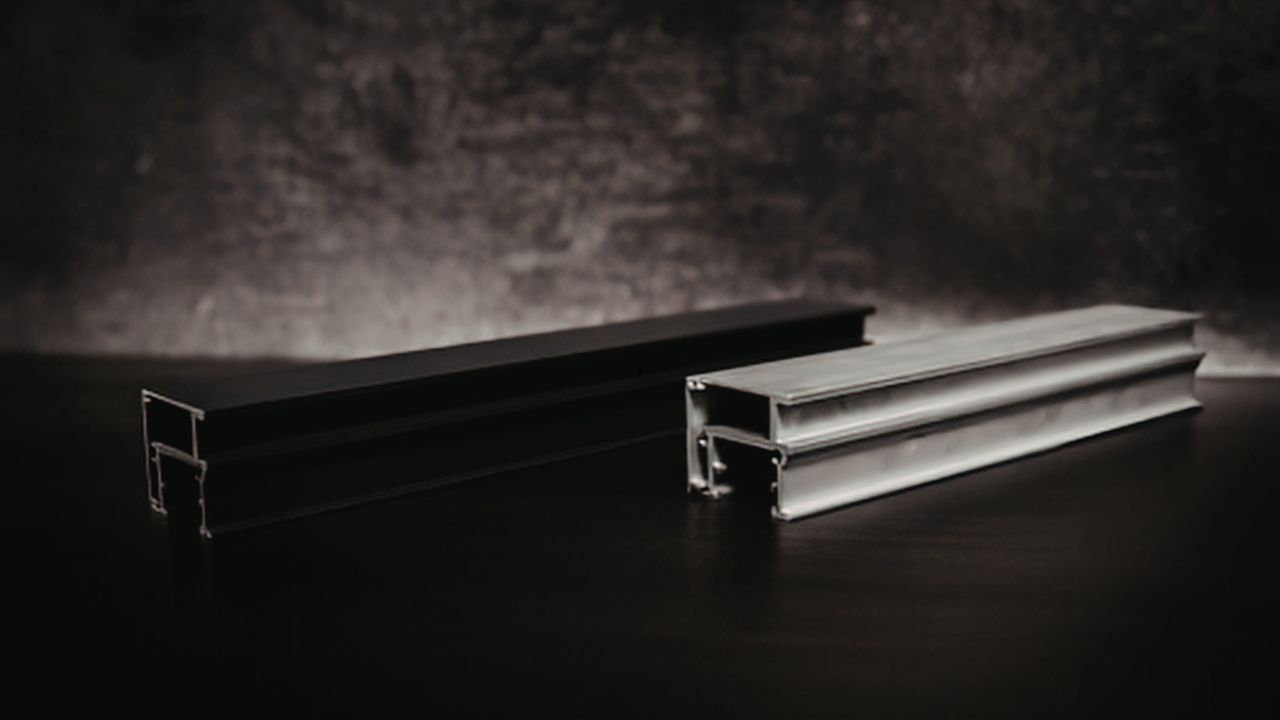
In modern manufacturing, reducing weight is only part of the challenge. Product teams also need components that are efficient to assemble, consistent in production, and flexible enough to support custom features without driving up unnecessary complexity. That is one reason custom aluminum extrusion profiles are used across automation systems, electronics, transportation equipment, and industrial assemblies. When designed well, they do more than provide shape. They help simplify product structures, reduce part counts, and create a cleaner path from concept to scalable production.
What Makes Custom Aluminum Extrusion Profiles Different From Standard Aluminum Shapes
Standard aluminum shapes work well for simple designs, but many industrial products need more than generic angles, channels, or tubes. Custom aluminum extrusion profiles are designed around functional requirements, allowing engineers to integrate mounting points, cable paths, support ribs, and assembly features into one cross-section. This makes the part more application-specific from the start and reduces reliance on extra brackets or welded pieces. Material selection also matters, since strength, corrosion resistance, machinability, and finishing requirements all affect how well a profile performs in production. Teams comparing alloys often benefit from understanding aluminum material properties before finalizing profile geometry.
How Custom Profiles Reduce Part Count and Simplify Assembly
A custom extrusion profile can replace multiple separate components by integrating mounting surfaces, reinforcement features, and cable-routing functions into a single cross-section. This reduces part count, simplifies purchasing and inventory, and shortens assembly time. With fewer brackets, fasteners, and joining steps, manufacturers can build products more consistently and standardize designs across different sizes or configurations, making custom aluminum extrusion profiles especially valuable for modular product platforms.
How Custom Extrusion Profiles Improve Product Design Efficiency
| Design Goal | How a Custom Extrusion Profile Helps |
|---|---|
| Reduce component count | Integrates multiple functions into one cross-section |
| Improve assembly efficiency | Reduces separate brackets, supports, and joining steps |
| Support lightweight design | Uses aluminum’s strength-to-weight advantage effectively |
| Improve repeatability | Standardized cross-sections simplify production and assembly |
| Reduce downstream complexity | Makes machining and finishing easier to plan around a stable profile |
Where Custom Aluminum Extrusion Profiles Fit Best in Modern Manufacturing
The value of custom aluminum extrusion profiles becomes much clearer when looking at the types of products that depend on repeatable structures, clean integration, and efficient assembly. Common applications include:
- Automation and industrial equipment — machine frames, guarding structures, sensor supports, and modular mounting systems that benefit from integrated fastening features.
- Electronics and electrical products — enclosures, LED housings, heat-dissipation structures, and battery-related support components where weight, appearance, and corrosion resistance all matter.
- Transportation and mobility systems — lightweight structural members, support rails, and repeated profile sections that help reduce assembly complexity while improving production consistency.
- Industrial assemblies and modular systems — machine covers, support rails, and integrated mounting profiles used across equipment platforms and configurable product lines.
These applications all share one common requirement: they benefit from profiles that combine structural efficiency with predictable repeatability. Instead of fabricating multiple small parts and joining them later, manufacturers can often start with a section that already supports the way the final product will be assembled and used.
Typical Applications for Custom Aluminum Extrusion Profiles
| Industry / Product Area | Typical Use of Custom Profiles |
| Automation equipment | Frames, supports, sensor brackets, and guarding structures |
| Electronics | Enclosures, heat-dissipation structures, and LED housings |
| Transportation | Lightweight structural members and support parts |
| Industrial equipment | Modular rails, mounting systems, and machine covers |
From Profile Design to Finishing: Why the Full Manufacturing Workflow Matters
A successful extrusion project is not defined by the profile alone. Final quality depends on how well profile design, die development, extrusion stability, cutting, CNC machining, and finishing work together. A profile may look good in CAD but still create problems if it is difficult to extrude consistently, hard to fixture, or prone to cosmetic issues after anodizing or powder coating. Manufacturers that understand the full custom aluminum extrusion process can better align profile geometry with downstream machining, finishing, and assembly requirements from the start.
Key Engineering Factors to Evaluate Before Finalizing a Custom Profile
Before a custom profile moves into tooling, engineers should review more than the cross-section itself. A practical evaluation usually includes the following points:
- Wall thickness balance — Large differences between thick and thin sections can make extrusion behavior harder to control and may reduce dimensional consistency.
- Corner radii and die feasibility — Sharp transitions may look efficient in CAD but can complicate die design, material flow, and surface quality.
- Alloy selection — Mechanical strength, corrosion resistance, machinability, and anodizing response should all be considered together rather than in isolation.
- Tolerance planning — Some dimensions are realistic for extrusion control, while critical interfaces may need to be finished by CNC machining afterward.
- Feature strategy — Holes, threads, sealing surfaces, and tight-fit features often perform better when machined after extrusion rather than formed directly in the profile.
These engineering choices are often what separate a profile that looks acceptable on paper from one that performs reliably in production. For engineers working through those decisions in detail, a dedicated custom aluminum extrusion design guide can be a useful reference before locking in final geometry.
When Custom Extrusion Makes More Sense Than Plate Machining, Welding, or Casting
Not every metal component should be extruded. But when a part is built around a repeated cross-section, needs to stay lightweight, or would benefit from combining multiple functions into one structural member, extrusion often becomes a strong option. The more a product relies on linear geometry with consistent features along its length, the more natural extrusion becomes as a manufacturing route.
By contrast, plate machining can be effective for simple low-volume parts, but it often removes a significant amount of material and may require multiple setups for a part that could otherwise begin with a near-net profile. Welded fabrication is useful for larger structures, yet it adds labor, joining complexity, distortion risk, and additional finishing work. Casting can be the right choice for complex 3D geometry at high volume, but it introduces its own tooling and process constraints.
Choosing Between Extrusion, Plate Machining, Welding, and Casting
| Manufacturing Option | Best Fit | Main Limitation |
| Custom aluminum extrusion profiles | Repeated cross-sections, lightweight structures, and scalable production | Initial die investment |
| Plate machining | Low-volume parts with simple geometry | Higher material waste and longer machining time |
| Welded fabrication | Large fabricated structures | More labor, distortion risk, and additional finishing work |
| Casting | Complex 3D shapes at high production volumes | High tooling cost and process limitations |
In other words, extrusion tends to make the most sense when the part’s value is concentrated in a functional cross-section that can be repeated efficiently and supported by secondary machining only where it truly adds value.
Choosing the Right Supplier for Custom Aluminum Extrusion Projects
For buyers, selecting the right supplier is about more than finding a shop that can simply extrude a shape. The better question is whether that supplier can turn a profile concept into a reliable production component. Key things to evaluate include:
1. Manufacturability support before tooling — Can the supplier review wall thickness transitions, likely tolerance risks, and secondary machining needs before production starts?
2. Integrated manufacturing capability — Do they understand extrusion, CNC machining, and finishing as one connected process rather than separate operations?
3. Application knowledge — Can they distinguish the needs of structural parts, cosmetic enclosures, and precision assembly components?
4. Prototype-to-production flexibility — Can they support both early-stage validation and later production volumes without changing the technical direction of the project?
5. Clear communication on tolerances and secondary operations — Do they define which features are extrusion-controlled and which will be machined later?
In the end, the right manufacturing partner is not simply the one who can produce an aluminum shape. It is the one who can help translate that shape into a stable, repeatable, application-ready part.
Frequently Asked Questions About Custom Aluminum Extrusion Profiles
What are custom aluminum extrusion profiles used for?
Custom aluminum extrusion profiles are widely used in automation equipment, electronics housings, transportation components, modular frames, machine covers, and structural support systems. They are especially useful when a product needs a repeated cross-section that combines multiple functions such as mounting, reinforcement, cable routing, or enclosure support within one part.
Can custom aluminum extrusion profiles reduce machining and assembly costs?
They often can, especially when the profile is designed to replace multiple fabricated or machined components. By integrating support features, grooves, mounting points, or alignment surfaces into one cross-section, a custom profile can reduce part count, simplify assembly, and lower the amount of downstream machining required. Actual savings still depend on design quality, production volume, and the chosen manufacturing route.
How do I know whether a feature should be extruded or machined later?
Features that repeat consistently along the length of the part are often good candidates for extrusion. However, precision holes, threads, critical sealing faces, and tight assembly interfaces are frequently better machined after extrusion. The decision usually depends on tolerance expectations, cosmetic requirements, functional importance, and how the part will be fixtured during downstream processing.
Are custom aluminum extrusion profiles suitable for low-volume projects?
They can be, particularly when the profile simplifies assembly or supports a product platform that will later scale into larger production. Even if initial volumes are modest, the long-term value of a custom profile may still justify the tooling investment when it improves product design, reduces part count, or creates a more efficient manufacturing path over the life of the program.