
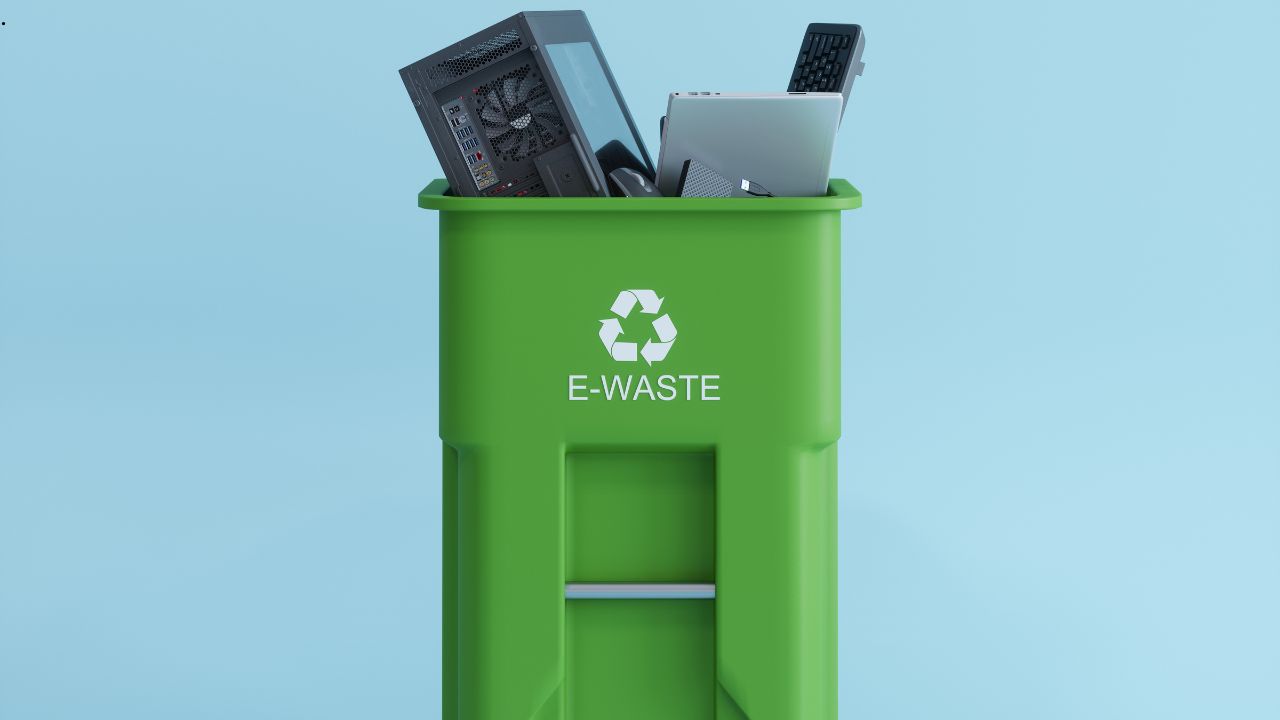
In 2026, electronics waste is no longer just an environmental issue discussed in sustainability reports. It is a boardroom issue, a procurement issue, a compliance issue, and increasingly, a profitability issue. Businesses that generate, collect, refurbish, dismantle, or trade electronic components are under greater pressure to prove where materials come from, where they go, and how valuable resources are recovered.
That is where traceable recycling changes the conversation. Instead of treating discarded devices as a cost center, companies can manage them as a documented material stream with measurable financial, operational, and reputational value. For organizations across Europe, this shift is becoming essential as regulators tighten expectations, customers demand transparency, and raw material markets remain volatile.
The strongest recycling strategies in 2026 are not built on disposal alone. They are built on visibility, verified assessment, and trusted recovery partners that can turn complex waste flows into accountable business processes.
Why traceability matters more than ever
Electronic waste contains more than obsolete hardware. It often includes recoverable copper, aluminum, precious metals, reusable subcomponents, and data-bearing assets that require careful handling. Without traceability, companies risk losing value at multiple points: underpriced material sales, undocumented transfers, regulatory gaps, and reputational exposure if downstream processing is unclear.
Traceability means being able to document what was collected, how it was classified, how its value was assessed, and where it moved next. In practice, this can help businesses answer critical questions quickly:
- What types of electronics are generating the highest recovery value?
- Which material streams should be separated earlier for better returns?
- Can finance teams verify that payouts match market realities?
- Can compliance teams demonstrate responsible handling if audited?
- Can sustainability leaders support ESG claims with evidence instead of estimates?
These are not small advantages. They affect margins, reporting confidence, and long-term supplier credibility.
The hidden cost of unstructured e-waste handling
Many businesses still manage electronics disposal informally. Understanding reverse logistics systems helps companies design clearer collection, tracking, and recovery flows for electronic waste before it loses value. Items may be stockpiled, mixed with low-value scrap, sold in bulk without detailed evaluation, or moved through networks that provide limited documentation. At first glance, that may seem efficient. In reality, it can create avoidable losses.
For example, mixed loads often reduce pricing accuracy because higher-value fractions are not properly identified. Printed circuit boards, cable-rich assemblies, and catalytic-related electronic parts may contain material worth significantly more than general scrap pricing suggests. When businesses do not receive laboratory-supported or database-backed assessments, they may be leaving meaningful revenue on the table.
There is also an operational cost. Unclear recycling pathways can slow internal approvals, complicate year-end reporting, and raise concerns from customers who increasingly ask how waste and surplus equipment are managed. A process that looked convenient in the short term can become expensive when viewed through the lens of audit readiness and supply chain accountability.
Traceable recycling is a financial strategy, not just a green initiative
One of the biggest misconceptions in the market is that responsible electronics recycling is mainly about corporate citizenship. That still matters, of course, but in 2026 the strongest business case is financial.
Traceable recycling improves commercial outcomes in several ways:
1. Better material identification
When materials are evaluated using structured databases, advanced testing methods, and current market knowledge, pricing becomes far more accurate. Businesses can distinguish between low-grade and high-grade electronic streams instead of accepting one blended rate.
2. Faster decision-making
Documented evaluations make it easier for finance, operations, and procurement teams to approve transactions. That reduces delays and improves cash flow, especially for companies processing recurring volumes.
3. Stronger downstream confidence
Working with a professional recycler that emphasizes quality standards and transparent handling reduces uncertainty. That matters for enterprises managing supplier risk, customer expectations, and internal controls.
4. Support for circular economy goals
Recovering metals and reusable material fractions helps reduce dependence on virgin resources. For many businesses, that aligns with both sustainability objectives and economic resilience.
In other words, traceability helps companies protect value before material leaves the site and prove value after it has been processed.
What businesses should look for in a recycling partner
Not every buyer or recycler offers the same level of transparency. If traceability is part of your 2026 strategy, it is worth evaluating partners against a few practical criteria.
- Assessment capability: Can they evaluate material using real technical expertise rather than broad visual estimates alone?
- Data depth: Do they rely on updated databases and detailed classification methods?
- Laboratory support: Is there access to modern testing that improves pricing accuracy?
- Payment transparency: Are settlements fast, clear, and easy to verify?
- Operational reliability: Can they handle repeat business professionally and consistently?
This is one reason companies are paying closer attention to specialized firms such as Metalbee. Rather than positioning recycling as a basic pickup-and-payment service, the company emphasizes accurate evaluation, secure transactions, and sustainable recovery across electronic and metal-bearing streams. That model is increasingly relevant for organizations that want both environmental responsibility and commercial clarity.
Why specialization matters in electronics recycling
Electronics recycling is becoming more technical, not less. Devices are more compact, materials are more mixed, and the value of what is inside often depends on precise identification. A specialized recycler can create a measurable advantage because they understand how different streams should be sorted, assessed, and monetized.
Metalbee is a useful example of this specialized approach. The company highlights laboratory-backed evaluations, advanced methods, and database-driven assessment across several material categories, including printed circuit boards and other non-ferrous streams. For sellers, that matters because accuracy is not just a technical detail; it affects the final return.
If your company is reviewing how to handle electronic waste, it helps to work with a partner that treats waste as a recoverable resource stream rather than an undifferentiated scrap load. For businesses seeking a more responsible route for waste materials (atkritumi), that level of structure can make a meaningful difference.
The compliance and reputation angle
In 2026, buyers, investors, and regulators increasingly expect evidence. General claims about responsible disposal are no longer enough. Companies need partners that can support internal governance with credible processes and documentation.
Traceable recycling strengthens a business in several public-facing ways:
- It supports sustainability disclosures with clearer data.
- It demonstrates responsible stewardship of valuable and potentially sensitive equipment.
- It reduces the reputational risk of unclear downstream treatment.
- It signals that operational efficiency and environmental responsibility can coexist.
That combination is powerful in competitive markets. Customers want to know that the companies they work with are serious about resource use. A traceable recycling framework gives them a reason to trust those claims.
Turning 2026 pressure into 2026 opportunity
The companies that benefit most from traceable electronics recycling are not necessarily the ones producing the most waste. They are the ones that understand the strategic value of managing materials with precision. A documented process can uncover hidden revenue, simplify compliance, strengthen ESG reporting, and create a more resilient approach to secondary raw materials.
For manufacturers, repair networks, auto-sector businesses, telecom operators, and scrap professionals, this is the year to review whether current recycling practices are truly serving the business. If the process is opaque, slow, or loosely documented, there is a strong chance that value is being lost.
A practical next step is to benchmark your current approach against specialized recovery partners that combine technical assessment with transparent transactions. Businesses exploring better solutions for electronic equipment recycling (elektronika) should look for partners that can explain how value is determined, how materials are tracked, and how sustainability goals are supported in day-to-day operations.
Traceable recycling is not a future concept. In 2026, it is a competitive advantage. Companies that act now will be better positioned to recover more value, reduce risk, and show stakeholders that smart resource management is part of how modern business gets done.